





Georgian Relief Stoneware
Georgian relief stoneware brings together crisp neoclassical moulding and durable ceramic bodies, offering the collector tactile teapots, jugs, and tablewares.
Georgian Relief Stoneware
Georgian relief stoneware encompasses functional and decorative vessels shaped in dense, vitrified ceramic bodies with applied moulded decoration. The forms span from teapots and mustard pots to wine coolers, cache pots, and game pie dishes.
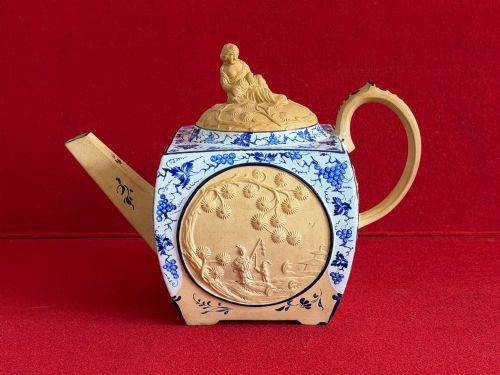
Most examples encountered on this page date from the late eighteenth century through the early nineteenth century, bridging the Georgian, Regency, and early Victorian eras. Neoclassical motifs dominate the aesthetic, occasionally accompanied by Chinoiserie subjects or crisply detailed sprigged designs.
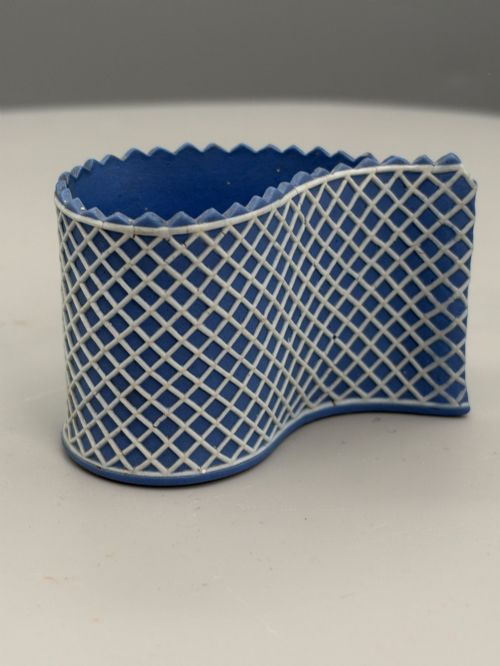
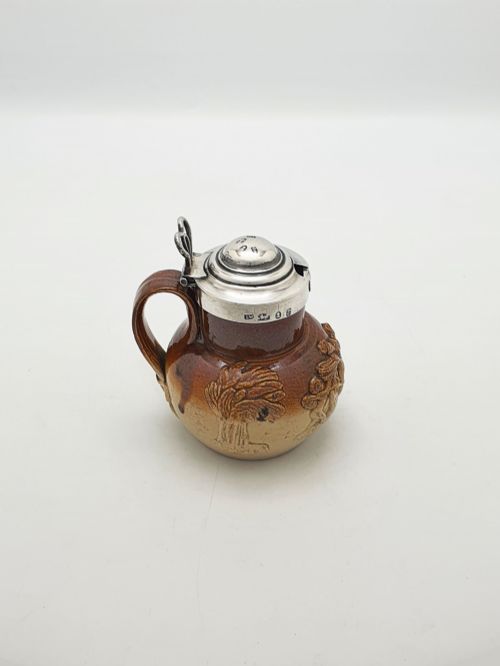
Makers utilised various clay bodies including traditional stoneware, caneware, buff stoneware, jasperware, and earthenware. Certain pieces incorporate sterling silver collars and hinged lids, adding a functional refinement to the ceramic form.
How they were made
Potters formed the primary body of each vessel using durable stoneware or specialised ceramic pastes such as caneware and jasperware. The dense composition allowed the material to hold sharp angles and fine lines during firing.
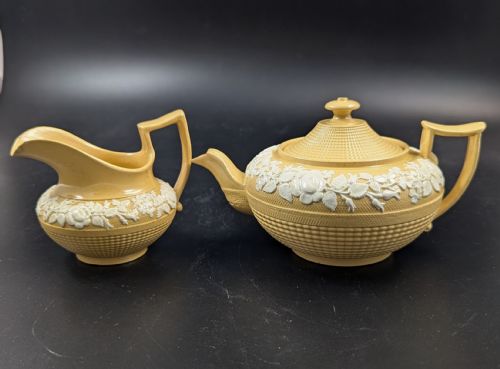
Applied ornamentation, known as sprigging, was pressed separately in small moulds and adhered to the unfired vessel body with slip. This technique created the characteristic raised relief patterns that define the neoclassical and figurative styles of the period.
Georgian Relief Stoneware Retail Price Guide 2026
Typical asking prices for georgian relief stoneware among the pieces listed under this phrase on Sellingantiques today, from the lower quarter to the upper quarter. They describe what is for sale here now, not the wider market.
Even mustard found itself elevated to high art when housed in stoneware pots sporting proper sterling silver collars and hinged lids.
What varies in quality
The crispness and depth of the moulded relief determine the visual success of the piece, separating finely detailed applications from softer, worn impressions. Superior examples maintain sharp borders along every sprigged motif and foliage garland.
Material refinement and the integration of secondary elements, such as sterling silver collars and hinged lids, mark the upper tiers of production. The precision of the glaze and the uniformity of the clay body further distinguish standard tablewares from exceptional exhibition pieces.
Spode·Wedgwood·Enoch Wood and Sons·Adams
The Georgian Relief Stoneware Glossary
- Stoneware
- A robust, vitrified ceramic body fired at high temperatures until semi-impervious to liquid. It provides a durable foundation for detailed relief moulding.
- Caneware
- A fine earthenware body possessing a warm, buff-yellow tone resembling bamboo or unpainted biscuit porcelain. It gained popularity during the Regency period for tableware.
- Sprigging
- The technique of pressing wet clay into a small mould to create a raised decorative motif, which is then lifted and applied to the vessel wall. This method allows for intricate low-relief ornamentation.
- Chinoiserie
- European artistic style reflecting Chinese and East Asian motifs, applied here to ceramic forms. It introduces asymmetrical floral patterns and exotic figural scenes to standard shapes.
Georgian Relief Stoneware: Frequently Asked Questions
What is relief stoneware?
Relief stoneware refers to ceramic vessels featuring raised decorative motifs applied to the surface before firing. The technique creates a distinct tactile contrast between the background body and the moulded ornamentation.
Potters utilised this method across teapots, jugs, and decorative cache pots to achieve crisp neoclassical designs without relying on surface painting.
How do I date these pieces?
Dating relies on stylistic markers such as neoclassical shapes, specific clay bodies like caneware or jasperware, and associated metalwork like sterling silver collars. Examining the sharpness of the sprigged relief and comparing maker attributions helps narrow the period.
Most items span the late eighteenth century through the early nineteenth century, aligning with the Georgian, Regency, and early Victorian eras.
Can I use these tablewares daily?
While durable, these antique pieces require careful handling to preserve delicate sprigged reliefs and silver mounts. Hand washing is essential to protect the unglazed or fine ceramic surfaces from modern detergents.
Many collectors reserve them for display or occasional service during formal dining.
What distinguishes jasperware from stoneware?
Jasperware is a specific type of unglazed stoneware characterised by its fine matte finish and reactive oxide colouring. Traditional stoneware covers a broader category of vitrified, dense ceramic bodies.
Both materials share exceptional durability, but jasperware is specifically recognised for its contrasting white relief figures against coloured grounds.