



Antique Stoneware Cup
These antique stoneware cup examples bring rugged utility and rich surface detail to your table, built from dense clay to outlast generations.
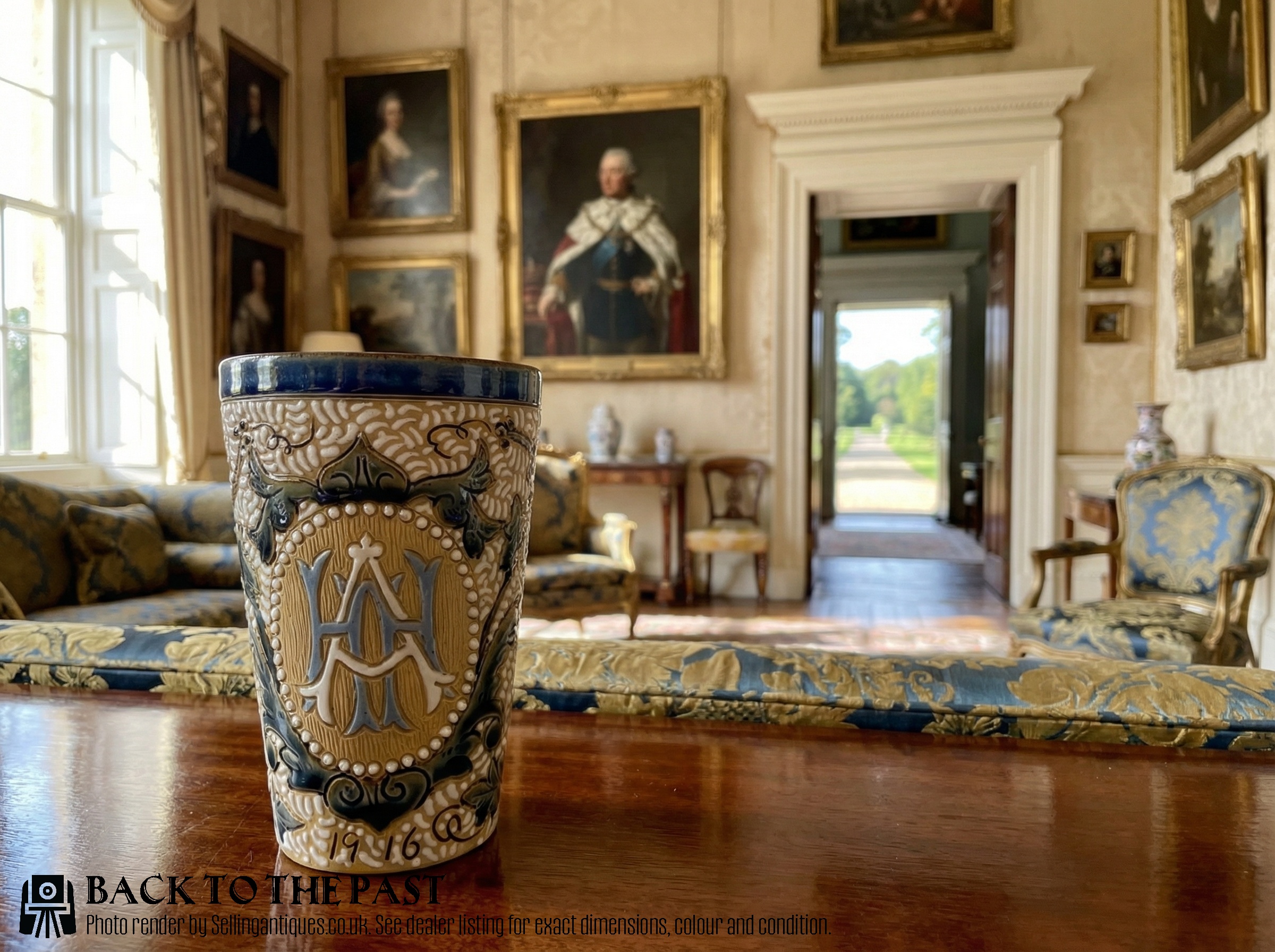
Antique Stoneware Cup
An antique stoneware cup bridges the gap between everyday tavern service and decorative Victorian craft, offering a tactile weight that lighter ceramics simply lack.
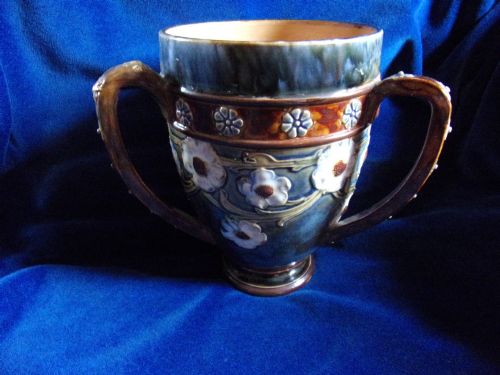
The pieces appearing on this page span the nineteenth century into the early twentieth century, taking forms from simple mugs to multi-handled tygs.
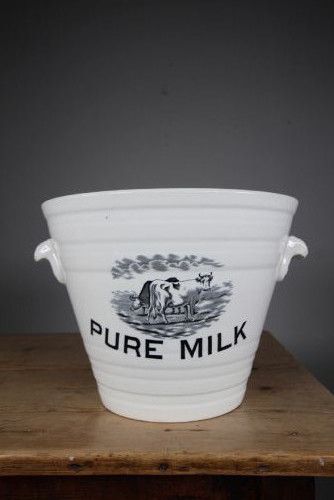
Makers ranged from English country potteries to large industrial names like Doulton Lambeth, producing vessels for both domestic dairy use and commemorative display.
Materials and construction
Potters shaped these vessels from heavy stoneware and ironstone clay bodies, fired at high temperatures until the material vitrified and held liquid without traditional porosity.
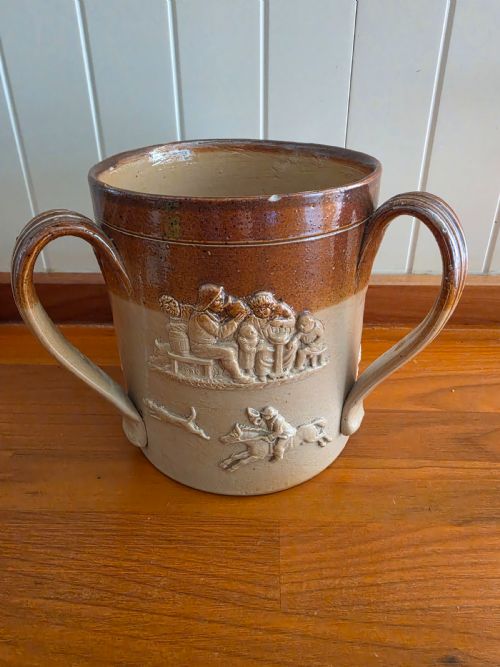
Surfaces frequently feature rich salt glazes or applied slip decoration, sometimes enhanced with sterling silver rims or mounts added by silversmiths after the initial pottery firing.
Measures of quality
Quality rests upon the crispness of the moulded relief and the skill behind hand-painted or slip-trailed decoration, such as the distinct pate-sur-pate work associated with notable studio artists.
The addition of hallmarked silver mounts elevates a standard vessel into a piece of presentation silverware, shifting the focus from simple kitchenware to decorative art.
Doulton Lambeth·Copeland·Sarreguemines·Fulham Pottery
The Antique Stoneware Cup Glossary
- Tyg
- A large drinking vessel featuring three or more handles designed so that multiple people could share the cup around a table. This form dates back centuries and remains common in nineteenth-century stoneware.
- Stoneware
- A robust pottery type fired at high temperatures until the clay body vitrifies into a dense, non-porous material. It resists chipping and holds liquids safely without relying on a soft lead glaze.
- Ironstone
- A patented ceramic material developed in the nineteenth century to mimic porcelain while offering the durability of heavy earthenware. It provides a sturdy white body for dairy pails and large mugs.
- Salt glaze
- A decorative finish achieved by throwing common salt into the kiln during high-temperature firing, creating a distinctive orange-peel texture on the stoneware surface. This treatment protects the clay and varies slightly on every single vessel.
Antique Stoneware Cup: Frequently Asked Questions
What is a tyg?
A tyg is a traditional drinking vessel fitted with three or more vertical handles. This design allowed guests to pass the cup securely around a communal table during feasts.
Most examples seen on this page date to the nineteenth century, often produced by prominent potteries in salt-glazed stoneware.
How do I clean my stoneware?
Wash antique stoneware gently by hand using warm water and mild soap. Avoid abrasive scrubbers that might damage historic salt glazes or delicate silver mounts.
Keep these vessels out of modern dishwashers to protect the vitrified clay body and any applied slip decoration from thermal shock.
Were these cups used daily?
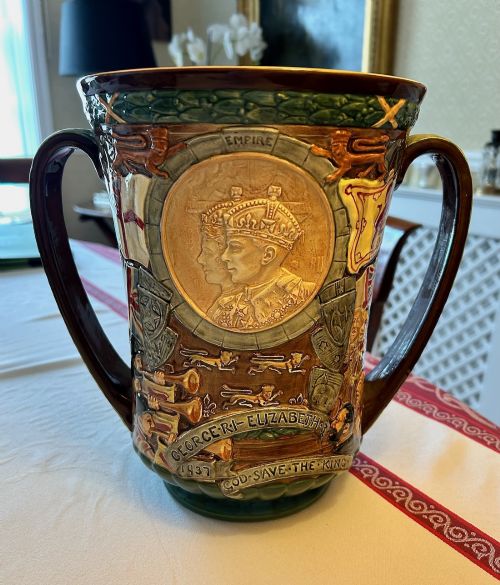
Many pieces served practical roles in dairies, homes, and taverns, while others commemorated coronations and school milestones. Everyday mugs show simple utilitarian forms built for heavy handling.
Commemorative pieces and silver-mounted beakers often spent more time on display cabinets than on rough tavern tables.
What is the silver for?
Silversmiths added sterling silver rims to strengthen vulnerable edges and elevate the status of the drinking vessel. Hallmarks on these mounts help collectors date the exact year of the silver work.
Silver mounts also indicate that a pottery vessel was considered valuable enough to warrant professional enhancement.