


Two Handled Ceramic Vase
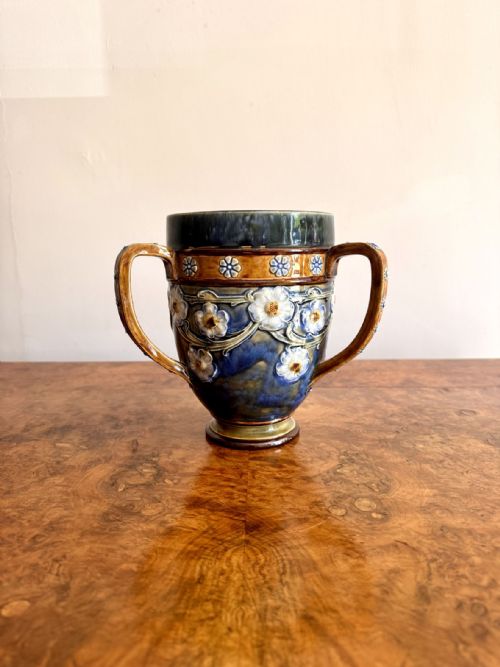
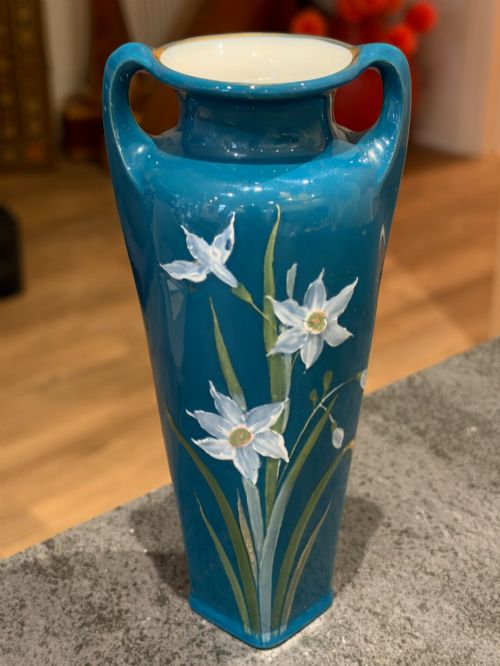
A two handled ceramic vase carries a formal symmetry found in nineteenth-century porcelain and earthenware collections.
Two Handled Ceramic Vase
A two handled ceramic vase brings together symmetrical vessel forms produced across the eighteenth, nineteenth, and early twentieth centuries. These pieces appear in porcelain, earthenware, and tin-glazed pottery, reflecting both British and continental European manufacture alongside Japanese export wares.
The selection ranges from neoclassical porcelain urns and loving cups to late Victorian blush ivory vessels and Meiji period Japanese works. Makers such as Royal Worcester, Spode, and Derby dominate the ceramic output alongside specialised European factories.
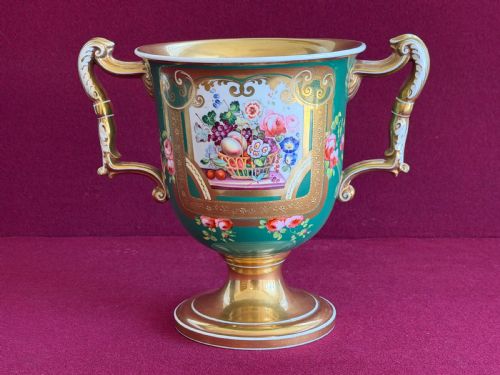
Buyers encounter forms designed for display, cabinet decoration, or commemorative use, often featuring painted landscapes, floral panels, and gilt handles. The structural twin handles define the silhouette, linking classical urn traditions with domestic decorative arts.
Materials and Construction
Potters utilised porcelain, earthenware, and tin glaze to form the body of each vessel, shaping the clay either on the potter's wheel or within intricate moulds. Twin handles were separately formed and securely attached to the shoulder and neck before firing.
Surface decoration involved hand-painting with enamel colours, often supplemented by gilding, gold leaf, or gold gilt highlights applied across the handles and rims. Specialised techniques such as cloisonné on tot.ai shippo or faience glazing distinguished the Japanese and continental wares.
One remarkably confident dragon shares bark texture space with a sugar bowl, proving nature had stiff competition.
Factors of Quality
Quality rests in the precision of the ceramic body and the finesse of the hand-painted decoration, where named artists like Zachariah Boreman or William Hawkins elevate a standard vessel into a studied artwork. Crisp moulding of the handles and the integration of gilding indicate higher tiers of production.
The execution of the glaze and enamel work distinguishes standard factory output from master-painted porcelain, while firm attributions to works by Royal Worcester, Derby, or H & R Daniel add historical weight to the piece.
H & R Daniel·Derby Porcelain·Spode·Cantagalli·Royal Worcester·KPM
The Two Handled Ceramic Vase Glossary
- Porcelain
- A hard, vitreous ceramic paste fired at high temperatures to achieve a white, translucent body. It forms the foundation of fine nineteenth-century decorative urns.
- Loving Cup
- A large two-handled drinking vessel, often used ceremonially or commemoratively. In ceramic form, it frequently doubles as a decorative cabinet piece.
- Blush Ivory
- A specific creamy-beige matte porcelain ground popularized by Royal Worcester in the late nineteenth century. It typically serves as a soft backdrop for delicate floral painting.
- Faience
- Tin-glazed earthenware produced across continental Europe. The opaque white glaze accepts brightly coloured painted decoration directly onto the surface.
- Gilding
- The application of gold leaf or gold powder to ceramic surfaces and handles. It provides metallic contrast against painted enamel scenes and white porcelain.
Two Handled Ceramic Vase: Frequently Asked Questions
What periods do these vases date from?
The pieces span from the late eighteenth century through the nineteenth century and into the early twentieth century. Examples encompass Georgian neoclassical designs, Victorian aesthetic movements, and Meiji period Japanese exports.
Each era brings distinct stylistic markers, ranging from hand-painted botanical panels to classical urn silhouettes with elaborate gilded handles.
How were these vessels used originally?
Many served as decorative garniture pieces or cabinet urns designed for prominent display in formal drawing rooms. Others, such as loving cups, held ceremonial significance or marked personal occasions.
Their substantial handles and balanced proportions prioritised visual symmetry and artistic presentation over everyday domestic utility.
How do I identify a painted artist?
Certain pieces bear direct signatures or initials from notable porcelain painters working within major factories. Documentary evidence and stylistic comparisons help attribute unsigned works to specific hands.
Factory marks stamped or painted on the underside also provide firm clues to the origin and date of manufacture.
How should I care for antique porcelain?
Display the vessels away from direct sunlight to preserve the stability of hand-painted enamels and delicate gilding. Dust them gently with a soft, dry brush rather than liquid cleaners.
Handle them by the body rather than relying solely on the decorative handles, which can be vulnerable to historical stress.