


Blue Porcelain Floor Vase
A blue porcelain floor vase brings monumental scale and striking pigment to an interior, anchored by centuries of Eastern and British ceramic traditions.

Blue Porcelain Floor Vase
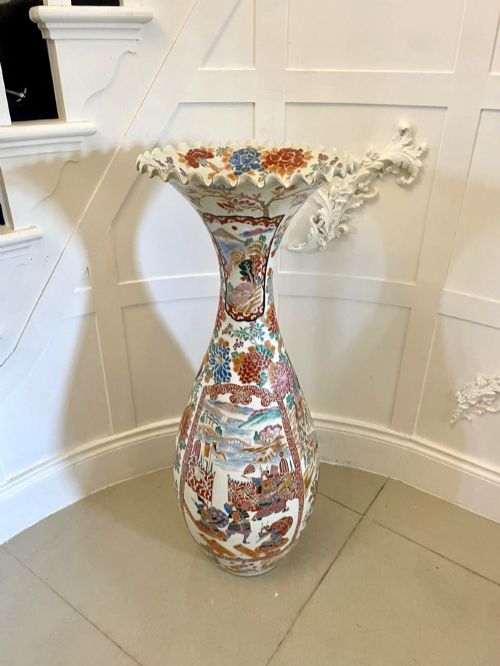
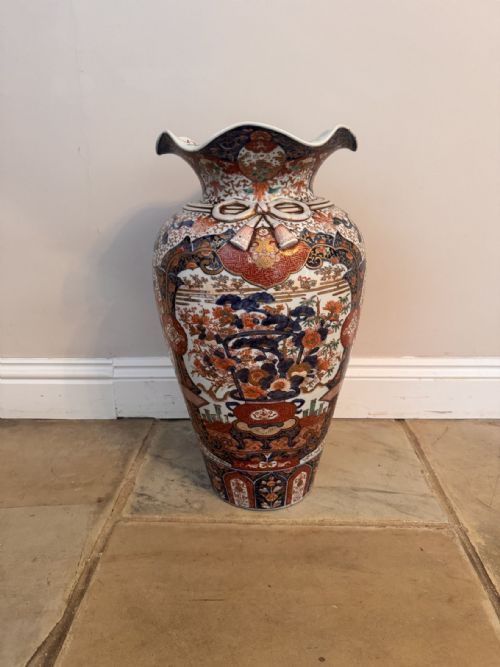
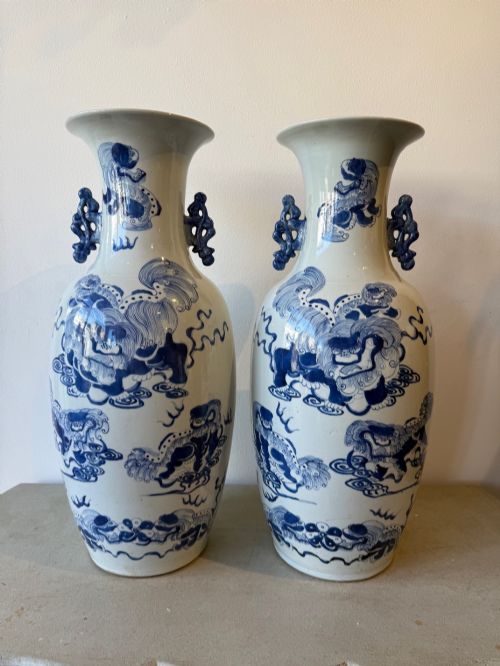
When searching for a blue porcelain floor vase, collectors encounter substantial vessels designed to stand directly upon the ground, often reaching impressive heights exceeding four feet. These grand pieces include both single statement objects and symmetrical pairs intended for prominent architectural placement in large rooms.
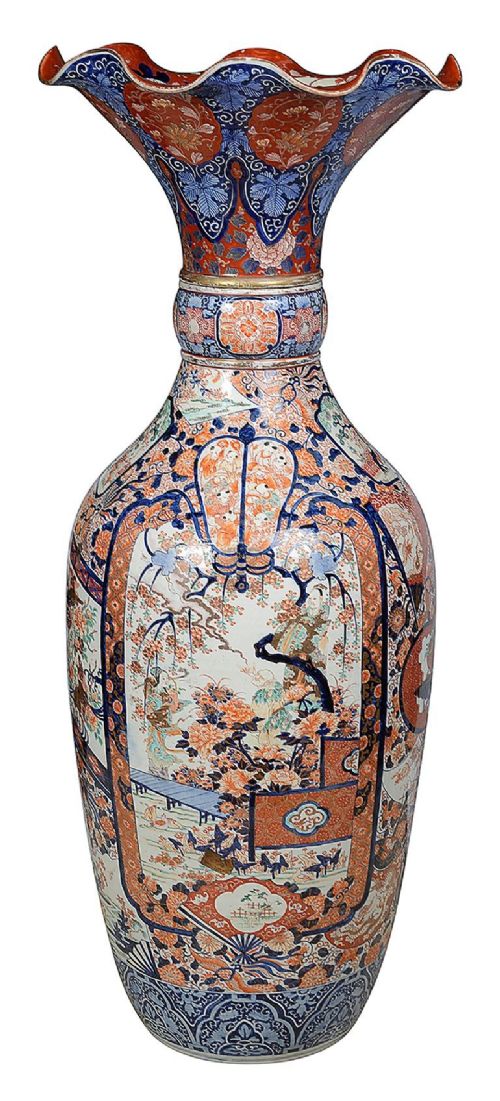
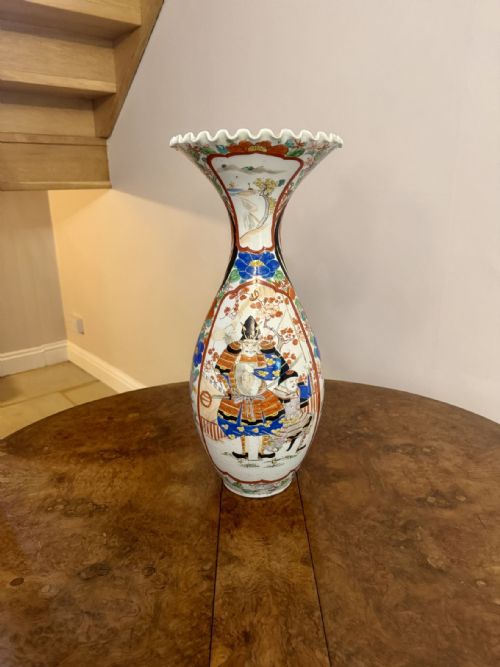
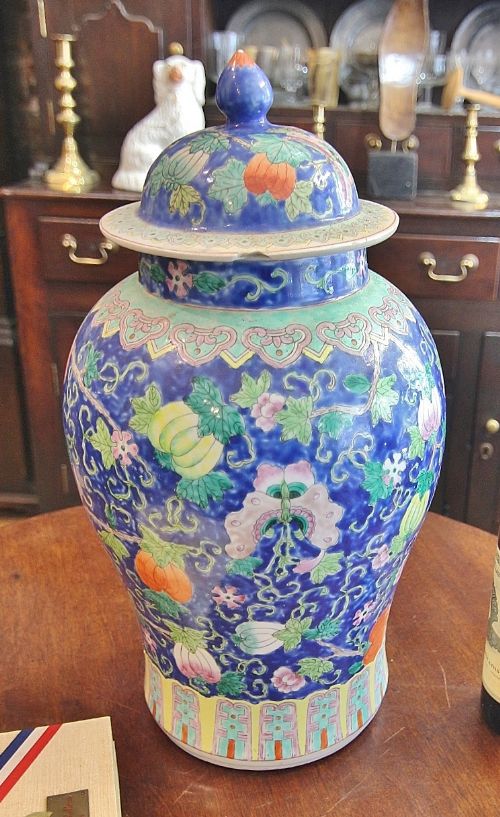
The selections available here lean heavily toward nineteenth-century Japanese Imari and Chinese blue and white ceramics, alongside striking British ironstone examples. Many incorporate rich cobalt glaze palettes combined with intricate enamel detailing or lacquer panels, reflecting traditional East Asian export styles and Meiji period craftsmanship.
Materials and methods
Potters shaped dense ceramic bodies and porcelain before applying cobalt glaze to create the deep foundational blue pigments characteristic of these large vessels. Artisans then fired the pieces at high temperatures, frequently layering overglaze enamels and gold leaf details onto the hardened surface for added richness.
Certain works incorporate supplementary materials such as wood stands or integrated lacquer panels set directly into the ceramic structure. Skilled hands controlled the precise application of cobalt glaze and gilt decoration to achieve the complex surface patterns seen across Japanese Imari and Chinese traditional styles.
Listings feature porcelain, ceramic, and ironstone forms enriched with cobalt glaze, enamel, gold leaf, and lacquer panels.
Defining quality in large ceramic vessels
Quality reveals itself through the clarity and depth of the cobalt glaze, where superior pieces display a rich, luminous pigment without muddiness or pooling. The crispness of the painted decoration, whether following Japanese Imari or Chinese traditional motifs, separates exceptional artistic execution from routine production.
Physical scale combined with structural stability dictates the standing presence of these heavy floor vessels, with monumental heights requiring immense kiln control to prevent warping. The integration of supplementary elements like gold leaf or lacquer panels further distinguishes the finest examples from standard decorative wares.
The Blue Porcelain Floor Vase Glossary
- Imari palette
- A traditional decorative scheme utilising cobalt blue, iron red, and gilt highlights on a white ceramic ground. This vibrant combination originated in Japan and heavily influenced nineteenth-century export wares.
- Cobalt glaze
- A mineral pigment applied beneath or over the ceramic glaze to produce deep, permanent blue tones during high-temperature firing. It forms the essential colour foundation for blue and white porcelain.
- Meiji Period
- The era in Japanese history spanning from 1868 to 1912, noted for producing large-scale export porcelain and decorative Imari floor vases.
- Ironstone
- A durable type of British ceramic developed in the nineteenth century to imitate Chinese porcelain. It provides a sturdy body suitable for large hall vases.
- Baluster
- A jar or vase shape with a rounded body that tapers toward the base and swells near the lower centre, commonly found in monumental floor vessels.
Blue Porcelain Floor Vase: Frequently Asked Questions
Where should a floor vase go?
These monumental vessels suit large entrance halls, wide corridors, or empty corners where their height and colour can anchor the surrounding space. They command attention on their own without requiring crowded furniture arrangements nearby.
Pairs look particularly striking flanking a fireplace or framing a grand doorway, while individual pieces work well as standalone focal points against plain walls.
How do I clean an antique vase?
Dust the exterior gently with a dry, soft cloth to prevent surface accumulation from settling into painted details or gilt work. Avoid using chemical cleaners or abrasive materials that might damage the glaze or delicate enamel overglazes.
Keep these vessels away from direct sunlight and damp environments to protect the structural integrity of the ceramic body and any associated lacquer elements.
Are these vases waterproof?
Most antique floor vessels were created for decorative display rather than functional plant holding, particularly those featuring delicate overglaze enamels or gilt. Placing water directly inside can risk seeping into historical ceramic bodies or damaging interior glazes.
If you wish to display dried stems or branches, use a separate waterproof liner rather than pouring water straight into the antique vessel.
How do I date a blue and white vase?
Dating relies on examining the specific shade of cobalt blue, the weight of the ceramic or ironstone body, and the characteristic painting style of the period. Nineteenth-century pieces often display deeper, more saturated cobalt tones combined with traditional Imari or Chinese export motifs.
Comparing the dimensions, form, and glaze characteristics against documented examples from the same era helps establish the likely decade of manufacture.