







Blue Ceramic Wall Plates
These blue ceramic wall plates bring centuries of kilncraft to a room, offering rich cobalt palettes and decorative forms from Delftware to Japanese Imari.
Blue Ceramic Wall Plates
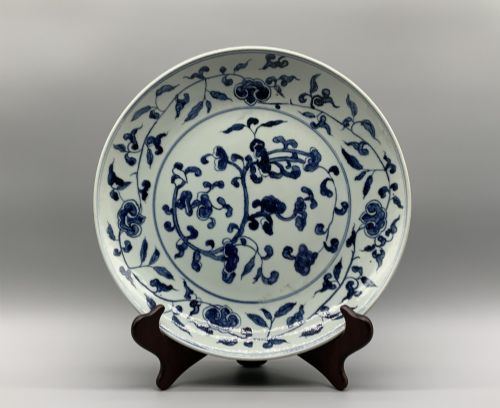
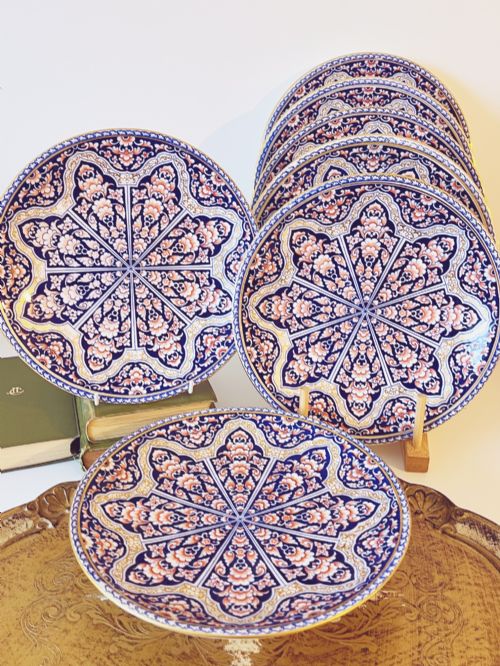
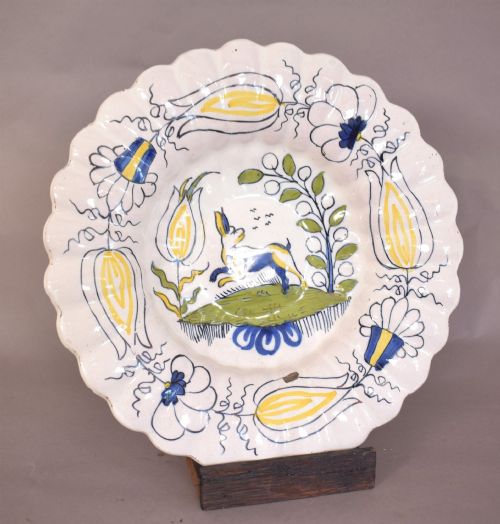
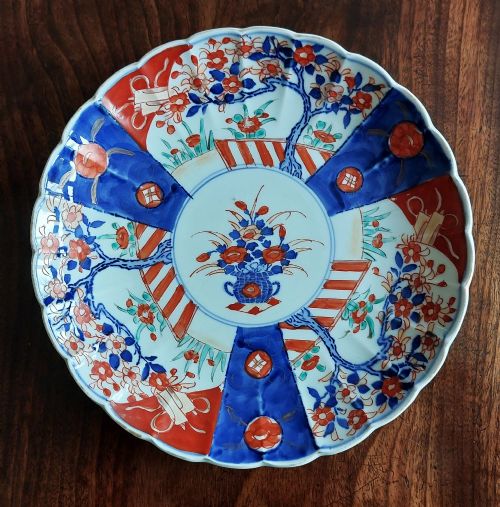
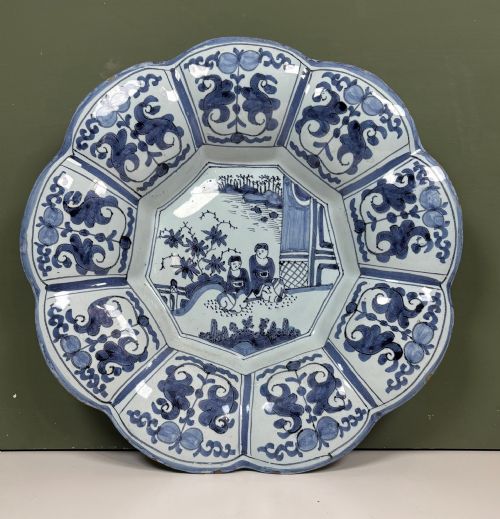
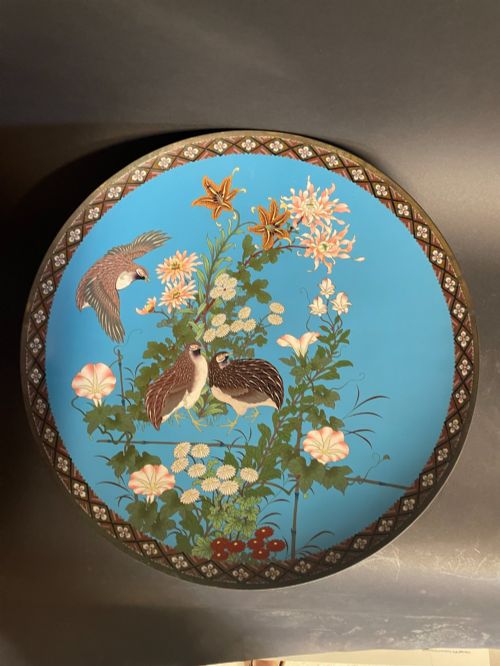
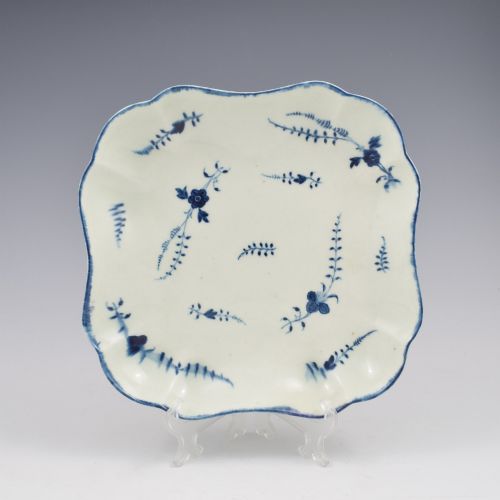
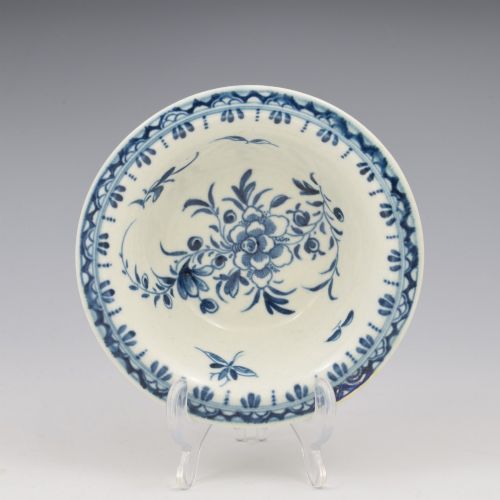
When searching for blue ceramic wall plates, buyers encounter a diverse selection spanning centuries of European and Asian production, with forms ranging from cabinet plates to large chargers designed for display. The pieces on this page lean heavily toward 18th-century Delftware, 19th-century English factories, and Japanese Meiji period Imari wares.
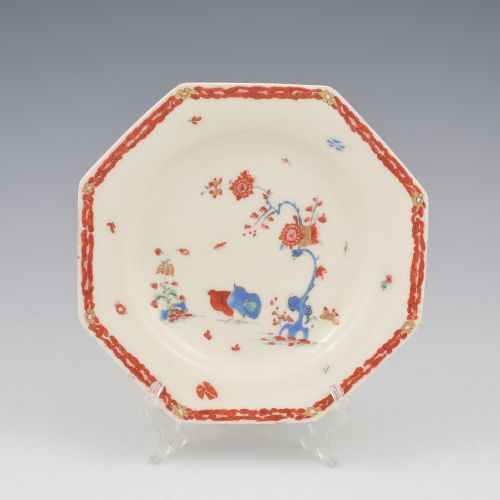
The assortment includes round chargers, lobed dishes, and octagonal plates intended primarily for vertical display rather than dining. Origin styles encompass Dutch Baroque, Chinese Qing Dynasty export, and Japanese Arita porcelain alongside Staffordshire and Worcester earthenwares.
Makers represented in the records include historical English potteries and continental factories that utilised tin-glazing and cobalt pigments. The core of the selection centres on large decorative chargers and smaller cabinet pieces decorated in characteristic blue and white schemes.
How they were made
Potters shaped these objects from earthenware, porcelain, and tin-glazed bodies before applying cobalt pigment by hand or transfer printing. Glazes were then fired to fix the deep blue tones across the surface.
Techniques varied from the intricate hand-painting seen on Chinese export and Delft chargers to the transfer-printed views on English earthenware plates. Gold leaf and enamel additions sometimes embellished the final fired surface on later continental and Japanese items.
Periods represented span from the 17th century through to the 1940s, including Meiji and Georgian eras.
What varies in quality
Quality rests upon the crispness of the cobalt painting, the purity of the white ground, and the control shown during the high-temperature kiln firing. Early Delft chargers and First Period Worcester pieces display finer brushwork and thinner potting than later mass-produced wares.
The depth and clarity of the blue pigment dictate visual success, with superior pieces showing rich tonal graduation rather than flat muddy washes. Hand-painted Japanese Imari and Chinese Kangxi examples demonstrate a sureness of line that elevates them above standard commercial output.
Royal Crown Derby·Royal Worcester·John Davenport·Stubbs
The Blue Ceramic Wall Plates Glossary
- Charger
- A large decorative plate intended for wall hanging or sideboard display rather than table use.
- Tin-Glazed Earthenware
- Pottery covered in an opaque white glaze containing tin oxide, providing a smooth canvas for cobalt painting.
- Imari Palette
- A decorative scheme employing underglaze blue combined with iron red and gilt highlights, originating in Japan.
- Kraak Style
- A type of Chinese export porcelain featuring panelled borders and central landscape or floral motifs.
- Cabinet Plate
- A fine decorative plate made for display in a cabinet or on a wall rather than everyday service.
Blue Ceramic Wall Plates: Frequently Asked Questions
How do I hang a heavy charger safely?
Heavy ceramic chargers require adjustable spring-loaded wire hangers that distribute weight evenly across the rim. Ensure the wall fixing engages directly into masonry or a stud rather than plaster alone.
Inspect the wire and tension periodically to confirm the plate remains secure against the vertical surface.
Can these plates be used for serving food?
Most antique decorative plates and chargers are intended solely for display and historical appreciation. Older glazes, particularly on 18th-century earthenware, may not meet modern standards for food contact.
Displaying them on walls or in cabinets keeps fragile surfaces safe from cutlery marks and modern detergents.
How do I distinguish Delftware from Japanese porcelain?
Delftware uses a porous earthenware body covered in an opaque white tin glaze that can show minor chipping at the edges. Japanese pieces utilise a dense, vitrified porcelain body that rings when tapped and reveals a hard translucent paste.
The foot rims and base markings also differ significantly between Dutch and Asian workshops of the period.
What does Imari mean on a plate?
Imari refers to Japanese export porcelain shipped from the port of town Imari during the Edo period, characterised by rich blue, iron red, and gold decoration. European factories subsequently copied this distinctive palette on their own earthenware and porcelain bodies.
These pieces combine intricate floral and bird motifs within segmented panels.