




Blue White Delftware Set
A blue white delftware set brings tin-glazed earthenware and cobalt pigment together in matched plates, tiles and inkstands.
Blue White Delftware Set
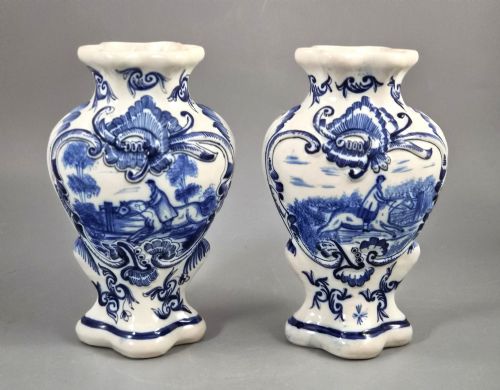
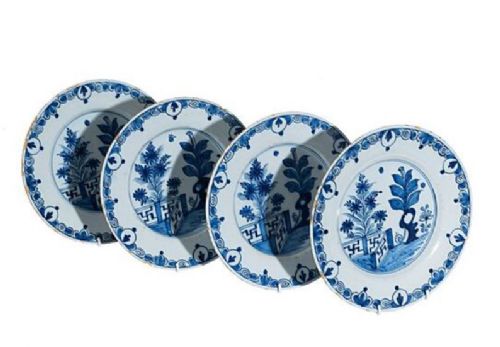
A blue white delftware set comprises matching or assembled groups of tin-glazed earthenware objects, most frequently found as plates, chargers, tiles and inkstands. These domestic and decorative items date primarily from the eighteenth and nineteenth centuries, spanning Dutch and French workshops.
Buyers encountering this category most commonly meet groups of eighteenth century plates or late nineteenth century desk accessories. The groupings often share characteristic cobalt pigment painting on a white tin glaze, showing the longevity of this palette across different decades.
How they were made
The makers formed these objects from clay before applying an opaque tin glaze that provided a smooth white ground for decoration. Painters then applied cobalt pigment directly onto the absorbent unfired or biscuit surface.
Kiln firing fused the metallic cobalt into the liquid glaze, creating the characteristic deep blue tones and glossy finish. Workshops across the Netherlands and France utilised these traditional faience techniques to produce both utilitarian inkstands and decorative wall tiles.
Miniature furniture sets made in tin-glazed earthenware offer a charming domestic scale for collectors who enjoy the unexpected.
What varies in quality
Quality rests primarily on the crispness of the hand-painted cobalt pigment against the white tin glaze. Stronger pieces display confident brushwork and well-defined motifs rather than muddy or blurred outlines.
The sophistication of the form and the consistency of the glaze application also distinguish finer examples. Early eighteenth century plates show distinct potting characteristics that differ from later nineteenth century decorative items.
Fourmaintraux Courquin
The Blue White Delftware Set Glossary
- Tin-Glazed Earthenware
- Pottery covered with a lead glaze made opaque by the addition of tin oxide. This white surface serves as the ground for painting.
- Cobalt Pigment
- A metallic oxide used to create deep blue decoration on ceramics. It withstands high kiln temperatures without losing intensity.
- Faience
- European tin-glazed earthenware produced in France, Germany and other regions. The term overlaps closely with delftware.
- Charger
- A large decorative plate intended for display rather than table service. These substantial vessels often feature elaborate painted scenes.
- Inkstand
- A desk accessory holding inkwells and pen rests. Ceramic examples combine practical utility with painted decoration.
Blue White Delftware Set: Frequently Asked Questions
What is a delftware set?
A delftware set groups together ceramic objects sharing tin glaze and blue painted decoration. These groupings typically consist of matching plates, chargers, tiles or desk pieces.
Such sets allow collectors to display coordinated groups of earthenware from the same period or workshop origin.
How old is blue and white delft?
The listings span from the eighteenth century through the late nineteenth century. Eighteenth century pieces display earlier potting traits and traditional hand painting.
Nineteenth century examples often include revival styles and specialised items like inkstands and miniature furniture.
Where were these pieces made?
Production centres were primarily located in the Netherlands and France. Dutch workshops established strong traditions in plates and tiles.
French makers also produced tin-glazed faience items, including decorative vases and desk accessories.
How should I display a set?
Plates and chargers look best mounted on walls or displayed on plate stands to showcase the painted surfaces. Inkstands and miniature pieces suit desktop or cabinet placement where the details remain visible.
Keep ceramic sets away from direct heat sources and harsh sunlight to protect the glaze.