
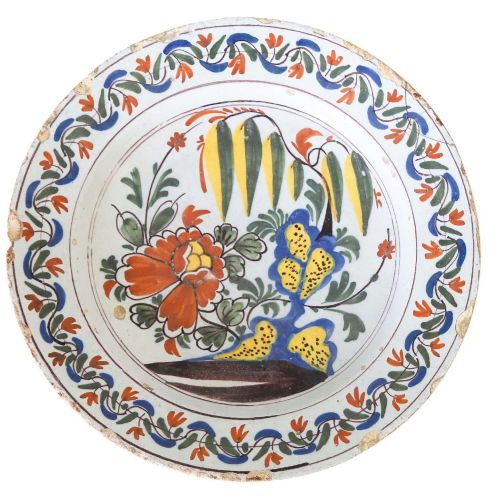


Delft Floral Wall Plates
Delft floral wall plates are tin-glazed earthenware dishes bearing hand-painted botanical motifs, sought after for their rich historic character and vibrant cobalt pigment.
Delft Floral Wall Plates
When you search for delft floral wall plates, you encounter tin-glazed earthenware dishes originating primarily from the eighteenth century. These pieces encompass both standard plates and larger chargers designed for display.
The objects span Dutch and English traditions, exhibiting hand-painted floral decorations executed in blue, manganese, and polychrome palettes. Forms range from individual decorative plates to pairs and matched sets intended for wall hanging.
How they were made
Potters shaped these objects from earthenware bodies before applying an opaque tin glaze that provided a smooth, white surface for painting. Artisans then applied cobalt pigment and other mineral colours directly onto the unfired glaze.
Grand feu techniques subjected the decorated earthenware to high temperatures, fusing the pigments into the glaze to create a durable finish. Walnut frames and marquetry racks sometimes accompany these ceramics for wall suspension.
Early potters occasionally forgot to glaze the footrims, leaving small patches of gritty clay that whisper tales of crowded kiln stacking.
What varies in quality
The quality of delft floral wall plates rests in the precision and fluidity of the hand-painted brushwork. Superior examples display confident, detailed botanical compositions rather than stiff or repetitive application.
The depth and consistency of the tin glaze also differentiate the pieces, alongside the richness of the cobalt pigment or polychrome hues. Larger charger plates with complex geometric and floral layouts typically command greater attention.
The Delft Floral Wall Plates Glossary
- Tin Glaze
- An opaque white glaze containing tin oxide, applied to earthenware to create a smooth surface for painting. This finish defines the characteristic appearance of traditional delftware.
- Charger
- A large decorative plate traditionally used for display on walls or sideboards rather than dining. These substantial dishes often feature the most elaborate floral designs.
- Polychrome
- Decoration utilising multiple colours rather than a single hue like blue or manganese. On these ceramics, such palettes typically incorporate floral motifs in various shades.
- Grand Feu
- A high-temperature firing technique that fuses painted pigments directly into the tin glaze. This method produces a glossy, integrated surface layer.
Delft Floral Wall Plates: Frequently Asked Questions
How do I hang delft plates?
These ceramic pieces require specialist wire hangers that grip the rim securely without causing damage to the earthenware body.
Alternatively, many collectors display chargers on sturdy plate rails or within dedicated wooden wall racks.
Are eighteenth-century plates fragile?
The tin-glazed earthenware body is susceptible to chipping along the edges if impacted hard against other surfaces.
Gentle handling and secure wall mountings ensure these historic ceramics remain stable during everyday life.
What colours appear on floral plates?
Traditional decoration relies heavily on deep blue cobalt pigment applied beneath or onto the white tin glaze.
Other examples introduce manganese purple and broader polychrome palettes to depict botanical subjects.
How do I identify Dutch delftware?
Dutch pieces from the eighteenth century frequently display distinctive floral and geometric compositions executed in tin-glazed earthenware.
Comparing the glaze opacity and the style of the hand-painted brushwork helps distinguish regional manufacturing traits.