
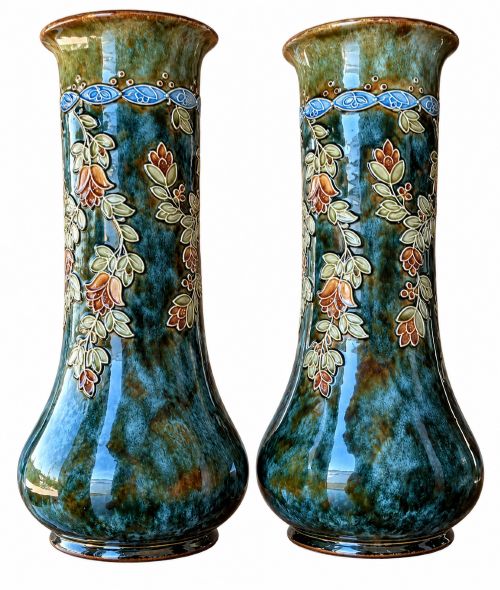
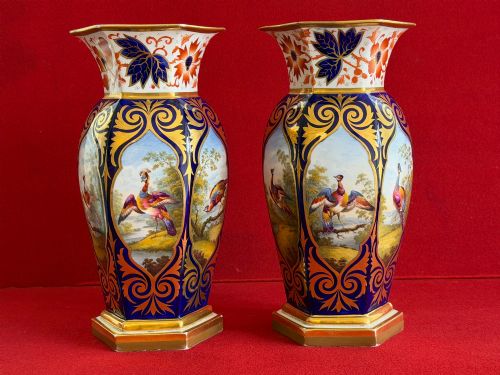
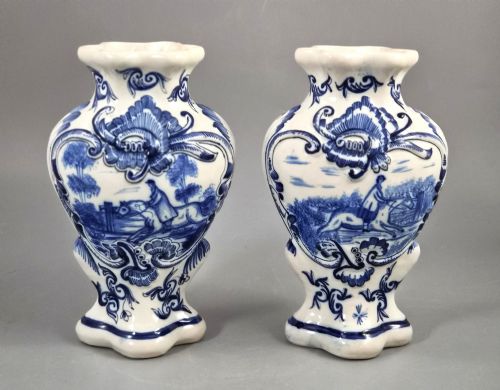
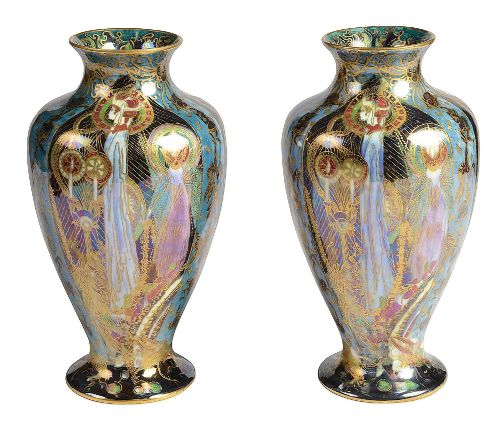
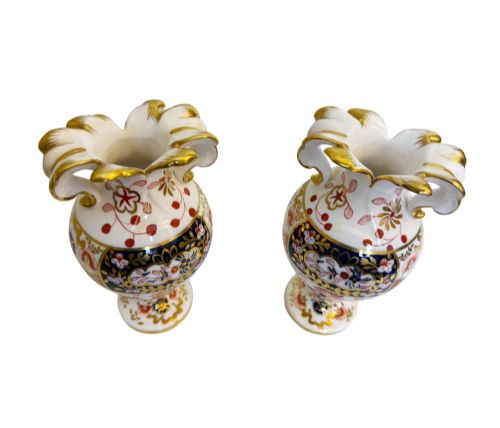
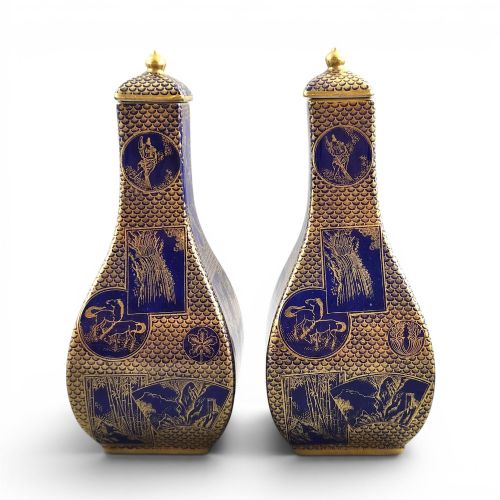
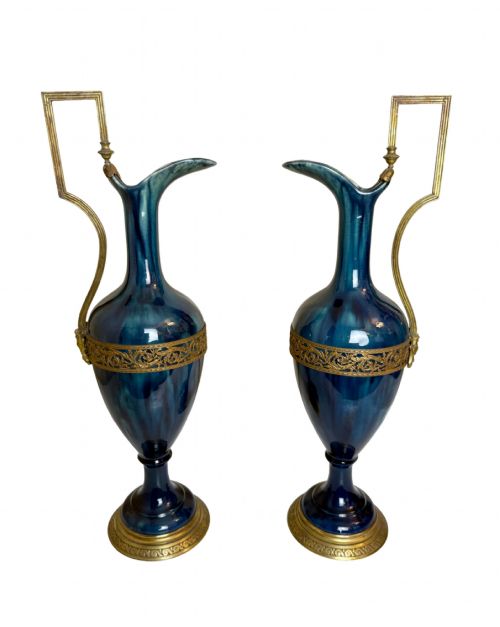
Blue Ceramic Urn Pair
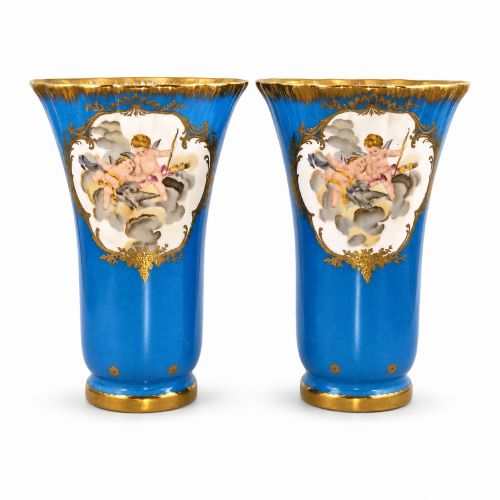
These blue ceramic urn pair selections bring striking symmetry and rich cobalt tones into a room, offering classic decorative presence for mantelpieces and side tables.
Blue Ceramic Urn Pair
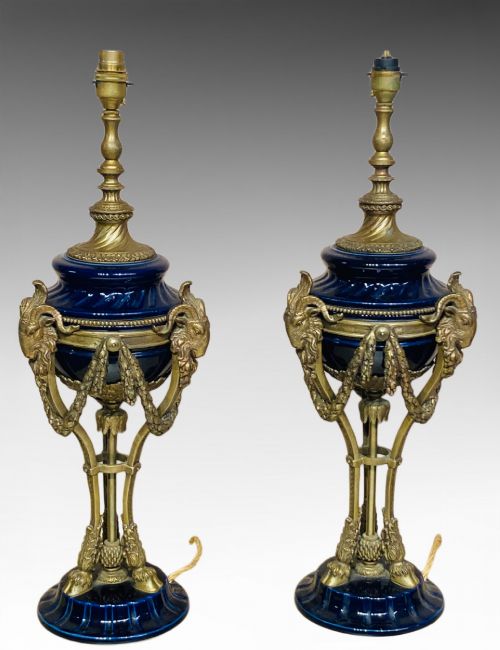
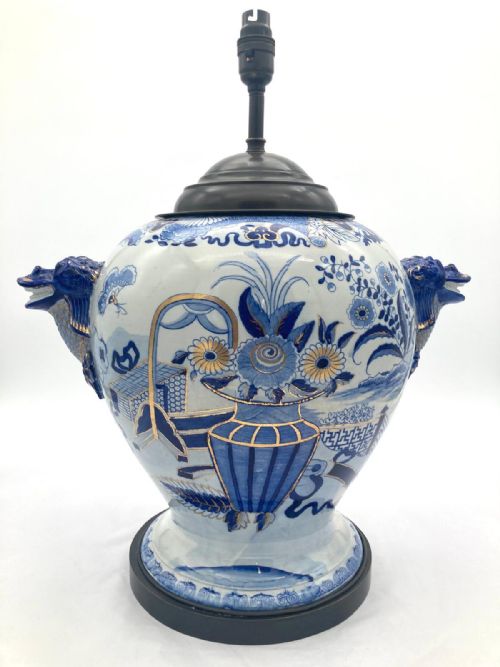
Buyers encountering this selection will most frequently find nineteenth-century examples alongside early twentieth-century creations, including lidded jars, campana-shaped urns, baluster vases, and pieces later converted into table lamps. The physical forms range from small mantel ornaments to large exhibition pieces standing over seventy centimetres high, often mounted with ormolu or gilt bronze trim.
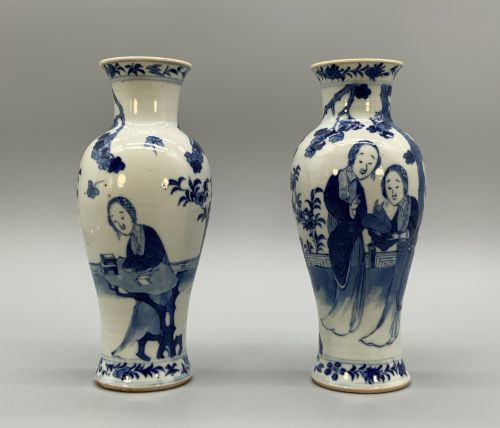
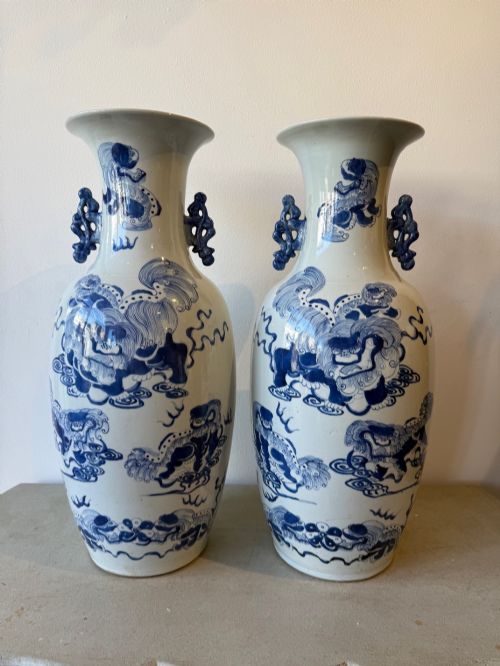
Origins represented in these listings stretch across European pottery traditions - such as English ironstone and stoneware, French faience, and Dutch delft - as well as significant Asian export wares including Japanese Satsuma and Chinese blue and white porcelain. This variety means collectors can source pieces matching specific historical interiors, from strict Regency symmetry to exuberant Victorian and Edwardian decorative schemes.
Materials and methods
Potters built these vessels using dense ceramic bodies like porcelain, ironstone, and stoneware, frequently finishing them with rich cobalt blue glazes or opaque tin-based faience enamel. Artisans applied decoration through hand-painted underglaze pigments, applied lustre designs, or crisp white Jasperware bas-reliefs moulded separately and affixed to the blue ground before firing.
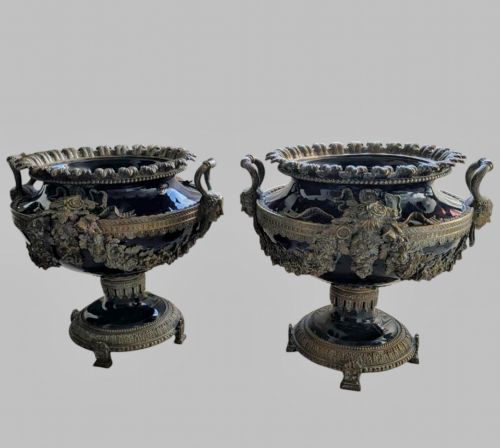
Many finer examples incorporate cast metal mounts, utilising ormolu and gilt bronze trims, handles, and pedestals to frame the ceramic body. Converted pieces integrate electrical fittings while retaining their original nineteenth-century ceramic bases and hand-turned structural components.
Listings feature ceramic vessels from the eighteenth century to the 1940s, encompassing earthenware, porcelain, stoneware, and faience.
Qualities of distinction
The division between standard production and exceptional work rests on the crispness of the modelling, the depth and evenness of the blue glaze, and the precision of any hand-painted detailing. Superior pairs display finely delineated motifs, flawless glaze consistency across both vessels, and securely fitted cast metal ormolu mounts that complement rather than crowd the ceramic form.
Artistic provenance and historical ambition elevate certain pairs, particularly those bearing the marks of prominent nineteenth-century potteries or exhibiting special exhibition-quality craftsmanship. The harmony of the pair as a matching unit, where size, firing shrinkage, and decorative alignment match precisely, determines the ultimate success of the ensemble.
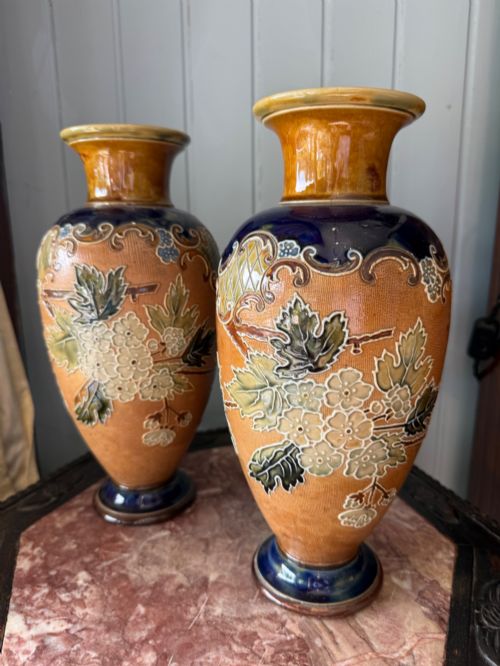
Royal Doulton·Flight Barr and Barr·Fourmaintraux Courquin·Mason's·Samson Paris·Hicks and Meigh·Minton·Wedgwood·Carlton Ware
The Blue Ceramic Urn Pair Glossary
- Campana urn
- A bell-shaped vessel with a flared rim and footed base, frequently utilised in classical decorative schemes. These forms often feature prominent handles springing from the lower body.
- Faience
- Tin-glazed earthenware produced across Europe, particularly in France and the Netherlands, known for its opaque white surface and painted blue decoration. It provides a substantial, matt ceramic body distinct from translucent porcelain.
- Jasperware
- A type of fine stoneware developed by Josiah Wedgwood, characterised by a matte coloured body and contrasting applied white relievo ornaments. Blue ground versions remain the most recognisable manifestation.
- Imari
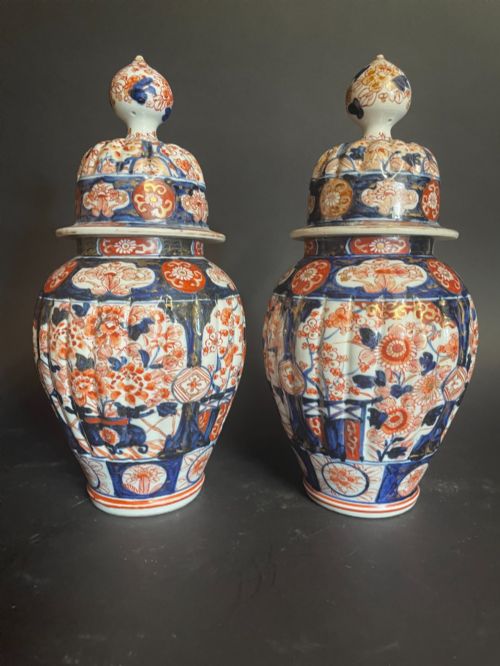
- A style of Japanese export porcelain featuring deep cobalt blue and iron red highlights, often enriched with gold leaf. These designs became widely emulated by European factories during the nineteenth century.
- Ormolu
- Gilded bronze mounts applied to furniture and ceramics, providing decorative handles, rims, and bases. High-quality examples exhibit sharp chiselling and a warm, deep gold finish.
Blue Ceramic Urn Pair: Frequently Asked Questions
How were these urns originally used?
These vessels served primarily as decorative garnitures on mantelpieces, sideboards, and architectural brackets, often paired with matching candlesticks or clocks to create symmetrical displays in formal reception rooms.
Larger examples functioned as garden jardinieres, umbrella stands, or floor-standing display pieces in grand nineteenth-century interiors, while smaller lidded jars held potpourri or dry goods.
Can I use converted lamp urns safely?
Most converted pieces retain their original ceramic bodies while incorporating modern electrical wiring housed through the base or top aperture, allowing them to function as stable table lamps.
Buyers should have older wiring inspected by a qualified professional to ensure safety while enjoying the ambient light provided by the handmade shades.
How do I care for gilt bronze mounts?
Dust the ormolu gently with a soft, dry cloth to prevent the accumulation of grit in the chased recesses of the metalwork.
Avoid liquid cleaners, polishes, or abrasive cloths, as these can strip the historical gilding from the bronze substrate.
What defines a true matched pair?
A genuine pair shares identical height, rim diameter, clay shrinkage rates, and hand-painted brushwork executed by the same workshop or artist during the same production period.
Slight variations in colour tone or hand-drawn motifs confirm the human hand in antique manufacture rather than industrial uniformity.