

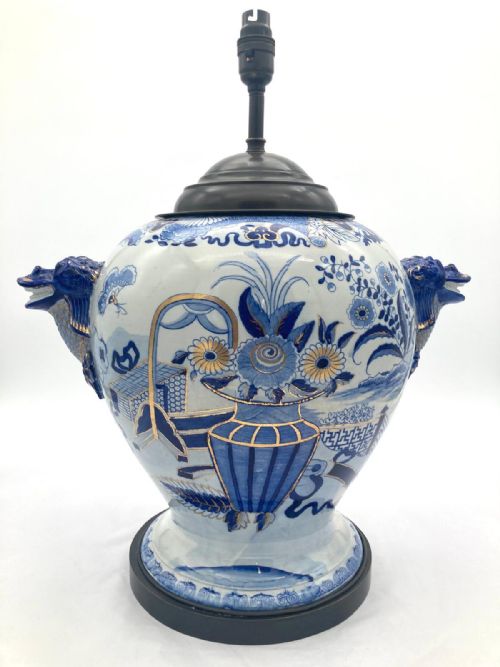


Regency Chinoiserie Urns
Regency chinoiserie urns combine classical neoclassical silhouettes with decorative oriental motifs, offering striking focal points for a traditional interior.
Regency Chinoiserie Urns
Regency chinoiserie urns are decorative vessels and lamps produced during the nineteenth century, drawing inspiration from eastern design traditions interpreted through a Regency lens. These pieces encompass coffee urns, lidded vases, and chestnut urns, displaying distinctive decorative forms.
The versions most commonly met on this page span the nineteenth century, featuring ironstone and painted toleware constructions. Makers applied intricate lacquer and gilt schemes to achieve the characteristic aesthetic demanded by period interiors.
How They Were Made
Potters and metalworkers shaped ironstone, tinplate, and toleware to form the robust bodies of these urns. Ironstone provided a durable ceramic base capable of holding dense blue glazes and polychrome schemes.
Makers applied gold leaf and gilt decoration over black lacquer and mazarine blue grounds to create the chinoiserie motifs. Artisans also utilised brass components for mounts and taps on functional vessel forms like coffee urns.
Regency Chinoiserie Urns Retail Price Guide 2026
Typical asking prices for regency chinoiserie urns among the pieces listed under this phrase on Sellingantiques today, from the lower quarter to the upper quarter. They describe what is for sale here now, not the wider market.
Listings feature ironstone and toleware pieces from the nineteenth century alongside later twentieth-century interpretations.
What Varies in Quality
The refinement of the hand-painted chinoiserie detailing separates superior examples from simpler production pieces. Crisp application of gold leaf and deep mazarine blue grounds indicate higher workshop standards.
Scale and proportion distinguish grand country house pieces from standard decorative wares. Intact original surfaces on toleware and well-preserved ironstone bodies maintain greater integrity than heavily restored examples.
Hicks and Meigh·Mason·Miles Mason
The Regency Chinoiserie Urns Glossary
- Toleware
- Painted and lacquered metalware, typically tinplate, used for decorative urns and vessels. This technique allowed makers to achieve smooth black and coloured grounds suitable for gilt decoration.
- Ironstone
- A patented heavy earthenware developed in the nineteenth century as a durable alternative to porcelain. It takes rich underglaze colours and gilt motifs exceptionally well.
- Chinoiserie
- European artistic style reflecting Chinese and East Asian motifs, popular during the Regency period. It appears on ceramics and toleware through imaginative landscapes and decorative patterns.
- Chestnut urn
- A covered vessel historically used at the dining table for serving roasted chestnuts. In Regency interiors, these forms were retained purely for decorative effect.
Regency Chinoiserie Urns: Frequently Asked Questions
What were Regency urns used for?
Many of these vessels served practical household functions, such as heating water or holding coffee and potpourri in formal rooms. Others were produced purely as decorative ornaments for country house mantelpieces and side tables.
Over time, numerous examples were adapted into table lamps to suit changing domestic lighting requirements while preserving the original decorative body.
How do I identify Regency period pieces?
Regency pieces typically display classical neoclassical urn shapes combined with vibrant chinoiserie decoration, reflecting design tastes of the early nineteenth century. Material choices, such as heavy ironstone or painted toleware, provide key chronological indicators.
Examining the depth of the glaze, the application of gold leaf, and the specific potting characteristics helps distinguish nineteenth-century production from later twentieth-century revivals.
Where should I place an urn at home?
Large urns function effectively as floor-standing or sideboard focal points, anchoring a room with their classical silhouette and decorative surface detail. Smaller lidded vases and potpourri vessels suit mantelshelves, bookcases, and entrance consoles.
When placed as matching pairs, they create formal symmetry on either side of a mirror or architectural feature.
Are converted lamp urns original?
Many period ironstone and ceramic urns were fitted for electricity during the twentieth century to give antique bodies a new domestic utility. This conversion process was often undertaken professionally to preserve the main ceramic structure.
Collectors appreciate both untouched decorative vessels and period lamp conversions, provided the original body remains undamaged by the wiring.