


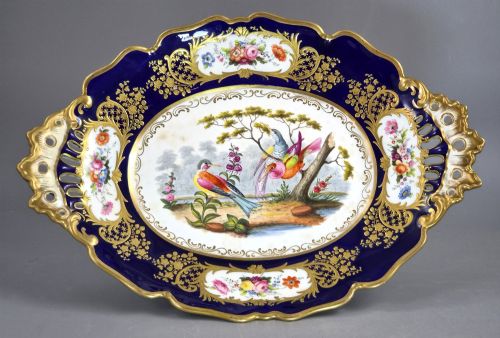

Blue Ceramic Dish
A blue ceramic dish brings centuries of global trade and domestic service into a room through deep cobalt painting.
Blue Ceramic Dish
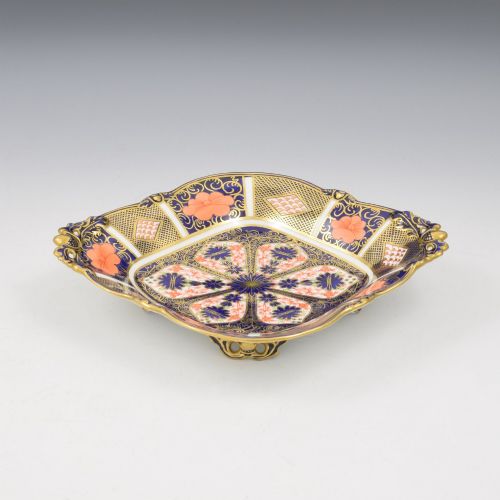
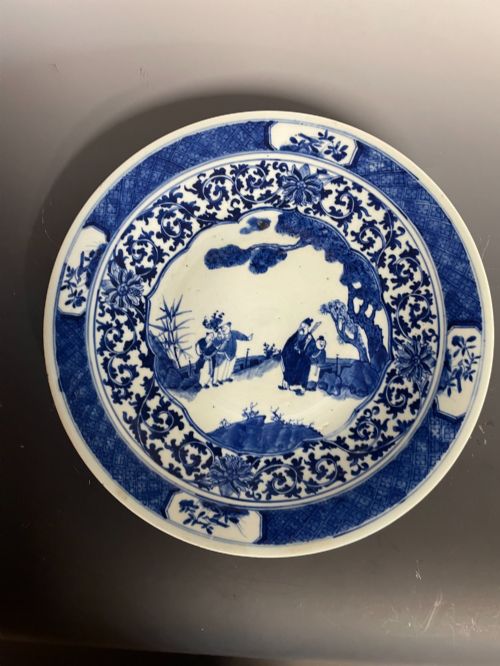
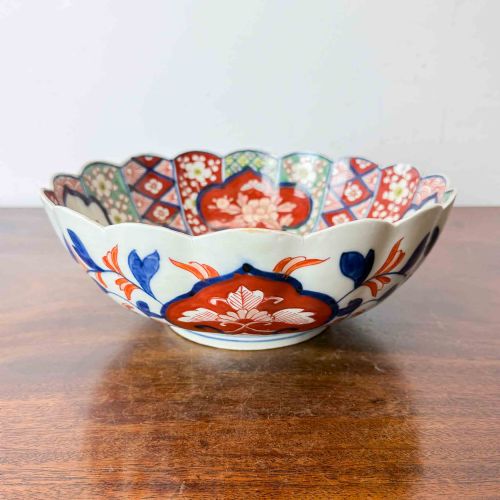
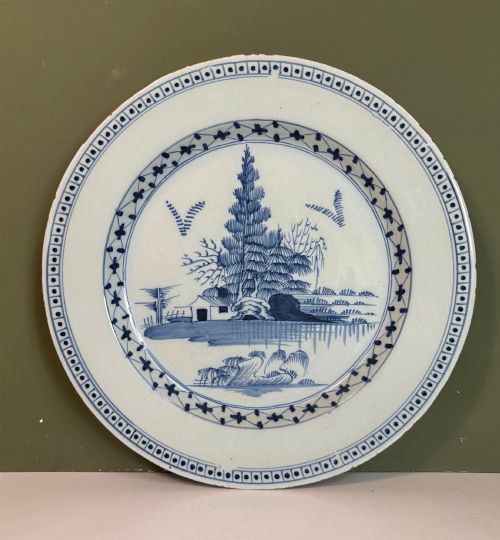
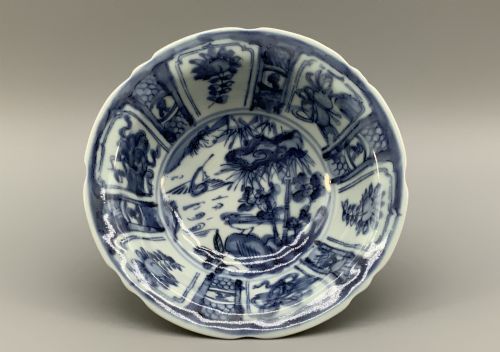
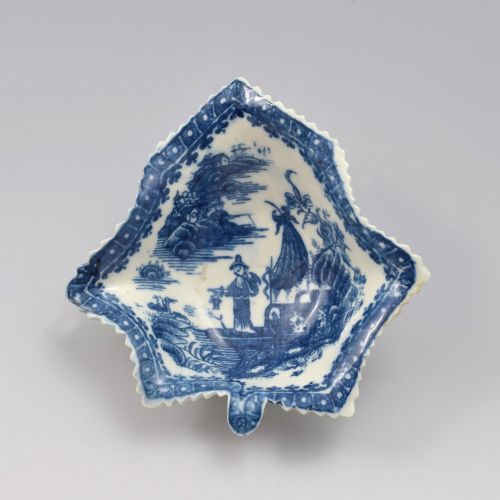
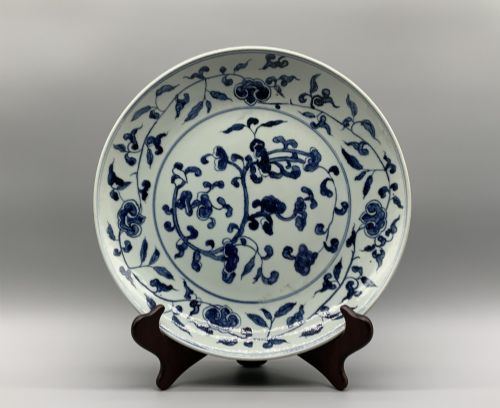
A blue ceramic dish encompasses chargers, plates, platters, and serving bowls spanning from the seventeenth century through to the early twentieth century. These domestic and display items originate from English factories, continental European kilns, and East Asian workshops. The most frequent examples include eighteenth-century Delft chargers and nineteenth-century Japanese Imari plates.
Buyers look for these pieces to add hand-painted cobalt detail, scalloped edges, and regional forms to a tabletop or wall display. The selection ranges from round serving vessels to lobed bowls and square dishes produced during the Kangxi and Meiji periods. Each object reflects the prevailing decorative tastes of its era, from Dutch Baroque interpretations to Chinese floral motifs.
Materials and production methods
Makers utilised earthenware, soft-paste porcelain, and hard-paste porcelain, finished with tin glaze, clear glaze, or enamel. Cobalt underglaze provided the primary blue pigment across both European factories and Asian kilns before firing at high temperatures. Certain pieces received supplementary gold leaf or polychrome overglaze painting after the initial kiln stage.
Moulding and throwing techniques created the underlying forms, including lobed bowls, scalloped edges, and octagonal plates. English and European potteries such as Derby, Worcester, and Spode refined porcelain pastes to achieve thinner walled dishes. Japanese Arita and Chinese export kilns relied on skilled brushwork to apply dense cobalt designs onto the clay surface.
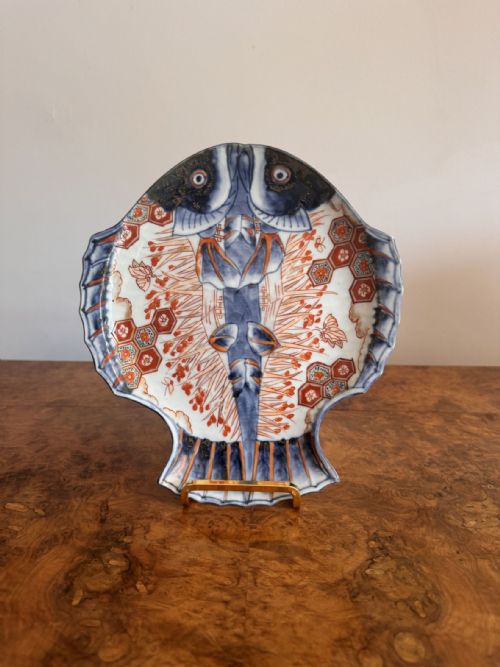
Certain nineteenth-century Japanese plates take the literal form of swimming fish, bringing a playful aquatic presence to the table.
Factors of quality and execution
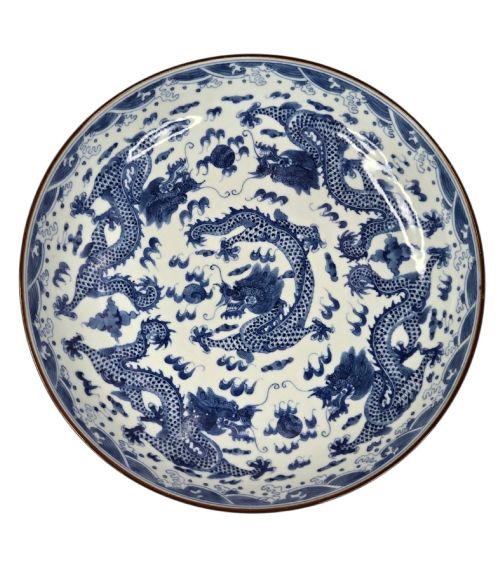
Quality rests in the precision of the hand-painted brushwork and the clarity of the cobalt underglaze against the white ground. Superior pieces display crisp definition in complex motifs like dragons, birds, or floral sprays without blurring or bleeding into the glaze. The weight of the porcelain or earthenware and the symmetry of thrown or moulded forms also distinguish finer examples.
The refinement of the paste and the smoothness of the glaze surface separate standard domestic wares from high-status cabinet pieces. Workshops with master painters achieved greater depth of tone within the blue pigment and cleaner execution along scalloped or lobed rims.
George Jones·Royal Worcester·Coalport·Spode·Davenport·Meissen·Sèvres·Derby
The Blue Ceramic Dish Glossary
- Cobalt Underglaze
- A blue pigment applied to pottery before glazing and firing, which reacts with high heat to produce a permanent deep blue tone. This technique protects the painted design beneath a glassy protective layer.
- Tin Glaze
- An opaque white glaze containing tin oxide used primarily on earthenware surfaces to create a smooth background for painting. It forms the distinctive finish found on traditional Delftware.
- Soft-paste Porcelain
- A ceramic composition made from glass frit and white clay fired at lower temperatures than hard-paste porcelain. English factories utilised this material extensively during the eighteenth century.
- Imari
- A style of Japanese porcelain decorated in underglaze blue, iron red, and gold, originating in Arita. The aesthetic gained immense popularity in Europe during the seventeenth and eighteenth centuries.
- Charger
- A large decorative plate utilised historically for ceremonial dining or as a centrepiece on a wall or sideboard. These wide vessels showcase expansive painted scenes or geometric borders.
Blue Ceramic Dish: Frequently Asked Questions
What is Japanese Imari porcelain?
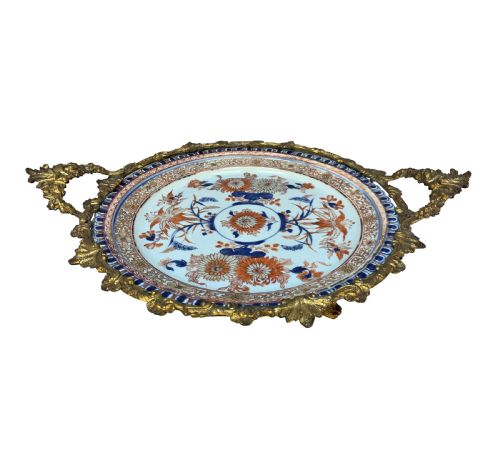
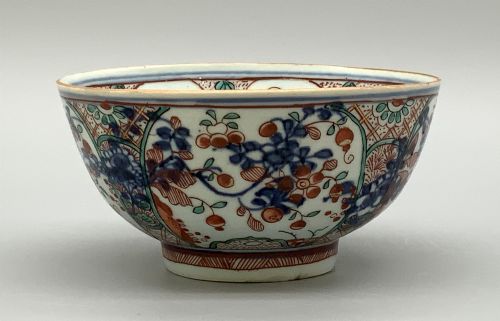
Japanese Imari porcelain refers to wares produced in Arita and exported through the port of Imari, characterised by a palette of underglaze blue, iron red, and gold leaf. These pieces date across the seventeenth, eighteenth, and nineteenth centuries, featuring dense panels of flowers, birds, and brocade patterns.
The heavy porcelain body and rich contrasting colours made these dishes prized possessions in European stately homes. Later Meiji period examples continued these traditional patterns with renewed technical precision.
Can I use antique blue ceramic dishes for serving food?
While these dishes served practical functions originally, most collectors limit antique porcelain and earthenware to display purposes. Modern detergents and thermal shock can damage fragile glazes and historical ceramic bodies.
Hand washing in lukewarm water without harsh abrasives is recommended for any piece chosen for occasional dining use. Inspecting the glaze for old hairline cracks ensures the structural integrity remains stable.
How do I distinguish between soft-paste and hard-paste porcelain?
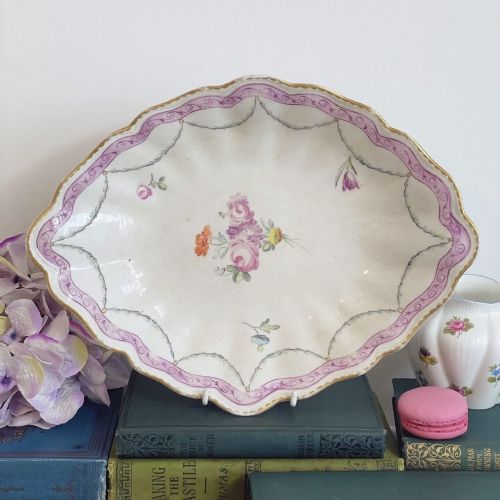
Soft-paste porcelain, common in eighteenth-century English factories, has a warmer, slightly softer appearance and can sometimes show minor glaze pooling. Hard-paste porcelain, produced in Asia and later across European factories, feels denser and resists scratching from steel.
Looking at the footrim where the glaze is absent reveals the texture of the underlying ceramic body. Soft-paste pieces often display a creamy translucency when held to a strong light source.