



Nineteenth Century Pearlware
Nineteenth century pearlware represents the refined earthenware of the Georgian and Regency periods, prized for its subtle blue-tinted glaze and transfer-printed or painted decoration.
Nineteenth Century Pearlware
Nineteenth century pearlware encompasses a diverse array of domestic and decorative objects produced during the Georgian and Regency eras, reflecting the immense skill of English potteries. Collectors encounter utilitarian vessels alongside ornamental figures, tabletop accessories, and tableware.
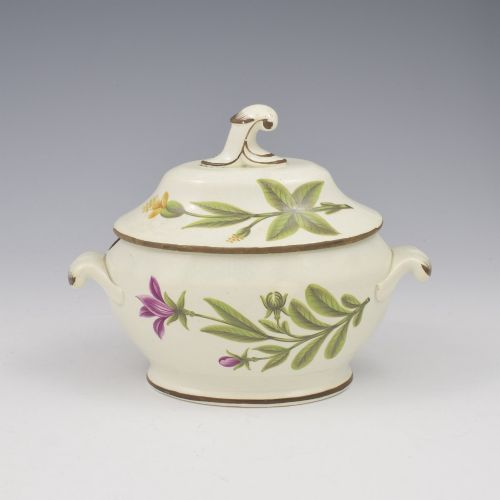
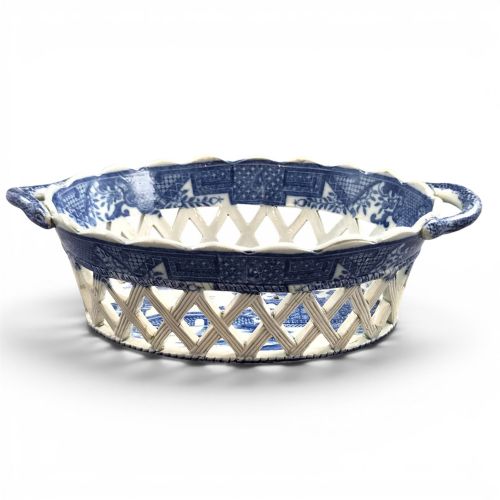
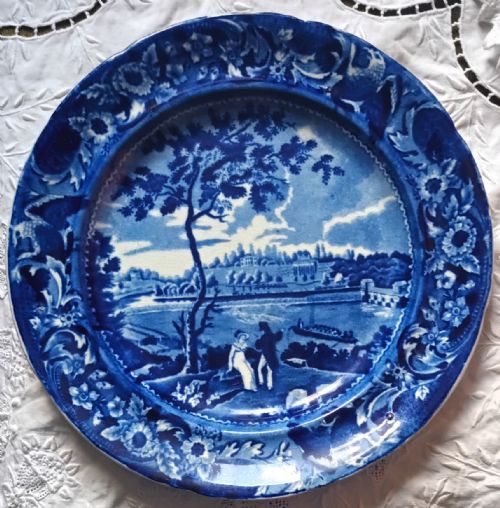
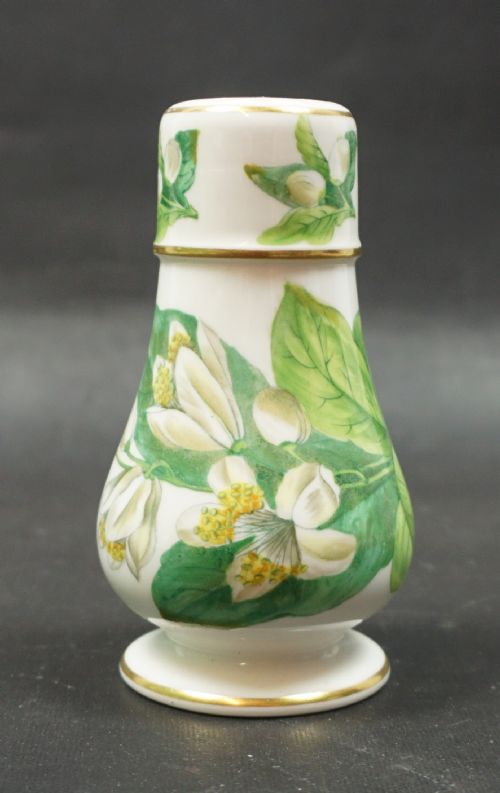
The objects listed on this page range from botanical sauce tureens and reticulated chestnut baskets to blue and white transfer-printed plates and characterful figural groups. Blue and white transfer printing dominates the plates and dishes, often depicting classical ruins, topographical scenes, or topographical views.
Vessels such as frog mugs, pounce pots, and lustre jugs illustrate the practical and decorative range of the ceramic body. Many pieces bridge the transition from the eighteenth century into the nineteenth, carrying forward refined potting traditions.
Materials and production methods
Makers produced nineteenth century pearlware using a refined white earthenware body containing a small amount of cobalt in the glaze to counteract the natural cream colour of the fired clay. This created a pale bluish tint that pooled pleasingly in crevices and provided a clean ground for decoration.
Potters decorated these wares using underglaze blue transfer printing, hand-painting in enamels, and occasionally applied gold leaf or lustre pigments. Transfer printing involved pulling an engraved copperplate impression onto tissue paper and transferring it onto the bisque or fired ceramic surface before glazing and firing.
Listings feature eighteenth and nineteenth century periods, utilising earthenware, pearlware, glaze, enamel, and gold leaf across diverse decorative forms.
Distinctions in quality
Quality in nineteenth century pearlware rests upon the crispness of the transfer print, the delicacy of the hand-painting, and the evenness of the pearl glaze. Superior examples exhibit sharp, clear lines without blurring or smudging in the printed transfer scenes.
The ambition of the form also dictates standing, with reticulated baskets, moulded tureens, and finely modelled figures demonstrating a higher level of ceramic artistry than standard utilitarian plates. Potteries known for exceptional throwing and moulding achieved cleaner profiles and more harmonious proportions.
Swansea·Spode·Stubbs·William Adams·Thomas Lakin·John Rogers & Son
The Nineteenth Century Pearlware Glossary
- Pearlware
- A refined white earthenware developed by Josiah Wedgwood and adopted by other potteries, featuring a thin glaze tinted with cobalt to resemble Chinese porcelain.
- Transfer printing
- A decoration technique where an engraved copperplate transfers a design onto tissue paper, which is then pressed onto the ceramic body.
- Lustre
- A metallic glaze application producing a reflective, iridescent surface finish often seen in copper, silver, or purple tones on early ceramics.
- Pounce pot
- A small desk accessory perforated on top for sprinkling sand or gum sandarac over wet ink to blot and dry writing.
- Reticulated
- Openwork decoration formed by cutting or piercing a pattern into the clay before firing, frequently seen on baskets and dessert ware.
Nineteenth Century Pearlware: Frequently Asked Questions
How do I identify pearlware?
Pearlware is distinguished by its fine earthenware body and the characteristic bluish pooling of the glaze, particularly visible around foot rims and handles. It sits chronologically between creamware and later ironstone ceramics.
Makers achieved this pale blue hue by adding a small amount of cobalt to the lead glaze, which made the underlying clay body appear whiter and closer to Chinese porcelain.
What is transfer printing?
Transfer printing is a method where an engraved copperplate is inked and stamped onto tissue paper, which is then applied to the ceramic surface to transfer the design. This allowed potteries to produce intricate pictorial scenes with remarkable consistency.
The technique revolutionised ceramic decoration during the Georgian period, enabling mass production of detailed topographical and classical patterns.
Were these pieces used daily?
Many nineteenth century pearlware items, such as plates, tureens, and jugs, served practical functions in dining and domestic routines. Others, including figurines and decorative baskets, were primarily ornamental.
Utilitarian wares experienced regular handling, which explains the varying degrees of wear found on domestic service items from this era.
How should I care for pearlware?
Pearlware should be washed gently by hand in warm water using mild soap, avoiding dishwashers and harsh abrasive scourers. The delicate glaze and any overglaze enamel or lustre decorations require careful handling.
Displaying pieces away from direct sunlight and extreme temperature fluctuations helps preserve the integrity of the antique ceramic body and glaze.