
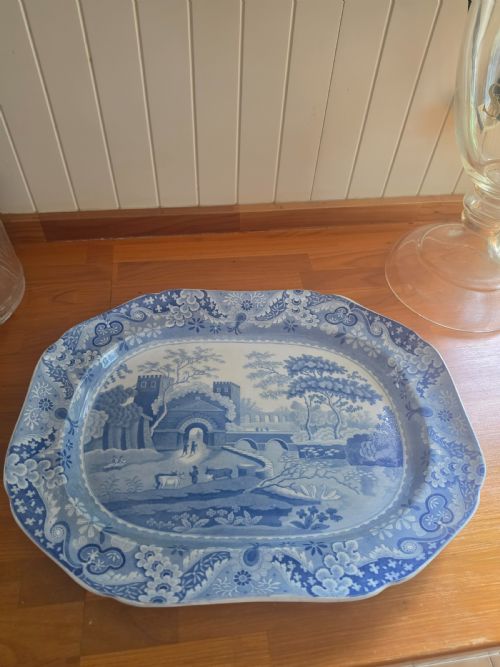
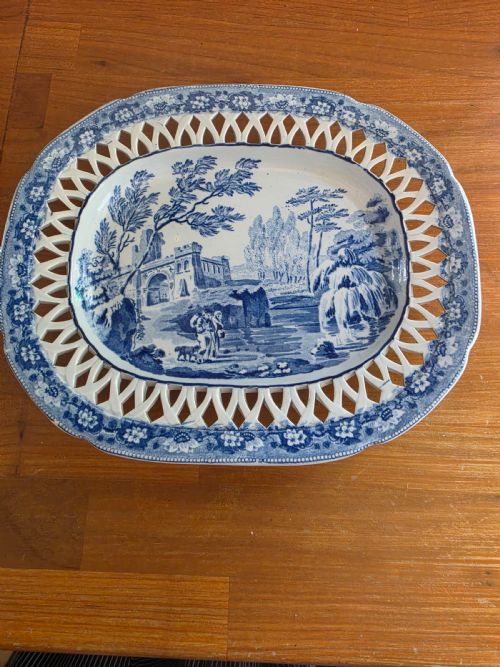
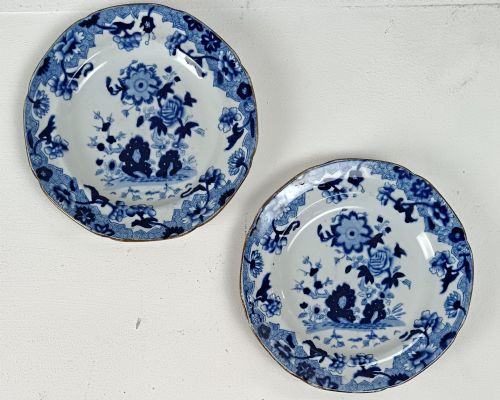

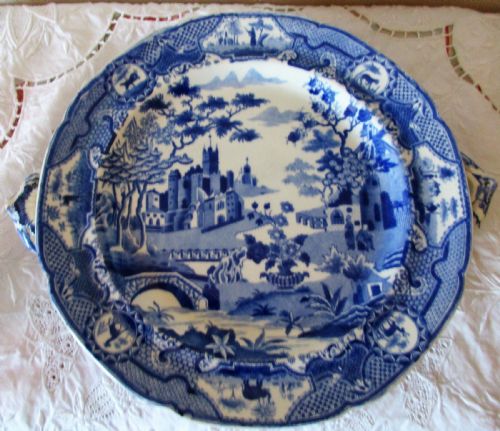
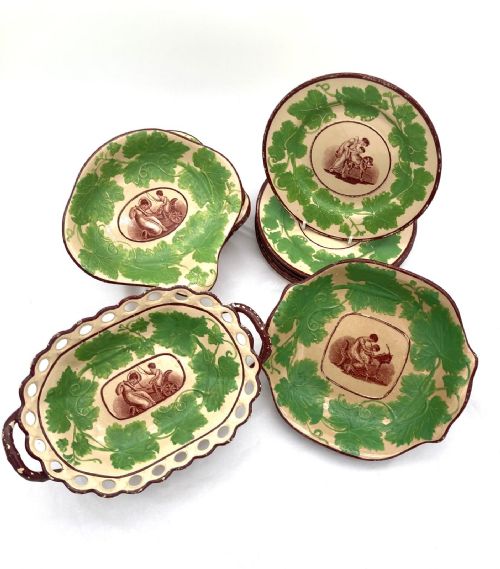
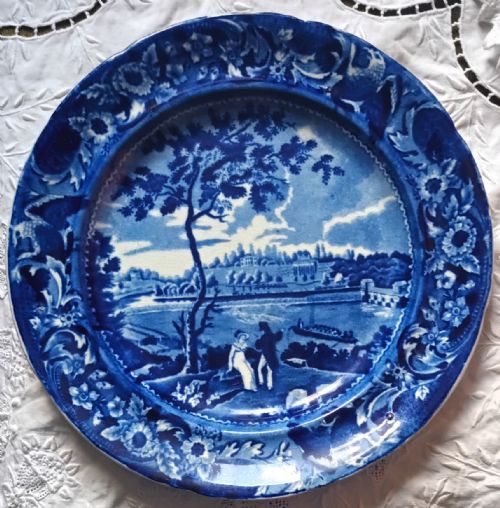
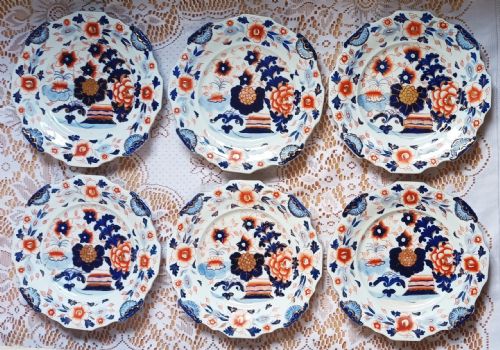


Georgian Transferware Plate
A georgian transferware plate brings early nineteenth-century British blue and white printed pottery directly to the table.
What They Are
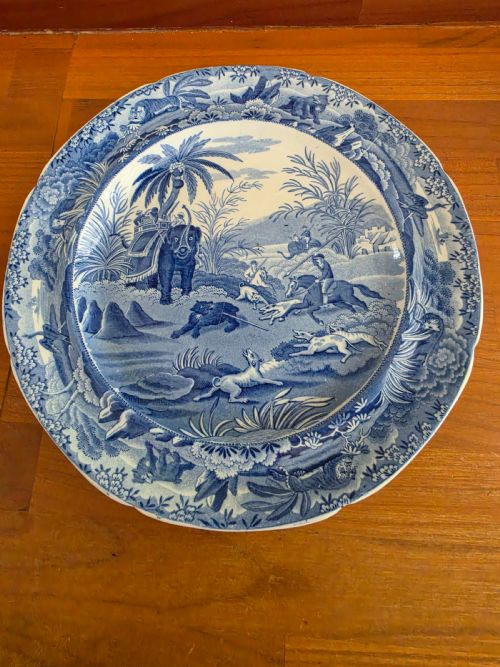
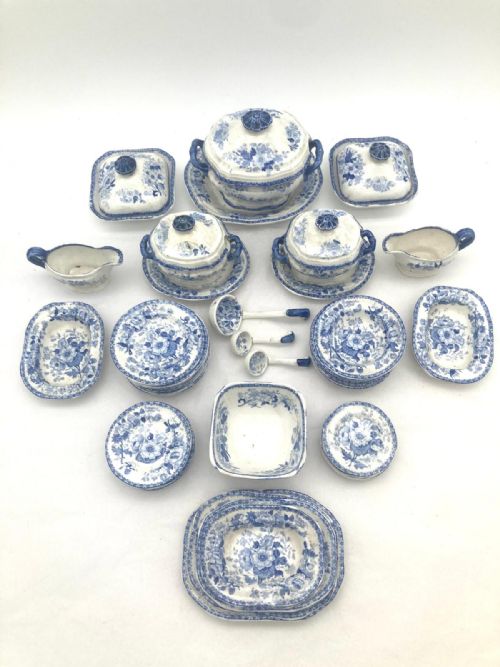
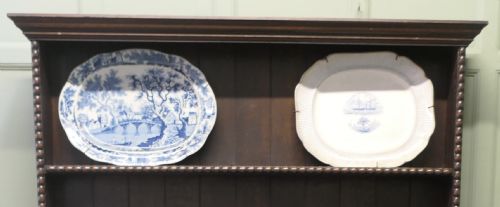
When searching for a georgian transferware plate, collectors look at earthenware and pearlware ceramic tableware produced during the nineteenth century in English potteries. These pieces take the form of decorative plates, tea plates, and larger dishes featuring pictorial scenes transferred from engraved copper plates.
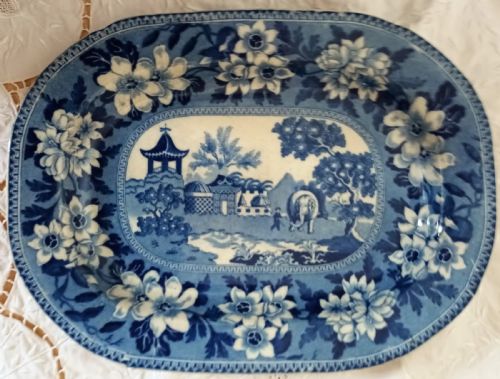
The versions most commonly met on this page are antique English blue and white examples depicting distinct thematic subjects, such as figural narratives, animals, or country houses. Each piece displays the characteristic aesthetic of the Georgian era through carefully organised borders and central imagery rendered in rich blue hues.
How They Were Made
Potters formed these items using earthenware and pearlware ceramic bodies, which were then fired to create a stable base for decoration. Artisans engraved copper plates with detailed designs, inked them, and transferred the pattern onto tissue paper before applying it to the biscuit ceramic surface.
Following the transfer process, the plates were coated in a clear glaze and fired again to seal the printed decoration beneath the glossy surface. This method allowed Staffordshire workshops to produce uniform pictorial designs efficiently while maintaining depth in the blue tones.
Retail Price Guide 2026
Typical UK retail prices for georgian transferware plate, calculated from the Sellingantiques database of over a million retail prices indexed since 2003. This retail price guide relies exclusively on Sellingantiques data; no external sources or auction records are used, so the figures do not describe the wider market.
What Varies in Quality
The clarity and registration of the printed transfer separate the finer examples from simpler production pieces. Sharp lines in the engraving and an even application of the blue pigment indicate superior craftsmanship in the Staffordshire potteries.
The quality of the underlying ceramic body, particularly the smoothness of the pearlware or earthenware and the evenness of the glaze, distinguishes the work of established makers from standard commercial output.
John Rogers & Son·Spode
The Georgian Transferware Plate Glossary
- Transferware
- Earthenware or pearlware pottery decorated by transferring a printed design from an engraved copper plate onto the ceramic surface using tissue paper. This technique enabled intricate pictorial scenes to be replicated consistently across tableware.
- Pearlware
- A refined type of earthenware developed in the late eighteenth century featuring a subtle blue-tinted glaze that pooled in recesses to create a whiter appearance than creamware. It serves as a primary ceramic body for Georgian blue and white plates.
- Earthenware
- A porous ceramic fired at a lower temperature than stoneware or porcelain, requiring a glaze to render it waterproof. Most nineteenth-century transfer-printed plates utilise this traditional pottery body.
- Staffordshire
- The historic centre of the English pottery industry, where numerous factories and makers produced the bulk of transferware plates. The region's access to local clay and coal drove its dominance in ceramic manufacturing.
Frequently Asked Questions
What is a georgian transferware plate?
A georgian transferware plate is an antique ceramic dish decorated with a monochrome blue printed design applied from an engraved copper plate onto earthenware or pearlware.
These pieces were produced in nineteenth-century English potteries and typically feature pictorial subjects ranging from narrative scenes to topographical views.
How were the blue patterns applied?
The patterns were created by engraving a copper plate, inking it, and pulling an impression onto special tissue paper. This printed paper was then pressed onto the ceramic body to transfer the design before glazing and firing.
This method allowed workshops to achieve remarkable detail in scenes like animal studies or estate views.
Can I use them for dining?
While these items were originally made as functional tableware or tea plates, their age and ceramic composition make them better suited for display rather than daily use.
Hand-washing and careful handling help preserve the nineteenth-century glaze and the delicate earthenware bodies.
How do I identify the period?
Identification relies on examining the ceramic body, particularly the characteristics of early nineteenth-century pearlware and earthenware, alongside the style of the blue and white transfer print.
Specific subjects, borders, and maker attributions found in the pottery also help narrow down the date of manufacture.