


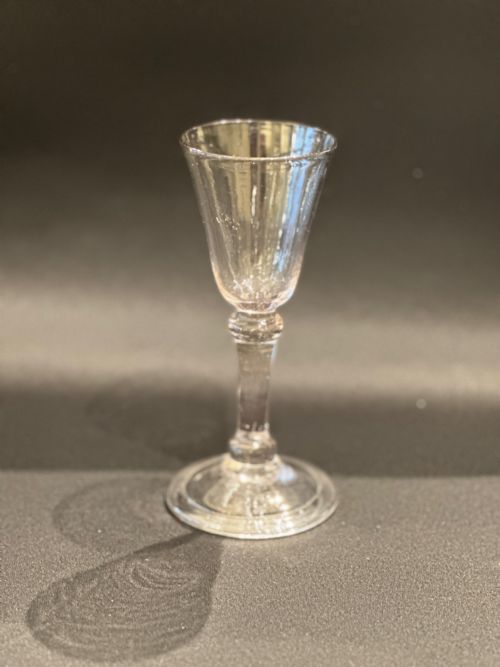
Baluster Wine Glass
These robust lead glass drinking vessels offer a tactile heft and period character that collectors pursue for historic drinking tables.
Baluster Wine Glass
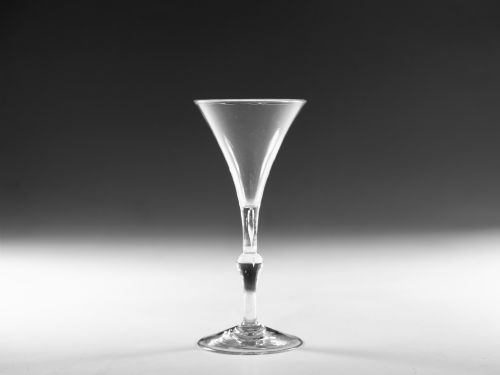
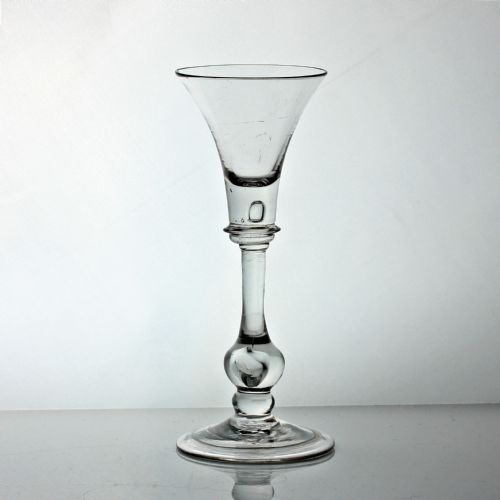
A baluster wine glass is a drinking vessel defined by its sturdy, knopped stem design, originating primarily in the Georgian and 18th century periods. These drinking glasses and stemware pieces range from heavy early examples to slender light baluster and balustroid variations.
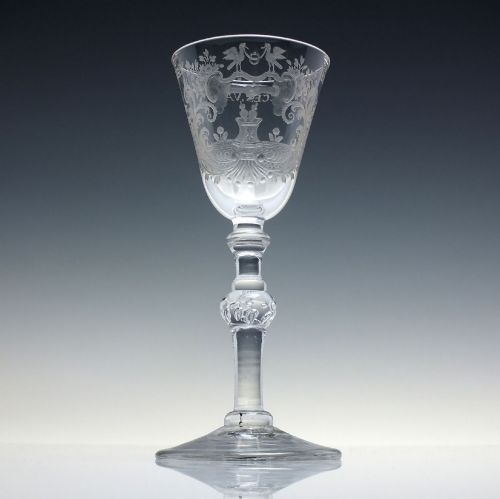
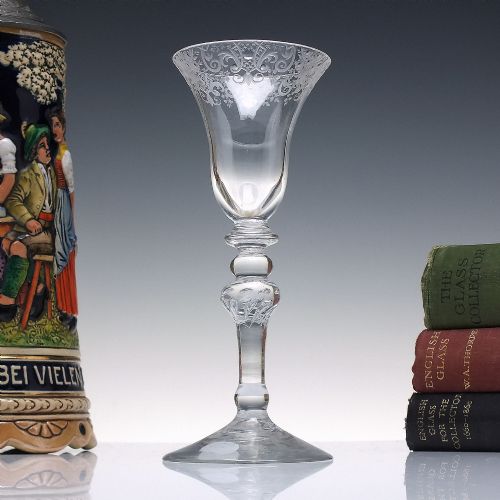
The version most commonly encountered on this page is the 18th century Georgian wine glass, often featuring engraved bowls and characteristic stems from around 1735 to 1750. Pieces also span wider eras, including Queen Anne, George II, and occasional Victorian or 17th century Bohemian examples.
Forms extend beyond standard wine glasses to include large goblets, cordial glasses, ratafia glasses, and rummers with baluster stems. These objects demonstrate diverse bowl shapes and foot formations, such as domed feet and flared rims, reflecting the shifts in drinking culture across decades.
How they were made
Makers utilised lead glass, lead crystal, flint glass, and clear glass to achieve the weight, clarity, and resonance required for these drinking vessels. Blown glass techniques allowed artisans to shape the bowl and foot while working molten metal at the furnace.
Stems were formed by drawing out the glass or applying separate knops, collars, and baluster components to the shaft. Engraved decoration on the bowls was often added later by specialists using wheel-cutting techniques to depict floral motifs, portraits, or commemorative inscriptions.
Available forms include heavy goblets, cordial vessels, and stemware with distinct knopped and drop-knop baluster stems.
What varies in quality
Quality rests in the proportion and balance of the stem against the bowl, where a well-distributed knop structure creates a satisfying visual and physical weight in the hand. The choice of heavy lead crystal or clear lead glass provides superior light refraction compared to simpler glass formulations.
The Baluster Wine Glass Glossary
- Baluster
- A thickened, architectural stem form resembling a small pillar, featuring rounded knops and swelling profiles.
- Balustroid
- A transitional or lighter stem style that borrows elements of the heavier baluster form while maintaining a slimmer silhouette.
- Knop
- A knob or swelling expansion on the stem of a glass, often used structurally and decoratively to vary the profile.
- Teardrop
- An elongated air bubble intentionally trapped inside the stem or foot of a glass during manufacturing.
- Ratafia glass
- A tall, slender drinking vessel designed for serving sweet cordial or fruit-infused liqueurs.
Baluster Wine Glass: Frequently Asked Questions
What is a baluster wine glass?
A baluster wine glass is a historic drinking vessel characterised by a thick, heavy stem featuring one or more prominent knops or baluster formations. These pieces date primarily from the 17th and 18th centuries and were made using lead glass or flint glass.
Collectors prize them for their substantial weight in the hand and the variety of stem configurations produced by period glassmakers. The form evolved from heavier early styles into lighter, more slender variations over the course of the Georgian era.
How were these glasses used?
These vessels served alcoholic beverages such as wine, cordials, and strong beers at the dining and tavern tables of the 18th century. Their robust construction suited the social drinking customs of the period, where toasts were frequent and glasses were set down firmly.
Larger goblet versions accommodated communal drinking or heavier ales, while specialised shapes like ratafia glasses held sweet liqueurs. They functioned as both utilitarian dining equipment and decorative items displaying household status.
How do I date an 18th century glass?
Dating relies on observing changes in metal composition, stem profiles, bowl shapes, and foot construction. Early 18th century pieces typically feature heavier lead glass, broader baluster stems, and folded feet.
By mid-century, styles shifted towards lighter baluster forms, slender stems with air teardrops, and engraved decoration. Comparing foot diameters, pontil marks, and manufacturing weight helps establish the approximate decade of production.