

Clear Flint Glass Goblet
These clear flint glass goblet examples bring eighteenth and nineteenth century drinking vessels into modern homes.
Clear Flint Glass Goblet
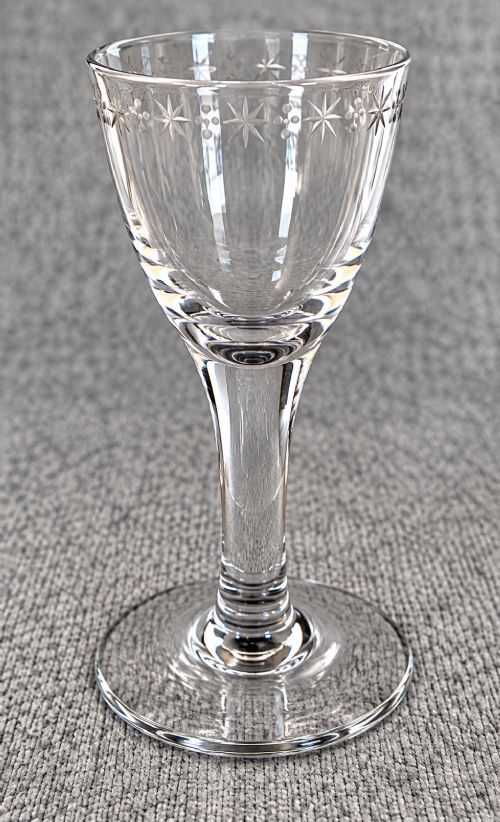
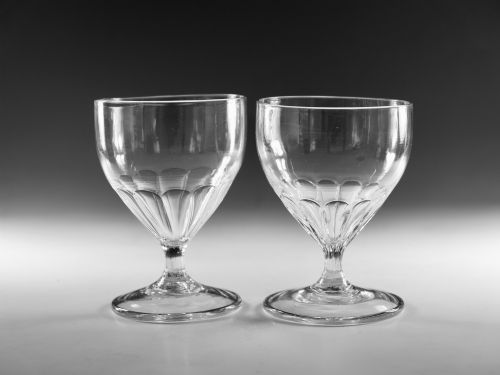
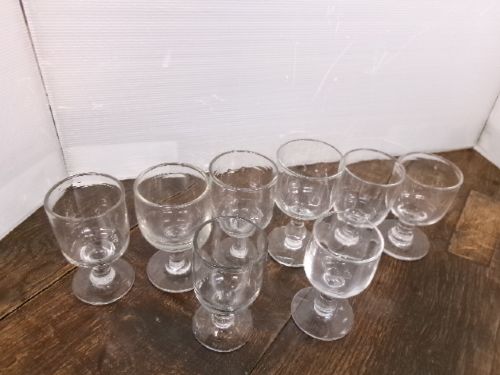
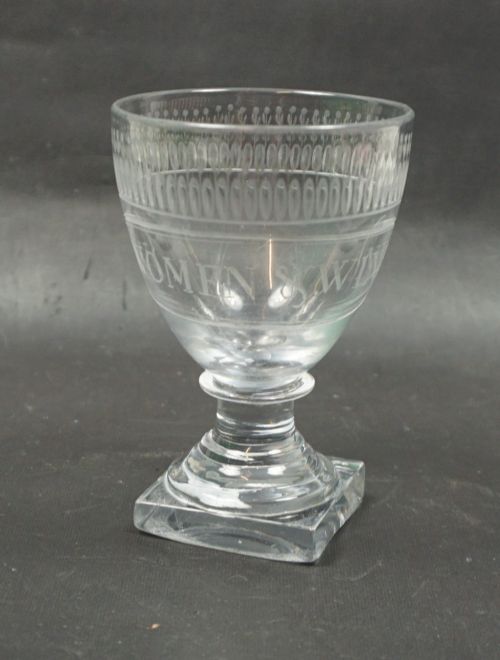
A clear flint glass goblet represents the drinking vessels of the Georgian and Victorian eras, spanning periods from seventeen hundred to eighteen sixty. These items take forms such as wine glasses, ale glasses, dram glasses, and rummers.
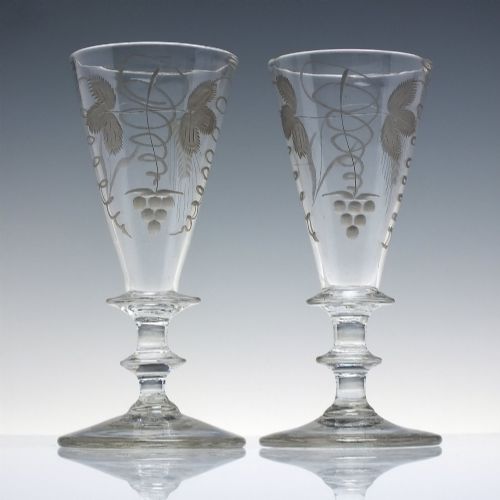
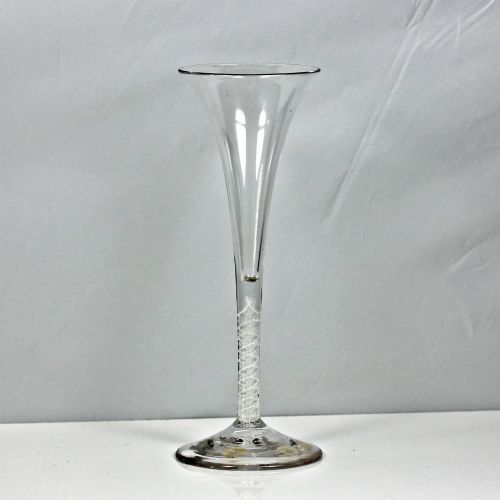
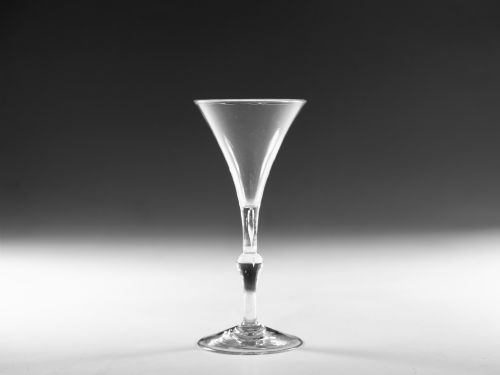
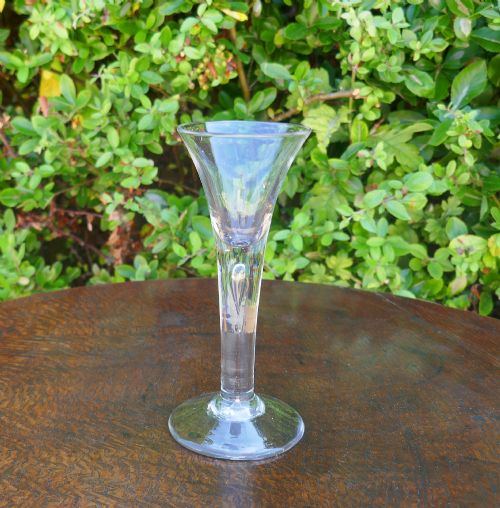
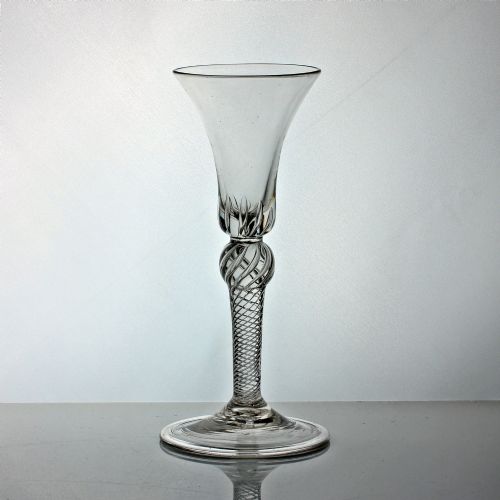
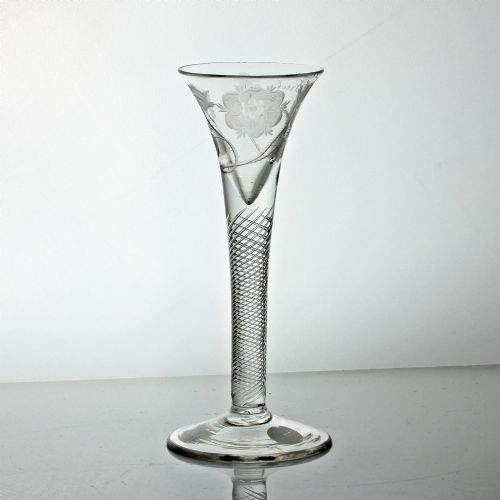
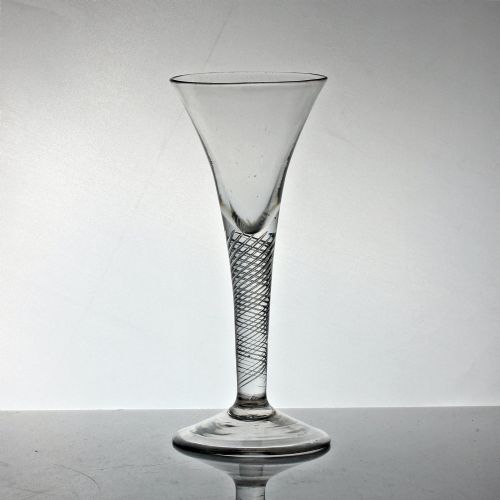
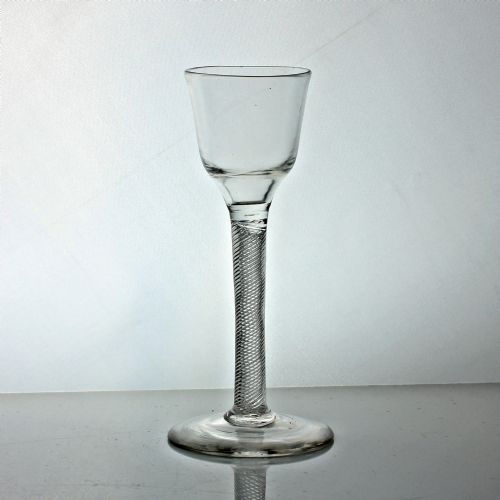
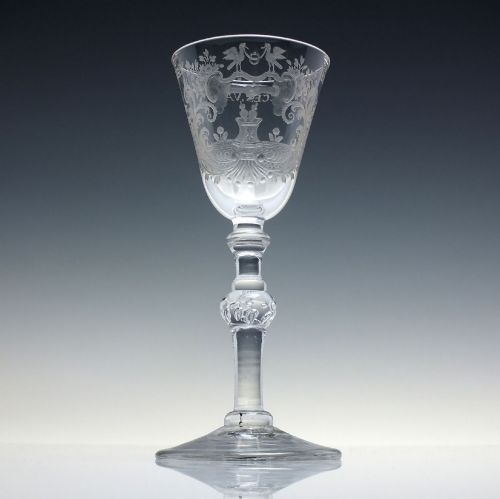
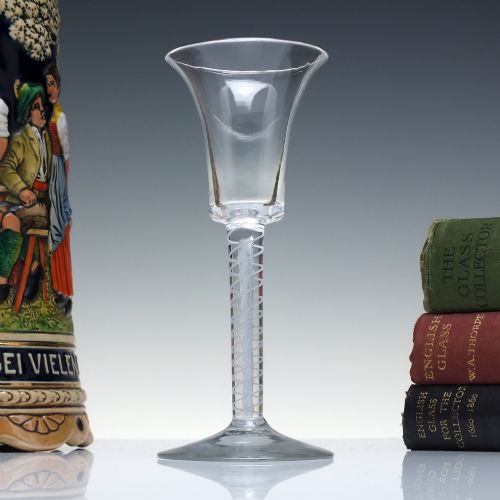
The pieces appearing on this page originate mostly from the eighteenth century and the Georgian period, featuring various bowl shapes like trumpet, bell, ogee, and pan top. Buyers meet stems formed as plain, baluster, air twist, opaque twist, and mixed twist varieties.
What varies in quality
The distinction between ordinary and superior vessels rests on the complexity of the stem formation and the crispness of the wheel engraving. Elaborate twists and baluster profiles demand higher skill than plain stems.
The Clear Flint Glass Goblet Glossary
- Flint glass
- A dense, brilliant glass containing lead oxide that provides high refractive power. This material allows for sharp optical clarity and resonant ringing when struck.
- Air twist
- A stem formation containing elongated internal air bubbles drawn into spirals during manufacture. These threads create delicate optical patterns inside the glass rod.
- Opaque twist
- A stem design featuring white or coloured enamel glass threads enclosed within clear flint glass. Makers twisted these internal rods into single or double series strands.
- Rummer
- A large, heavy drinking glass popular in the late eighteenth and nineteenth centuries. These vessels often sit upon short stems with ovoid or bucket bowls.
- Baluster
- A sturdy, swelling stem form derived from architectural pillars, characteristic of early eighteenth-century English drinking vessels. These stems often feature knops and swelling nodes.
Clear Flint Glass Goblet: Frequently Asked Questions
How do I date a glass goblet?
Dating relies on observing bowl forms, stem construction methods, and foot types alongside known historical periods. Eighteenth-century pieces often show baluster or twist stems, whereas nineteenth-century examples tend toward heavier rummers and square bases.
Material composition and engraving styles also offer clues. Georgian glass typically exhibits different weight and lead content compared to Victorian equivalents.
What is an air twist stem?
An air twist stem contains spiral threads of trapped air running through the transparent glass rod. Makers created these effects by drawing and twisting bubbles formed within the molten metal.
This technique requires precise temperature control during shaping. The resulting internal threads catch the light differently depending on the angle.
Can I use antique goblets for drinking?
These vessels were originally made for consuming wine, ale, and beer during Georgian and Victorian times. Hand washing in lukewarm water protects the historic glass from thermal shock.
Harsh detergents and dishwashers should be avoided to preserve the surface polish and any delicate wheel engraving. Careful handling prevents chips on the rims and thin feet.
What distinguishes an ale glass?
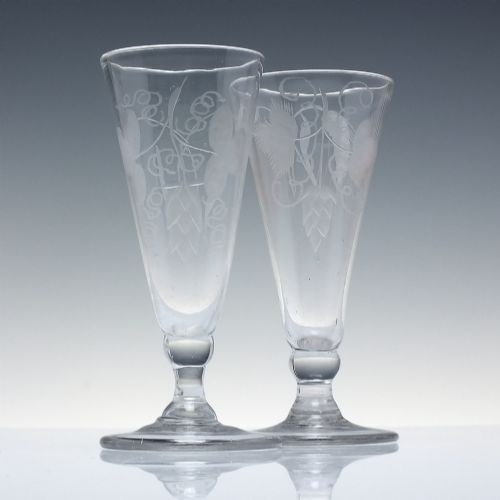
Ale glasses generally feature taller, narrower bowls suited to carbonated beverages of the period. Engravings on these pieces frequently incorporate hop and barley motifs.
Stem styles on ale glasses vary from plain stems to opaque twists and composite forms. They provide a lighter alternative to the heavier rummers found in later periods.