

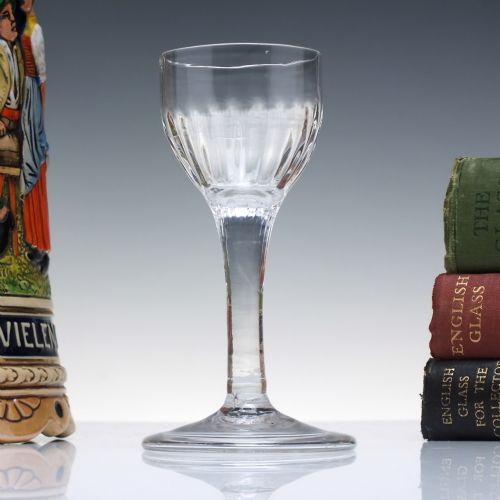


Folded Foot Glass
Folded foot glass pieces bring tactile weight and historical substance to a table, offering collectors tangible links to eighteenth-century tavern and dining traditions.
Folded Foot Glass
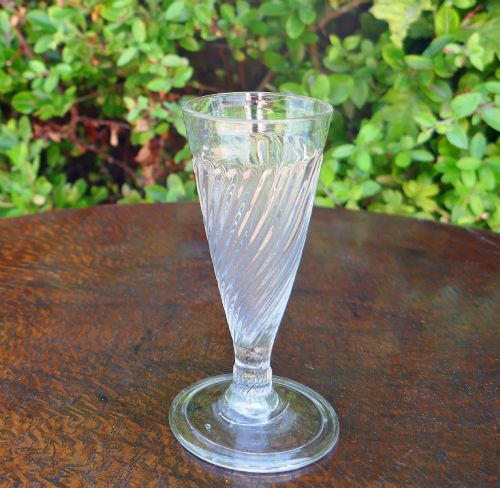
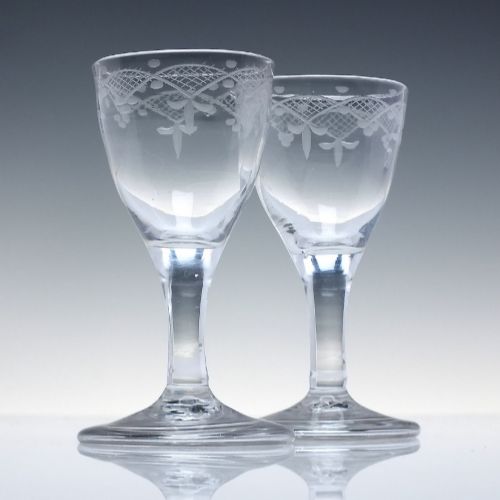
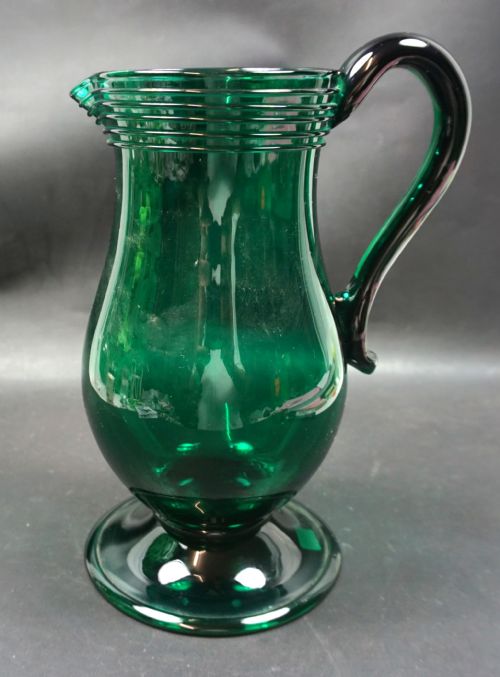
A folded foot glass is a piece of drinking vessel or table glassware distinguished by a rim folded back underneath for extra stability and strength. The selections seen here span the eighteenth century and the Georgian period, dominated by wine glasses, ale glasses, dram glasses, and cordials alongside larger serving forms such as tazzas and jugs.
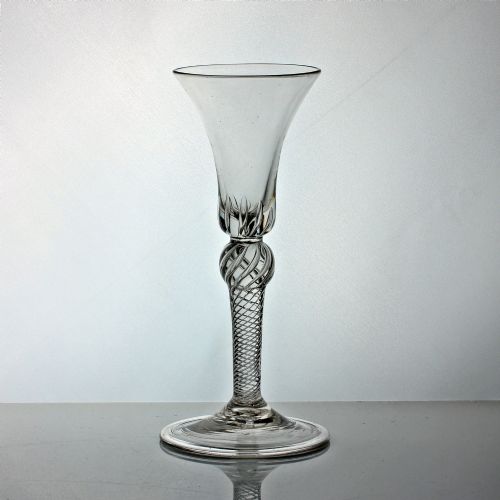
Most examples originate from English workshops operating between 1700 and 1750, carrying forms like plain stems, air twists, and balustroids. Alongside these drinking vessels, buyers will encounter occasional nineteenth-century jugs and twentieth-century candlesticks bearing the same characteristic folded rim beneath their bases.
The category ranges from simple domestic dram glasses to elaborate engraved wine glasses featuring baluster stems and complex air tears. Collectors hunt these pieces for their authentic handling properties and the survival of the folded rim, which indicates earlier manufacturing methods.
What varies in quality
Quality rests upon the symmetry of the fold, the clarity of the metal, and the dexterity displayed in forming the stem. Superior pieces exhibit an even distribution of lead glass without heavy clouding, alongside well-proportioned bowls that balance harmoniously against the spreading foot.
The crispness of optical moulding, such as wrythen ribs or fluting, distinguishes finer examples from heavier, simpler tavern forms. Engraving depth and precision further separate standard dram glasses from exhibition-grade wine and ale vessels.
Folded Foot Glass Retail Price Guide 2026
Typical asking prices for folded foot glass among the pieces listed under this phrase on Sellingantiques today, from the lower quarter to the upper quarter. They describe what is for sale here now, not the wider market.
An eighteenth-century drinker lifting an ale glass with a folded foot held history literally double-rimmed at the bottom.
The Folded Foot Glass Glossary
- Folded foot
- A glass base where the rim is turned under to create a thickened, rounded edge that provides additional weight and strength. This technique was particularly common in the eighteenth century.
- Air twist
- A stem formation containing elongated spiral air bubbles trapped inside the glass during manufacture. Makers created these by drawing out air-teared metal while twisting the hot stem.
- Tazza
- An open shallow vessel or shallow bowl raised on a central stem and foot. They served fruit or sweetmeats at formal Georgian tables.
- Balustroid
- A stem style intermediate between a heavy baluster and a plain stem, often featuring knops above a tapering shaft. It is frequently encountered on mid-eighteenth-century drinking glasses.
- Wrythen
- A decorative spiral moulding pattern impressed into the body or bowl of glassware. The effect is achieved by twisting the glass while it is semi-molten.
Folded Foot Glass: Frequently Asked Questions
What is a folded foot glass?
A folded foot glass is a drinking vessel or serving piece featuring a base where the outer rim is doubled back underneath itself. This extra layer of glass adds physical weight to the base and prevents chipping along the edge.
Most surviving examples date from the Georgian era and the eighteenth century, encompassing wine glasses, ale glasses, and cordials.
Why did makers fold the feet?
Glassmakers folded the feet to reinforce the most vulnerable part of the drinking vessel against daily wear and tavern use. The folded rim adds stability to tall stems and heavy bowls.
Over time, changing fashions and improving glass chemistry made this extra reinforcement less necessary for everyday production.
How do I date an eighteenth-century glass?
Dating relies on observing the combination of bowl shape, stem construction, and foot formation. Early pieces often feature heavy balustroid stems, basal bubbles, and folded feet.
Later eighteenth-century examples introduce facet cutting, opaque twists, and lighter drawn trumpets while retaining the folded rim on specific ale and wine forms.
Can I use these glasses today?
These items can be used for special occasions, provided they receive careful hand washing in lukewarm water. Antique lead glass is softer than modern glass and sensitive to thermal shock.
Many collectors prefer to display them or handle them gently to preserve the historic surface and rim integrity.