







Lead Glass Dram Glass
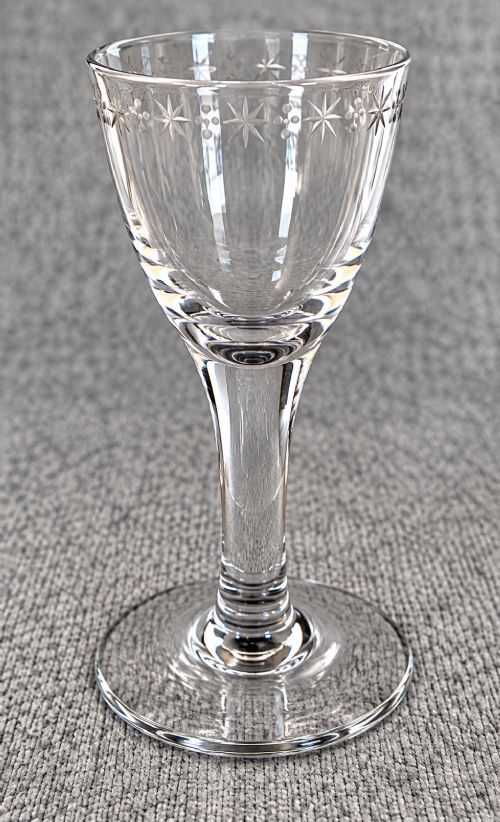
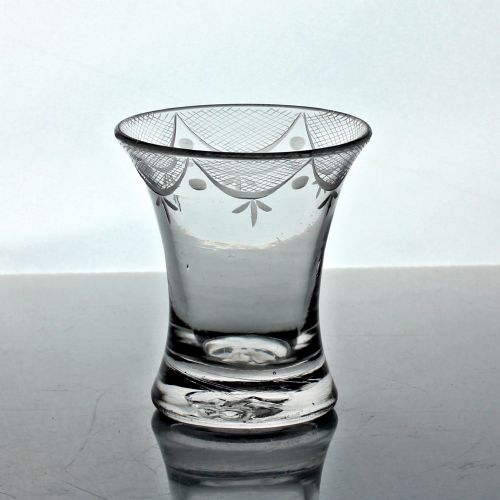
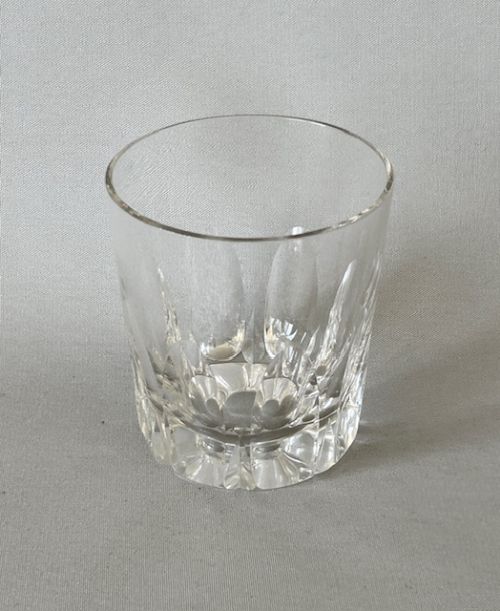
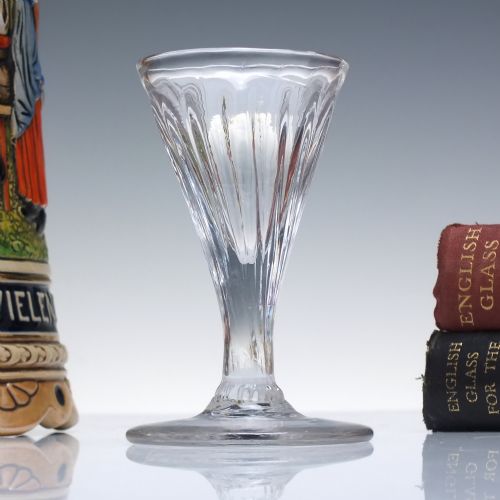
These small lead glass dram glass pieces offer a direct connection to Georgian drinking customs through their heavy metal and deep bowl forms.
Lead Glass Dram Glass
A lead glass dram glass is a small drinking vessel designed for fiery spirits like gin, whisky, or cordials, built with a heavy feel in the hand. Buyers searching this phrase look for authentic examples from the eighteenth century up to the Victorian period, spanning stemware and small tumblers.
The pieces on this page are dominated by Georgian forms, ranging from early baluster stems to later cut and engraved vessels. Collectors encounter variations such as folded feet, ribbed moulding, and deceptive bowls meant to trick the drinker about the contents.
How they were made
These vessels are fashioned from lead glass and flint glass using hand-blown techniques that produce a bright, clear metal. Artisans shaped the hot material into thick-walled bowls and heavy feet, often incorporating a basal bubble in the stem during manufacture.
Decoration on these glasses relies on wheel-cutting and engraving to apply motifs such as swags and tails or simple floral etchings. The metal itself contains lead oxide, which gives the glass its characteristic weight and brilliance under candlelight.
Lead Glass Dram Glass Retail Price Guide 2026
Typical asking prices for lead glass dram glass among the pieces listed under this phrase on Sellingantiques today, from the lower quarter to the upper quarter. They describe what is for sale here now, not the wider market.
Some eighteenth-century drinkers used heavy firing glasses specifically designed to survive the enthusiastic table-thumping that followed a rousing patriotic toast.
What varies in quality
Quality in these vessels rests upon the clarity of the metal and the crispness of the hand-cutting or engraving. Superior examples display a clean, heavy handle with well-balanced proportions between the bowl, stem, and foot.
The sophistication of the form dictates distinction, separating simple utilitarian pieces from refined baluster stems or delicately rib-moulded toastmaster glasses. The integrity of the folded foot and the depth of the wheel-work further separate standard items from finer specimens.
The Lead Glass Dram Glass Glossary
- Baluster stem
- A thick, swelling stem form reminiscent of architectural balusters, common in early eighteenth-century drinking vessels. This heavy form provides stability to short, small glasses.
- Folded foot
- A glass foot where the outer rim is doubled under and fused back to the underside, creating a strong edge. This technique adds weight and durability to the base.
- Deceptive bowl
- A solid or thickened lower bowl section designed to hold far less liquid than the exterior appearance suggests. Such vessels often served in toasts and drinking games.
- Rib moulded
- A decorative effect created by blowing hot glass into a ribbed mould to form raised vertical ridges before further expansion. This technique adds texture and strength to the vessel wall.
- Firing glass
- A heavy-footed drinking glass designed with a thick base to be banged safely on a tavern table after a toast. The sturdy construction absorbs the impact without shattering.
Lead Glass Dram Glass: Frequently Asked Questions
What were lead glass dram glasses used for?
These small vessels were used for serving short measures of strong spirits, cordials, and liquors like gin or whisky in taverns and domestic settings. Their compact size suited the potent nature of the drinks consumed during social gatherings.
They also played a role in formal toasts, where sturdy bases and thick walls allowed drinkers to strike the table safely after a speech.
How do I date an antique dram glass?
Dating relies on examining the form of the stem, the manufacturing marks on the base, and the style of any engraving. Early examples often feature heavy baluster stems and folded feet, while later pieces show wheel-cut patterns.
The metal composition and weight also provide clues, as eighteenth-century flint glass differs noticeably in heft and refractive quality from Victorian alternatives.
How should I care for antique glass?
Antique glass requires gentle hand washing in lukewarm water with mild soap, avoiding sudden temperature changes that can stress the old metal. Soft cloths prevent scratching the polished surface and preserve the hand-cut details.
Display them away from direct sunlight and vibrations to protect these fragile historic items from accidental damage.