







Clear Glass Aperitif Glass
These clear glass aperitif glass selections bring period elegance to modern tables, offering delicate vessels for small pours of fortified wine or liqueur.
Clear Glass Aperitif Glass
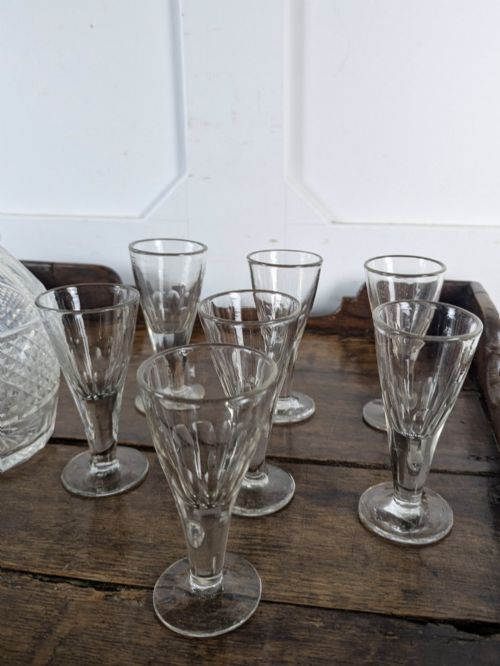
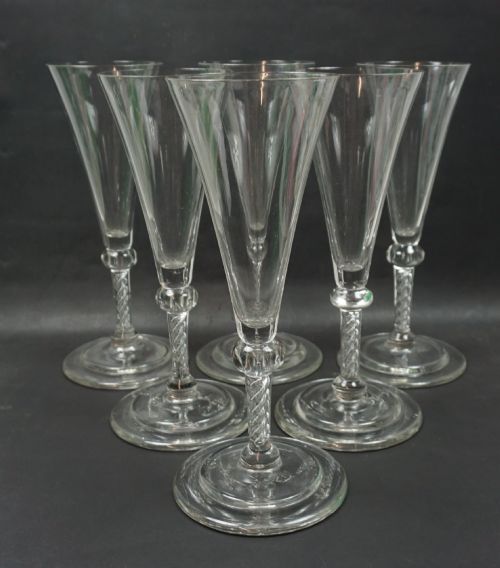
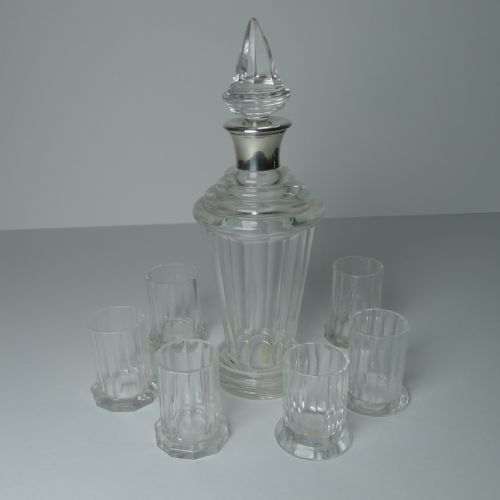
A clear glass aperitif glass encompasses small drinking vessels designed for fortified wines, cordials, and spirits, spanning periods from the 18th century through to the Art Deco era. The selection you encounter here ranges from early Georgian examples with intricate stemwork to Victorian thumb-cut flutes and geometric 1930s sets.
Forms vary from tall wine flutes and pedestal stems to cordial glasses and larger decanter sets with matching shot glasses. You will find pieces reflecting Georgian, Victorian, Edwardian, and Art Deco design aesthetics.
Origins represented in these listings include English and continental European makers, showcasing how different regions approached the craft of small-scale drinking vessels. Each era brings distinct proportions and decorative treatments to the form.
Materials and methods
The material composition relies heavily on lead glass, lead crystal, and plain clear glass, sometimes paired with silver plate for serving trays and mounts. Manufacturers shaped these materials using traditional glassblowing techniques, creating sturdy bases and thin-walled bowls.
Decoration is achieved through wheel engraving, etching, thumb-cutting, and facet-cutting directly into the glass surface. Specialised stem techniques such as air twists and opaque twists also appear in the earlier periods, demonstrating advanced manipulation of the molten material.
Clear Glass Aperitif Glass Retail Price Guide 2026
Typical asking prices for clear glass aperitif glass among the pieces listed under this phrase on Sellingantiques today, from the lower quarter to the upper quarter. They describe what is for sale here now, not the wider market.
Assessing quality in clear glass aperitif glass
Quality rests in the clarity of the metal, the crispness of the cutting, and the balance of the proportions. Heavy lead crystal and well-defined facets reflect light sharply, whereas lesser pieces show softer edges and minor optical distortions in the glass body.
The sophistication of the decorative work sets exceptional items apart, from delicate hand-engraved motifs to complex air twist stems. Uniformity across matched sets and the condition of any supplementary metal elements like silver plating also dictate the standing of a piece.
Karl Palda·Moser Glass
The Clear Glass Aperitif Glass Glossary
- Air twist
- A decorative stem feature containing internal spiral threads of air trapped within the glass. This effect is created by drawing and twisting bubbles formed during the blowing process.
- Cordial glass
- A small drinking vessel designed specifically for holding concentrated liqueurs or aperitifs after a meal. These glasses typically feature narrow bowls and shorter capacities than standard wine glasses.
- Thumb-cut
- A decorative technique involving shallow, rounded concavities ground into the exterior surface of the glass. It provides both a tactile grip and a prismatic play of light.
- Opaque twist
- A stem formation created by incorporating white or coloured enamel glass rods into the molten stem before drawing and twisting. It produces solid opaque white threads running through the clear stem.
- Facet stem
- A stem polished with flat geometric planes that catch and refract light from multiple angles. This treatment is frequently found on Georgian and later drinking vessels.
Clear Glass Aperitif Glass: Frequently Asked Questions
How do I distinguish 18th century stems from later ones?
Eighteenth-century examples often display handmade characteristics like pontil marks on the base, folded feet, and specialised internal structures such as air or opaque twists. The glass metal itself may show minor surface wear and small bubbles trapped within the handle or bowl.
Later Victorian and 20th-century pieces generally present greater uniformity, sharper mechanical cutting, and crisper geometric facets due to industrial advancements in glass production.
Are these glasses suitable for regular use?
Many of these drinking vessels remain robust enough for occasional modern use when handled with proper care. Hand washing is essential to preserve fragile stems, historical glass surfaces, and any associated silver plating.
Due to the delicate nature of antique lead glass and intricate engraving, they are best reserved for special toasts rather than everyday dining.
Why do some sets include decanters and trays?
Complete hospitality sets were designed for formal entertaining, allowing hosts to serve aperitifs directly from a matched decanter into uniform glasses. Serving trays kept the small glassware organised and protected on sideboards.
Such suites coordinated the aesthetic of the entire serving experience, combining glass decanting vessels with matching shot glasses or cordials.