



Antique Tin Glaze Ceramic
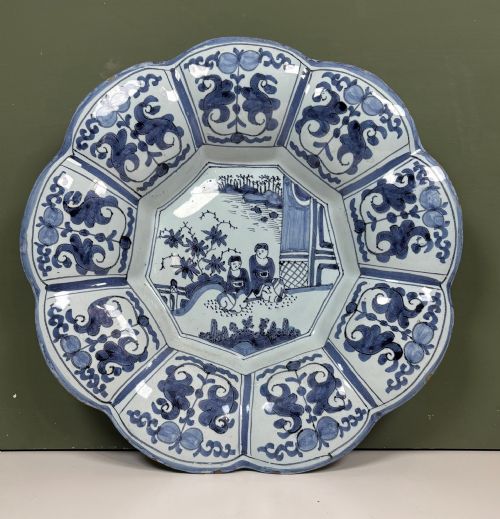
Antique tin glaze ceramic pieces span chargers, apothecary jars and vases painted with cobalt pigment across centuries of European earthenware tradition.
Antique Tin Glaze Ceramic
Antique tin glaze ceramic encompasses earthenware bodies coated in an opaque white metallic glaze, forming the ground for painted decoration.
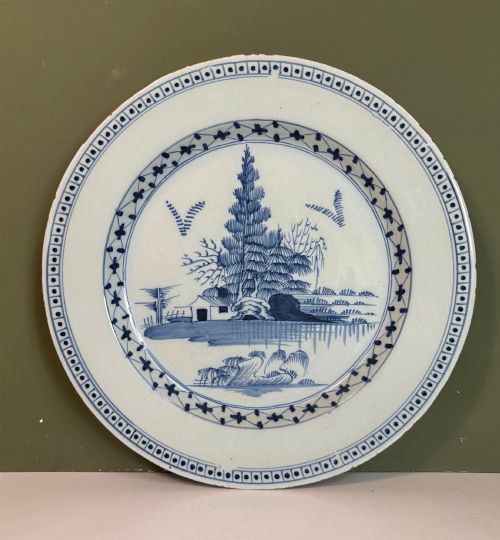
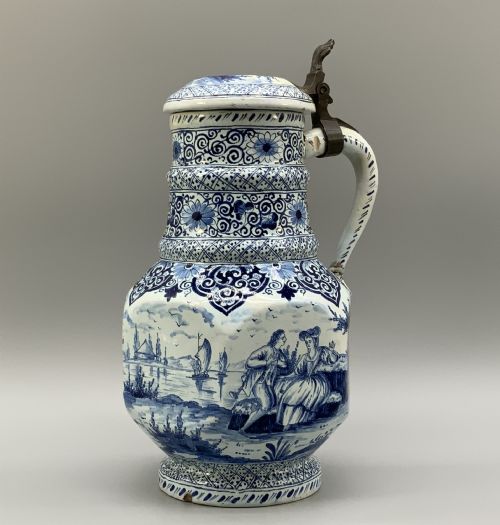
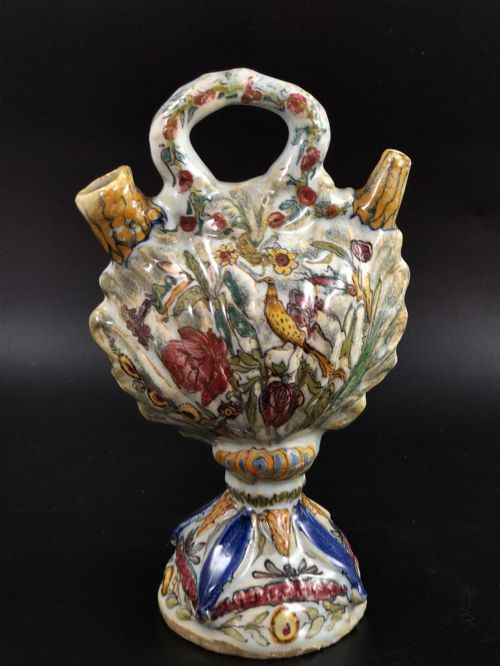
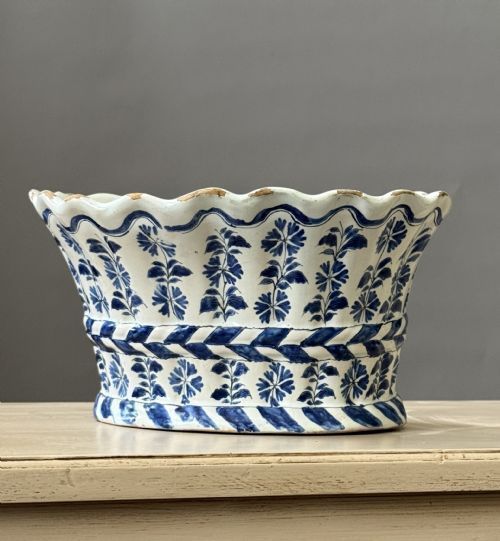
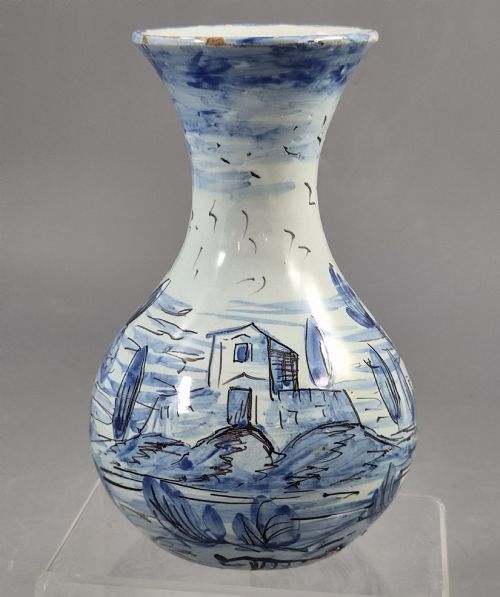
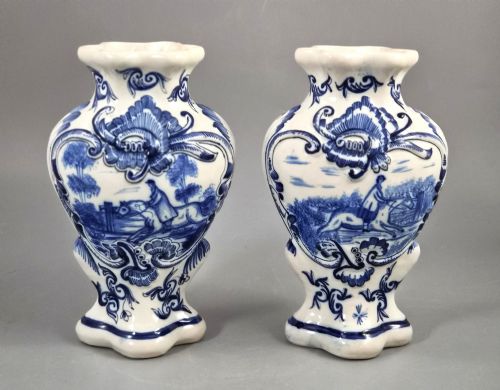
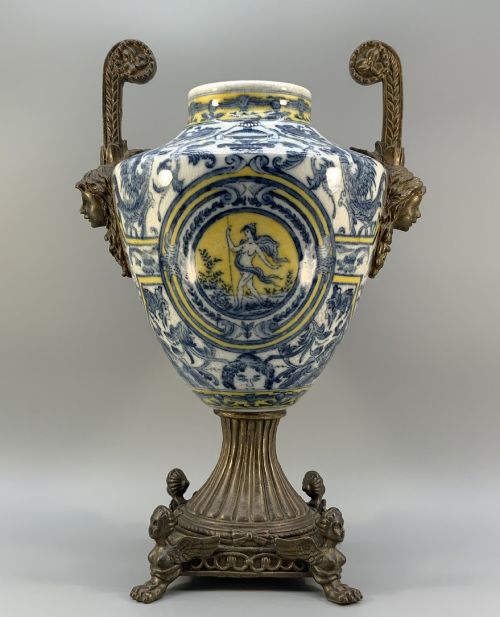
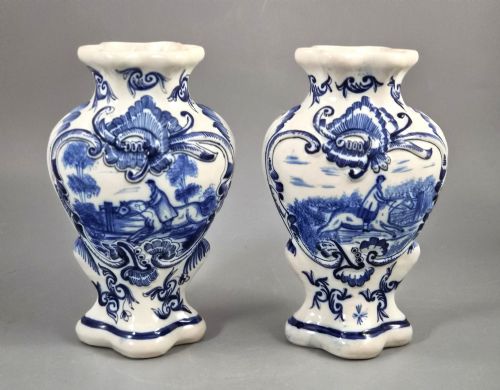
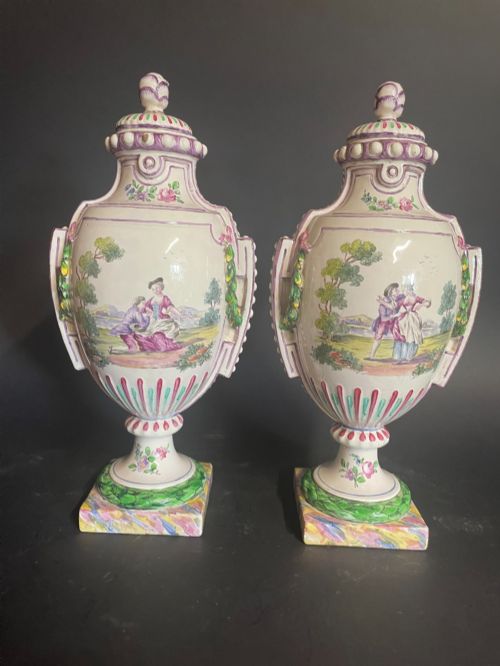
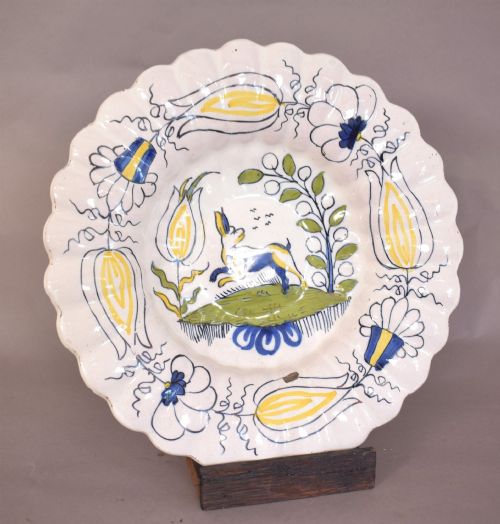
The selections here frequently comprise 18th century Dutch Delft chargers, English plates and continental faience vessels displaying blue and white or polychrome palettes.
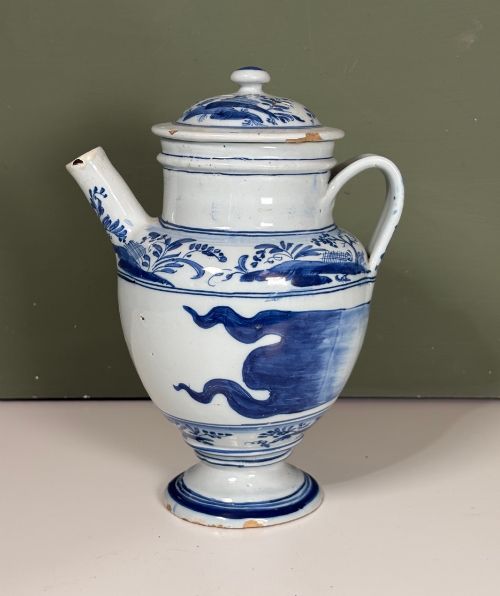
Forms range from utilitarian apothecary jars and puzzle jugs to decorative cabinet vases and tiles originating from workshops in England, France, Italy and the Netherlands.
Materials and production methods
Potters shaped local clays into earthenware bodies before dipping the fired pieces into a liquid glaze containing tin oxide to achieve an opaque white surface.
Artisans applied metallic oxides, notably cobalt pigment for blue and manganese for purple or brown, directly onto the porous unfired glaze.
A final high-temperature firing fused the pigments into the glaze layer, producing the characteristic glossy finish seen on faience and majolica.
The listings span earthenware forms from the seventeenth to the twentieth century, featuring tin glaze and cobalt oxide decorations.
Assessing quality in tin glaze wares
Quality depends upon the precision of the brushwork and the complexity of the painted compositions, distinguishing hurried workshop output from master painters.
The purity and evenness of the white tin glaze ground affect the visual impact, alongside the stability of the clay body during the kiln firing.
Fourmaintraux-Courquin·Cantagalli
The Antique Tin Glaze Ceramic Glossary
- Delftware
- Tin-glazed earthenware originating from the Netherlands and England, typically decorated with blue designs on a white background. It developed as a European response to imported Chinese porcelain.
- Maiolica
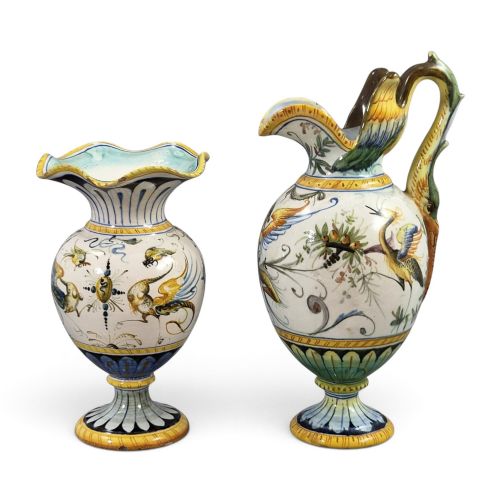
- Italian tin-glazed earthenware produced from the Renaissance onward, known for rich polychrome painting and historical or mythological subjects. The technique later spread across continental Europe.
- Faience
- French and continental European tin-glazed earthenware encompassing both utilitarian vessels and decorative objects. The term covers various regional traditions including Desvres and Rouen wares.
- Charger
- A large decorative plate intended for display on a wall or dresser rather than table service. These substantial dishes often showcase the finest painting of a workshop.
- Apothecary jar
- A vessel designed to hold medicinal herbs, syrups or dried drugs in pharmacies and dispensaries. They frequently bear painted Latin labels amidst floral scrolls.
Antique Tin Glaze Ceramic: Frequently Asked Questions
What is antique tin glaze ceramic?
Antique tin glaze ceramic refers to earthenware pottery covered with an opaque white glaze containing tin oxide, providing a smooth canvas for hand-painted mineral pigments.
This group includes regional European traditions such as Dutch Delftware, Italian maiolica, and French faience dating from the seventeenth century onward.
How do I care for tin glaze pottery?
These ceramic pieces require gentle handling because the earthenware body is relatively soft and the historic glaze can be prone to chipping along the edges.
Keep them away from moisture and direct water immersion to protect the porous clay and glaze surface from staining or deterioration.
How do I distinguish Delftware from maiolica?
Delftware typically denotes northern European tin glaze wares featuring blue and white designs inspired by Chinese porcelain or local Dutch landscapes.
Maiolica describes Italian traditions that often embrace vibrant polychrome palettes and opaque glazes developed during the Renaissance revival periods.
Were chargers used for dining?
Chargers served primarily as large decorative display plates placed on sideboards or hung upon walls rather than functional tableware for meals.
Their substantial surfaces provided master painters with ample space to execute complex pictorial or floral compositions.