
Antique Table Salts
These antique table salts span Georgian elegance to Art Deco utility, offering small, decorative vessels for dining tables that collectors seek for their craftsmanship.
Antique Table Salts
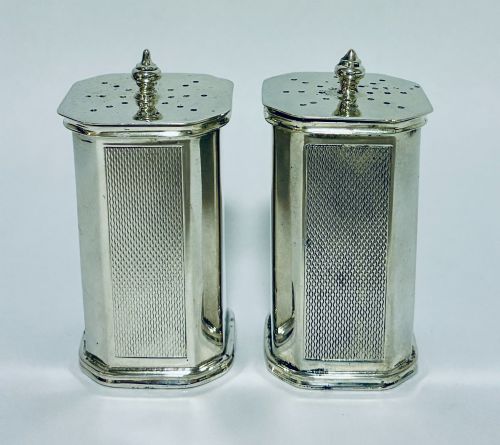
Antique table salts comprise open salt cellars, trencher salts, and standing vessels designed to hold seasoning on the dining table. You will frequently encounter Victorian and Edwardian examples alongside Georgian pairs and Art Deco sets.
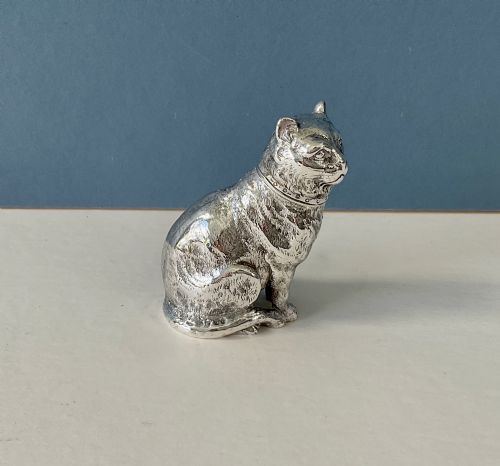
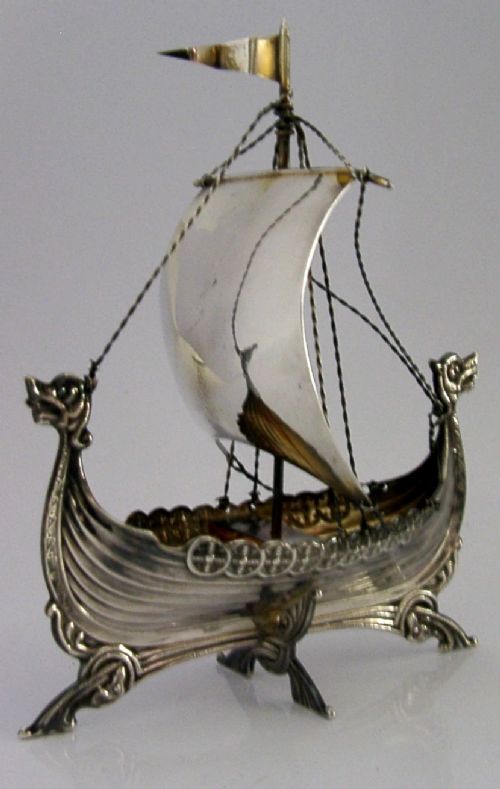
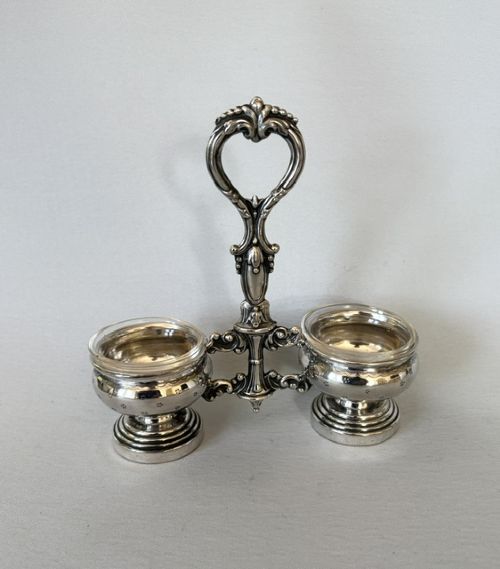
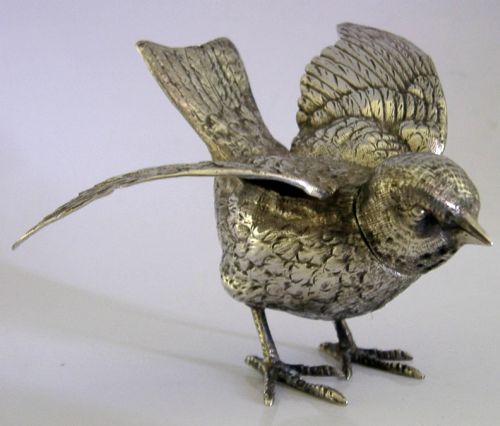
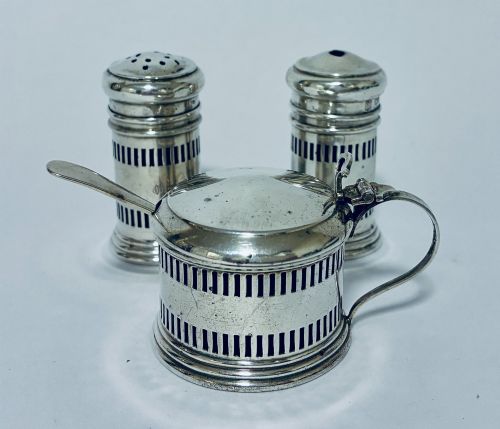
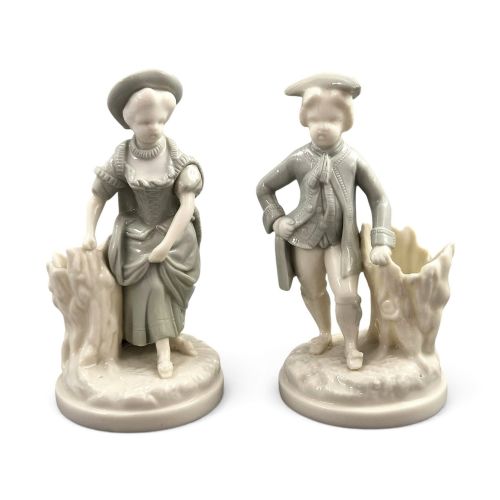
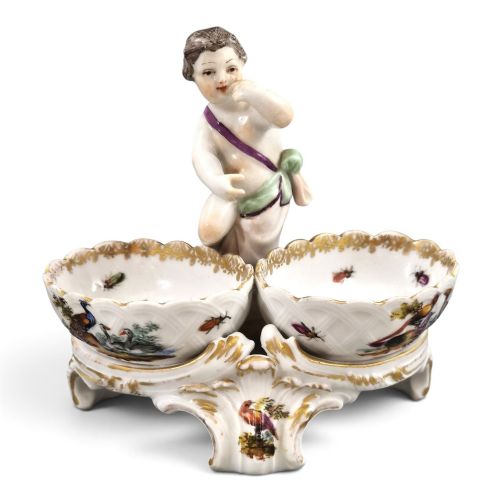
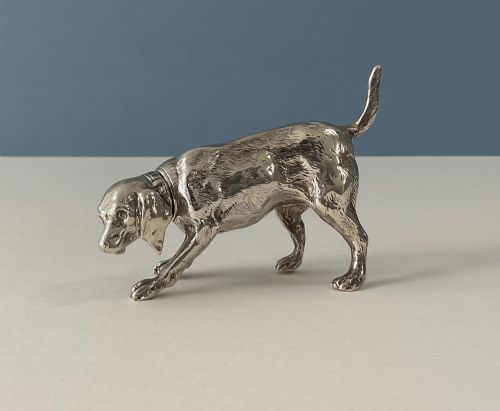
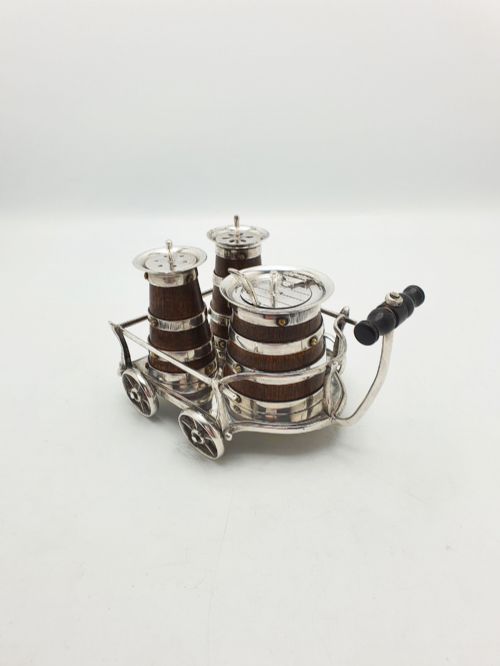
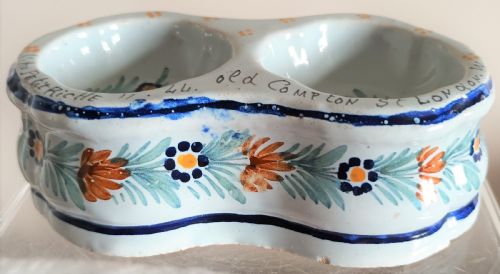
The selection ranges from simple sterling silver bowls and cut glass dishes to novelty shapes such as animals, birds, and Viking ships. Makers utilised diverse forms, including double salt cellars, pedestals, and fitted cruet frames containing multiple condiment containers.
Originating across Britain, France, Germany, and Scandinavia, these pieces reflect changing dining customs from formal 18th Century settings to late Victorian domestic routines.
Materials and Technique
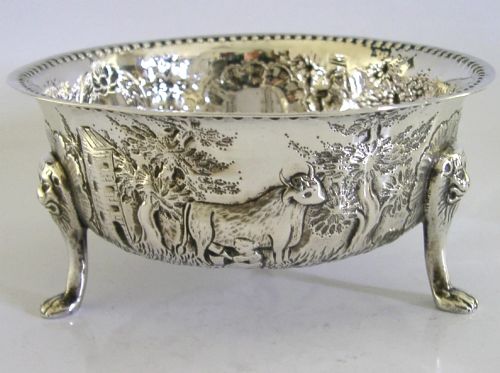
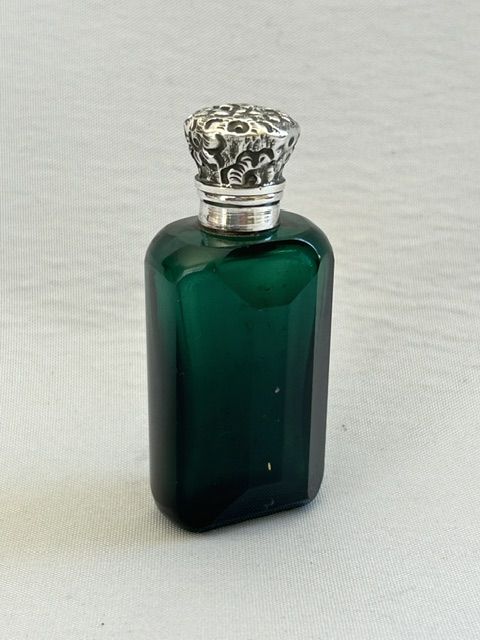
Silversmiths shaped sterling silver and silver plate through casting, piercing, and repoussé work, frequently gilding the interiors to protect the metal from corrosive salt. Glassmakers produced cut glass and moulded vessels, sometimes incorporating flash colours like cranberry or Bristol green.
Many open cellars rely on contrasting inserts, pairing clear or cobalt glass liners with pierced silver frames, carved horn, or porcelain bodies from factories such as Meissen, KPM Berlin, and Royal Worcester.
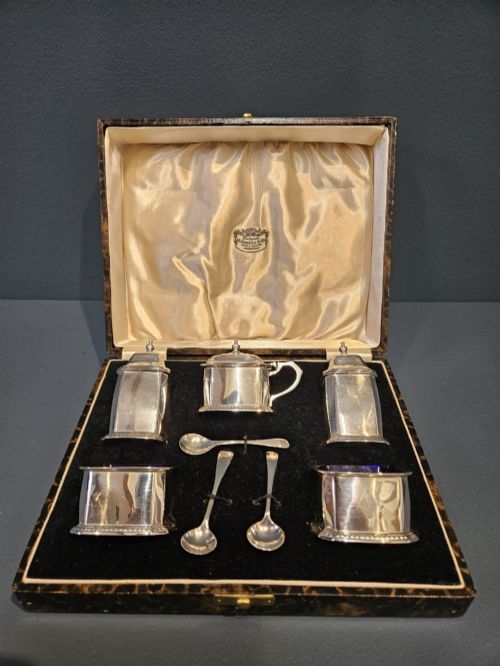
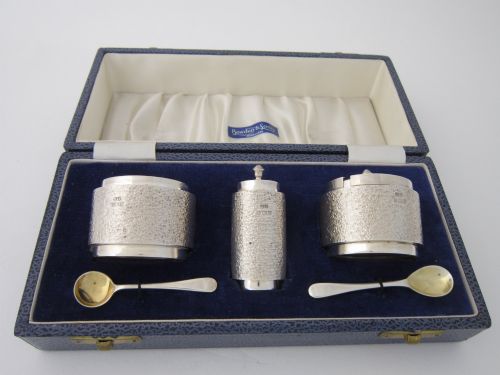
Makers integrated organic and textile elements into specific designs, combining wood like oak for barrel cruets, velvet linings in presentation cases, and hand-painted enamel decoration.
Listings feature sterling silver, silver plate, cut glass, cobalt glass, porcelain, and carved horn across Georgian, Victorian, Edwardian, and Art Deco periods.
Distinctions in Execution
Quality rests upon the crispness of the casting, the depth of hand-piercing on silver galleries, and the precision of cut glass facets. Superior examples display careful finishing to interior gilding and secure, well-fitted mounts.
Artistry in novelty pieces separates standard production from exceptional work, marked by realistic anatomical detail in animal figures like owls, cats, and birds. Maker attribution and matching original liners or spoons elevate individual sets.
David Hennell·William Bateman·Josiah Williams & Co·Georg Jensen·Meissen Dresden·KPM Berlin·Royal Worcester·HB Quimper
The Antique Table Salts Glossary
- Salt Cellar
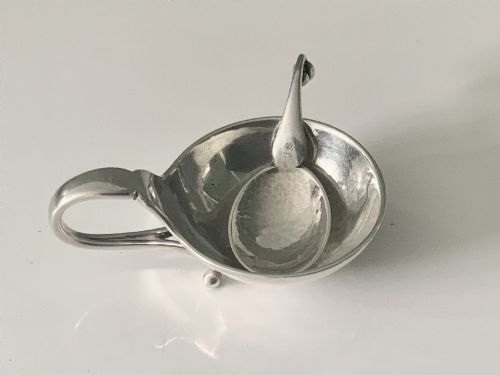
- An open bowl designed to hold loose salt on the dining table before the invention of the spring-loaded shaker. They frequently rest on three tiny feet or a pedestal base.
- Trencher Salt
- A small, low salt cellar, often square or oval, used by diners at the medieval or early modern board before individual places gained prominence.
- Cruet Set
- A matched frame holding multiple bottles, castors, and salt cellars for vinegar, oil, pepper, and mustard. Georgian and Victorian sets often group three to seven vessels together.
- Gilding
- A thin layer of gold applied to the interior surface of a silver salt cellar to prevent the salt from chemically reacting with and pitting the silver.
- Cobalt Glass
- A deep blue glass used for liners within pierced silver salt cellars to provide a striking visual contrast through openwork designs.
Antique Table Salts: Frequently Asked Questions
How were antique table salts used?
Diners used open salt cellars to take a small pinch of salt using a tiny spoon or the tip of a knife, placing it directly onto the edge of their plate.
Before free-flowing salt and shakers became common in the 20th century, these open vessels served as the primary method for seasoning food at the table.
How do I clean silver salt cellars?
Wash silver pieces gently in warm, soapy water and dry them thoroughly with a soft cloth to protect the metal and any interior gilding.
Avoid harsh dips that can strip away historic patina or damage delicate glass liners and enamel work housed within the silver frames.
Are glass liners important?
Original glass liners protect the surrounding silver or metal frame from corrosion caused by direct contact with salt over long periods.
Finding a set with matching original glass liners or cobalt inserts significantly strengthens the completeness and historical integrity of the piece.
Can I use them today?
You can use open salt cellars on a modern dining table for coarse sea salt, spices, or even small portions of condiments.
Ensure that silver-gilt interiors remain intact and wash them immediately after use to prevent the salt from pitting the historic metal surface.