




Antique Red Glassware
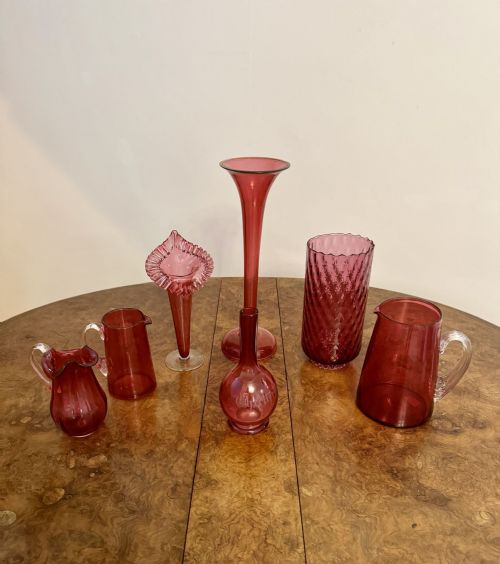
These pieces of antique red glassware span rich cranberry tones and deep ruby shades, offering striking visual depth for any collection.
Antique Red Glassware
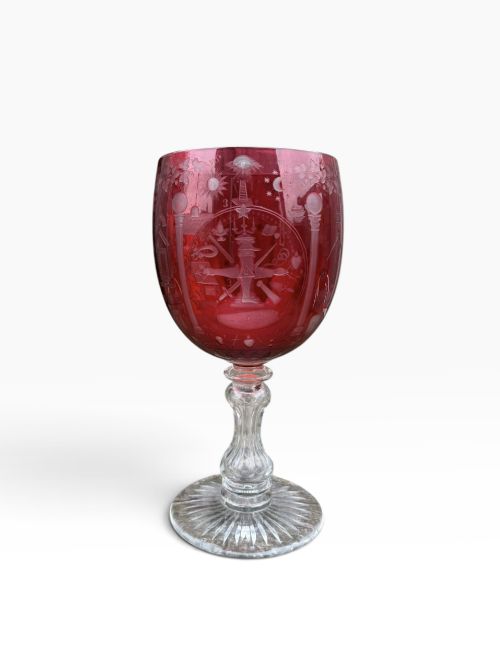
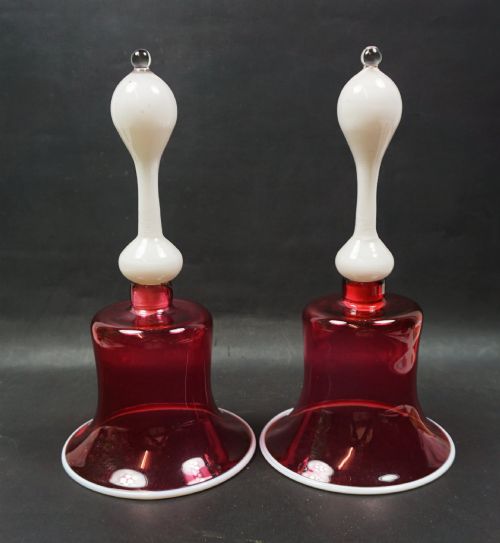
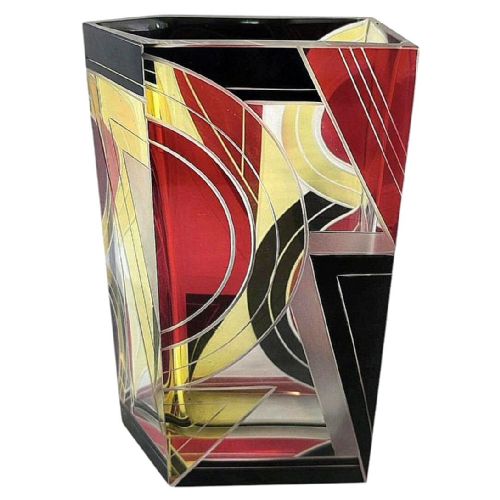
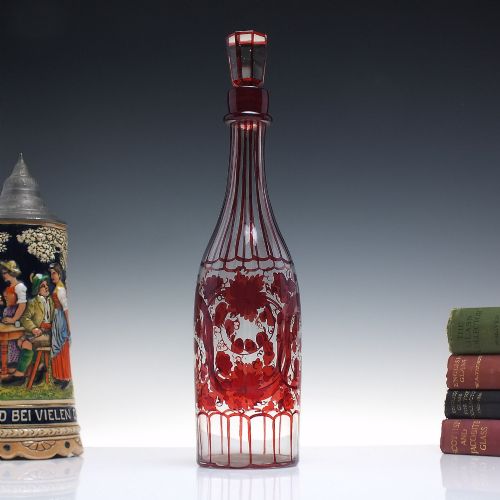
When you search for antique red glassware, you find a diverse array of vessels including wine glasses, decanters, vases, and bells spanning the nineteenth and early twentieth centuries. The selection encompasses English and continental origins, with Victorian cranberry glass and Bohemian ruby pieces appearing frequently alongside Art Nouveau and Art Deco designs.
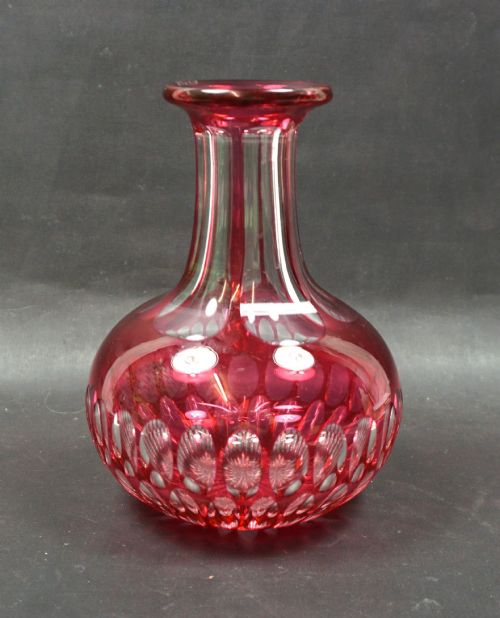
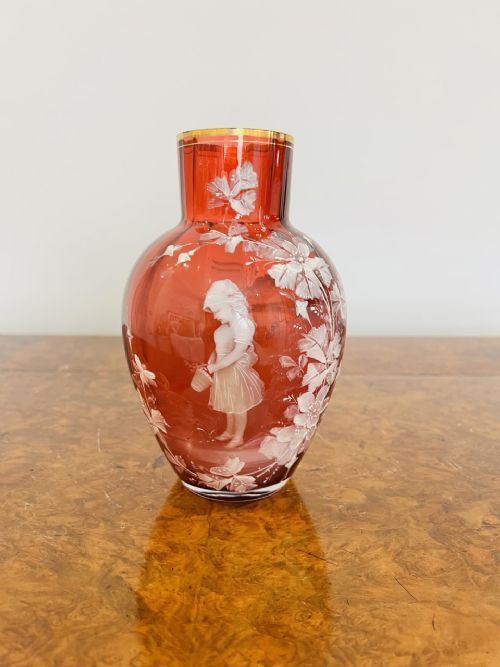
Vessels range from practical tableware such as champagne coupes, carafes, and tumblers to purely decorative items like Mary Gregory vases, jars, and apothecary carboys. These objects reflect various stylistic movements, incorporating Georgian, Edwardian, and nineteenth-century aesthetics into domestic and display settings.
How these items were made
Makers utilised free-blowing and mould-blown techniques to shape the metal, often casing layers of coloured glass over clear crystal to create depth before wheel-engraving or cutting away the outer layer. Decoration involved hand-painting with enamels, applying gold leaf detailing, and executing cameo techniques to reveal contrasting background layers.
Specific motifs were achieved through specialised skill, such as the white enamel silhouette painting seen on Mary Gregory pieces, or the delicate application of gold lotus and palmette patterns by period workshops. Bell production required precise manipulation of molten material to attach contrasting white or clear glass handles and rims.
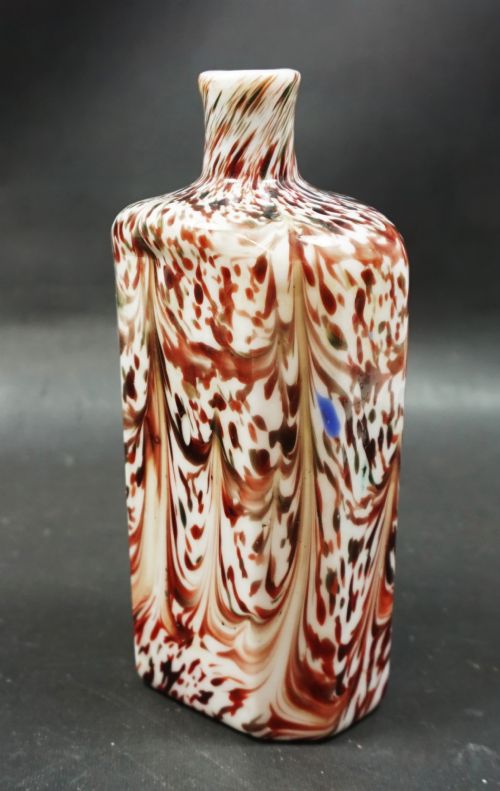
Materials recorded across the inventory include cranberry glass, ruby glass, milk glass, gold leaf, and cut crystal.
What varies in quality
The standard of craftsmanship shows in the depth and evenness of the colour saturation, particularly where layers of ruby or cranberry glass overlay clear crystal. Superior pieces display crisp wheel-engraving, precise gilding, and refined enamel work rather than flat or hesitant surface decoration.
Proportion and finishing differentiate finer items, visible in the symmetry of hand-blown stemware, the neatness of applied handles, and the clarity of cut crystal facets. Earlier nineteenth-century examples often demonstrate greater attention to detail in their decorative motifs compared to later mass-produced wares.
Legras·Galle·Paul Nicholas for D'Argental
The Antique Red Glassware Glossary
- Cranberry glass
- A transparent pinkish-red glass coloured with gold chloride, widely popular during the Victorian period for tableware and decorative items.
- Ruby glass
- A deep, rich red glass created using copper or gold, often associated with Bohemian and nineteenth-century European production.
- Mary Gregory glass
- Glassware decorated with white enamel silhouettes depicting children in natural settings, popular in the late nineteenth century.
- Cameo glass
- A technique involving at least two fused layers of contrasting colours, where the outer layer is carved away to leave a raised design.
- Tazza
- An ornate shallow cup or open bowl mounted on a stem and foot, used historically for serving small foods or as a decorative centrepiece.
Antique Red Glassware: Frequently Asked Questions
How do I clean antique glassware safely?
Wash pieces by hand in warm water using a mild liquid detergent, avoiding abrasive sponges or harsh chemicals that might damage delicate gilding or enamel decoration.
Place a towel at the bottom of the sink to cushion the glass during washing, and dry immediately with a lint-free cloth to prevent water spots.
How can I date my red glassware?
Examine the manufacturing technique, pontil mark on the base, and stylistic indicators such as Victorian enamel work, Art Nouveau motifs, or Art Deco geometric forms.
Compare the object's form and decoration against documented periods like the mid-nineteenth century or the early twentieth century to narrow down its age.
Were these wine glasses meant for daily use?
Many Victorian and Edwardian wine glasses and decanters were produced for formal dining and entertaining rather than everyday domestic dining.
Their survival in sets suggests they were often kept in cabinets or sideboards for special occasions and handled with considerable care.