




Hand Painted Glass Jug
A hand painted glass jug brings rich Victorian colour and tactile enamel work straight to the table.
What these pieces are
When you search for a hand painted glass jug, you encounter nineteenth-century vessels designed for milk, cream or water use. These domestic objects survive from the Victorian era, spanning decades such as eighteen-eighty and eighteen-ninety.
The selections on this page predominantly present Victorian forms, including cream jugs, water jugs, and larger pitchers. Makers shaped these domestic items from blown glass, opalescent glass, and cranberry glass.
Beyond standard serving pieces, certain variants incorporate matching glass sets intended for water service. Each piece reflects the functional tableware needs of nineteenth-century households.
How they were made
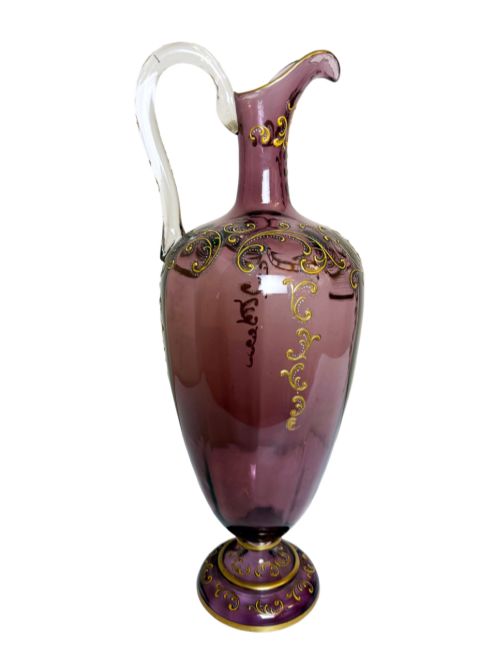
Artisans formed these vessels using blown glass techniques, shaping molten material into pitchers, ewers, and smaller cream jugs. The resulting bodies utilise clear glass alongside coloured foundations like green, violet, and cranberry tones.
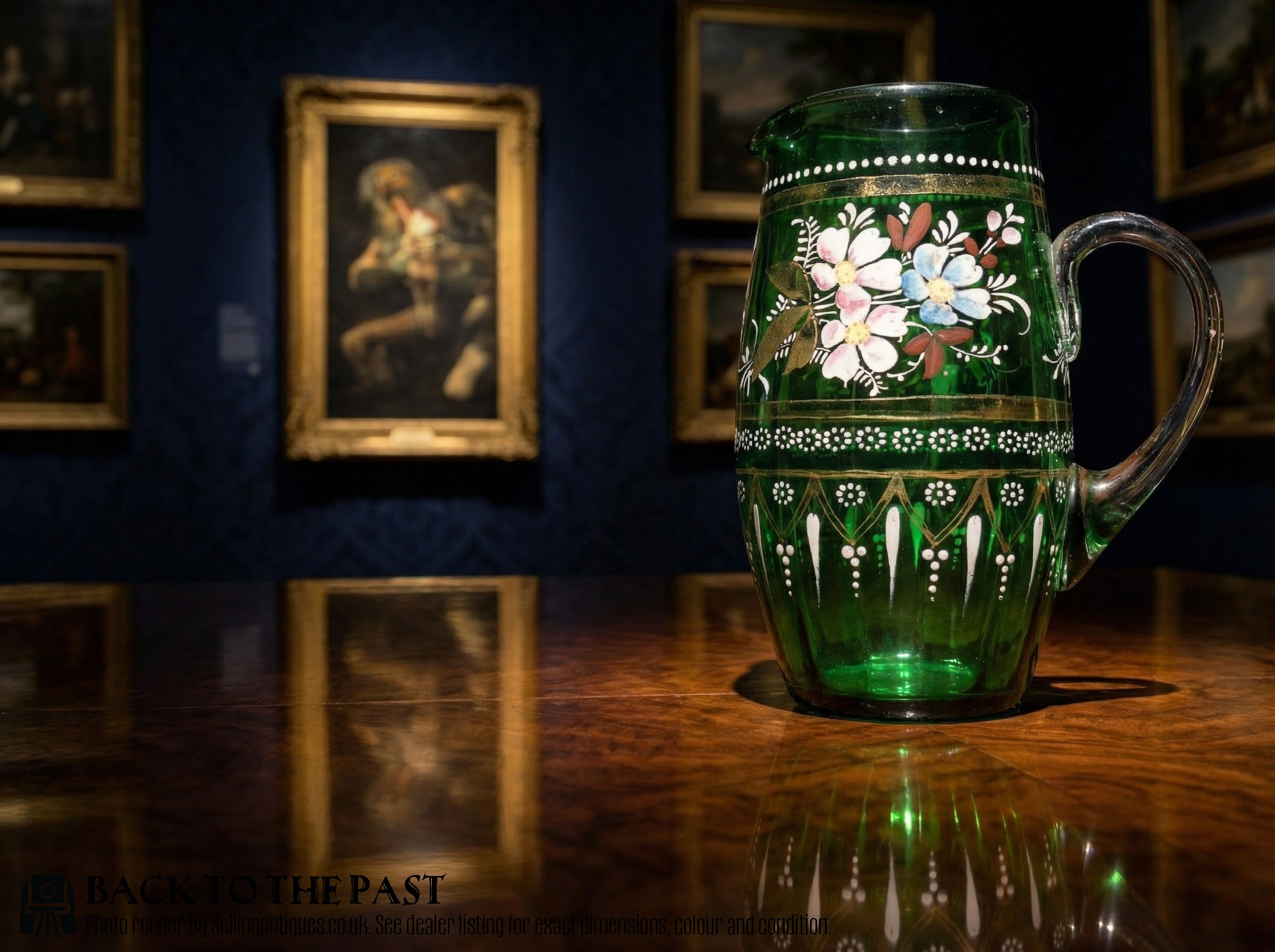
Decoration relied on meticulous hand painting, frequently incorporating enamel paints and gold leaf applications. Skilled hands added gilt applique and detailed enamel scenes directly onto the glass surfaces.
Listings feature Victorian pieces utilising blown glass, cranberry glass, and opalescent glass.
What varies in quality
The distinction between standard domestic vessels and finer examples rests upon the intricacy of the hand painting and gilding. Enamel work that remains crisp and detailed elevates a piece above simpler, plain-tinted glassware.
Material choice and colour depth also dictate the hierarchy among these jugs. Rich opalescent glass or deep cranberry and violet tones demonstrate superior glasshouse output compared to basic clear variants.
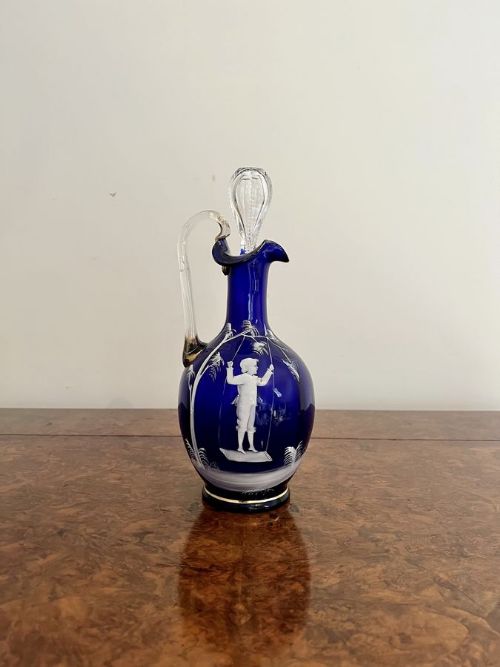
Mary Gregory
The Hand Painted Glass Jug Glossary
- Opalescent glass
- A type of glass that displays milky, translucent effects with lighter coloured rims or highlights. This appearance results from specific chemical agents added during the melting process.
- Cranberry glass
- Transparent red glass created by adding gold chloride to the molten batch. It serves as a signature material for Victorian decorative tableware.
- Enamel paint
- Opaque vitreous material applied to the exterior of fired glass vessels. It provides durable, colourful decoration that stands proud of the smooth surface.
- Gilt applique
- Applied metallic gold decoration adhered to the glass body. This technique adds reflective highlights and ornate borders to nineteenth-century jugs.
- Pitcher
- A large serving vessel featuring a handle and a pouring spout. Victorian examples often doubled as decorative water ewers.
Frequently Asked Questions
How were Victorian glass jugs used?
These vessels served practical domestic roles at the dining table, holding water, milk, or cream for daily meals. Their decorative enamel finishes suggest they also functioned as ornamental display items when not in active service.
Households utilised smaller cream jugs for tea service, while larger pitchers managed water distribution for guests.
What colours do these jugs appear in?
The available pieces show a distinct Victorian palette, featuring vibrant cranberry red, deep violet, opalescent hues, and translucent green. Clear glass also appears beneath painted enamel decoration.
Makers selected these contrasting glass grounds to make the applied gold leaf and painted details stand out vividly.
How do I care for antique glass jugs?
Hand washing in lukewarm water with mild soap protects the delicate enamel painted surfaces and gold leaf applications. Harsh detergents and modern dishwashers will damage the historic hand-applied decoration.
Store the jugs securely away from edge surfaces to prevent accidental impact to the thin blown glass bodies.
How do I identify a Victorian glass jug?
Look for characteristic nineteenth-century manufacturing traits such as pontil marks on the base, hand-blown irregularities, and period-specific enamel motifs. The presence of opalescent glass or cranberry coloration strongly points to Victorian production.
Stylistic cues like gilt applique and traditional pitcher proportions help confirm the nineteenth-century origins of the piece.