



Ruby Red Wine Glasses
Ruby red wine glasses bring rich colour and Victorian warmth to the table.
Ruby Red Wine Glasses
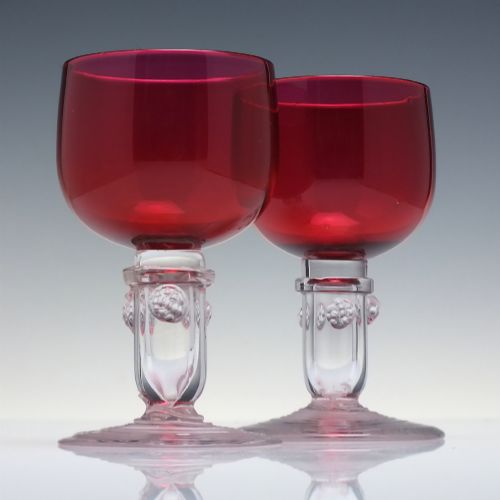
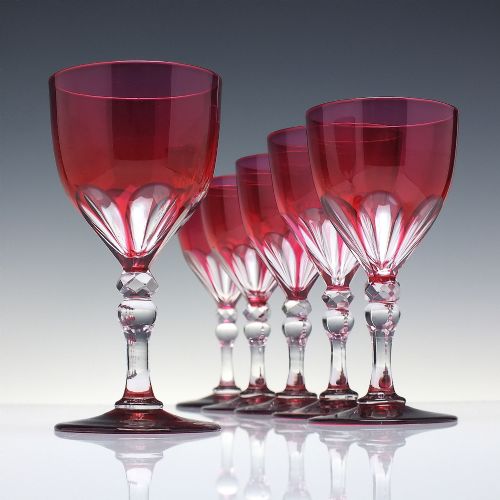
When you search for ruby red wine glasses, you are looking for rich tablewares produced primarily during the nineteenth and early twentieth centuries. The examples met on this page are predominantly Victorian sets of cranberry glass stemware alongside matching decanters and jugs.
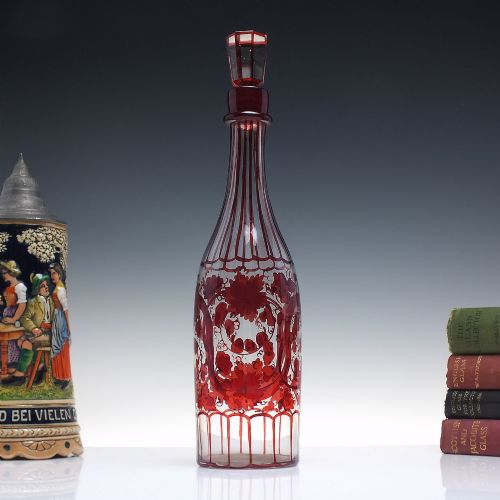
The selection ranges from sets of hand-blown wine glasses to individual overlay decanters engraved with birds or vines. English and Bohemian origins dominate the forms, capturing a distinct period aesthetic of deep red hues.
How they were made
These pieces rely on glass-blowing techniques combined with the addition of gold chloride to achieve the characteristic red and cranberry tones. Master glassmakers also utilised overlay methods, fusing layers of clear and coloured glass before cutting back the surface to reveal designs.
Decoration often involved wheel-engraving to carve intricate fruiting vines and foliage through the red layer into the clear glass beneath. Hand-painting and sterling silver mounts were occasionally added to complete the vessels.
Ruby Red Wine Glasses Retail Price Guide 2026
Typical asking prices for ruby red wine glasses among the pieces listed under this phrase on Sellingantiques today, from the lower quarter to the upper quarter. They describe what is for sale here now, not the wider market.
Several decanters feature finely engraved birds among vines, preserving miniature wildlife scenes across their ruby surfaces.
What varies in quality
Quality rests on the depth and evenness of the colour throughout the glass, alongside the crispness of any wheel-engraving. Pieces with delicate details like engraved birds among vines show a higher level of artisan skill than plain vessels.
The weight and clarity of the lead crystal or blown glass also set finer decanters and wine glasses apart. Intact matching sets demonstrate greater cohesion and survival than assembled collections.
The Ruby Red Wine Glasses Glossary
- Cranberry Glass
- A transparent pinkish-red glass coloured by the addition of gold. It became immensely popular during the Victorian era for tableware and decorative items.
- Overlay Glass
- A technique involving two or more distinct layers of glass fused together. The outer layer is partially cut away to create contrasting patterns and clear windows.
- Champagne Coupes
- A shallow, broad-bowled stemmed glass designed originally for sparkling wine. Victorian examples often feature engraved bowls and matching coloured feet.
- Decanters
- Vessels used for holding and serving wine, frequently fitted with stoppers. The evidence shows versions in ruby overlay glass and cranberry glass with engraved decoration.
- Hook Wine Glasses
- A specific European form of stemware with a distinctive bowl and stem shape. Bohemian makers produced notable sets of these coloured glasses.
Ruby Red Wine Glasses: Frequently Asked Questions
Are ruby red wine glasses safe to use?
These historical glasses were manufactured for dining and entertaining, using traditional glass and crystal compositions. Many collectors continue to use them for special occasions.
Hand washing in warm water preserves the delicate glass and any hand-painted or engraved details. Modern dishwashers and harsh detergents should be avoided to protect the finish.
How do I identify Victorian cranberry glass?
Victorian cranberry glass displays a characteristic pinkish-red hue derived from gold content in the metal. The pieces often show pontil marks on the base from hand-blowing.
Matching the styles, engraving motifs like fruiting vines, and period forms such as claret jugs and stemmed wine glasses helps confirm the nineteenth-century origin.
What is the difference between ruby glass and cranberry glass?
Cranberry glass specifically uses gold oxide to produce a translucent pinkish-red shade associated with the Victorian period. Ruby glass can encompass a broader range of deep red glasses.
In the listings here, both terms describe rich red tablewares, though cranberry is most frequently linked to the nineteenth-century wine glasses and decanters.
How should I display my antique wine glasses?
Displaying these glasses in a cabinet with good lighting highlights the rich tones of the coloured and overlay glass. Grouping decanters with matching wine glasses creates an effective period arrangement.
Ensuring stable shelving protects the delicate blown stems and engraved surfaces from accidental knocks during daily movement.