




Antique Glass Goblets Set
These antique glass goblets set pieces bring period weight and colour to a table, spanning Georgian rummers to Victorian cranberry stemware.
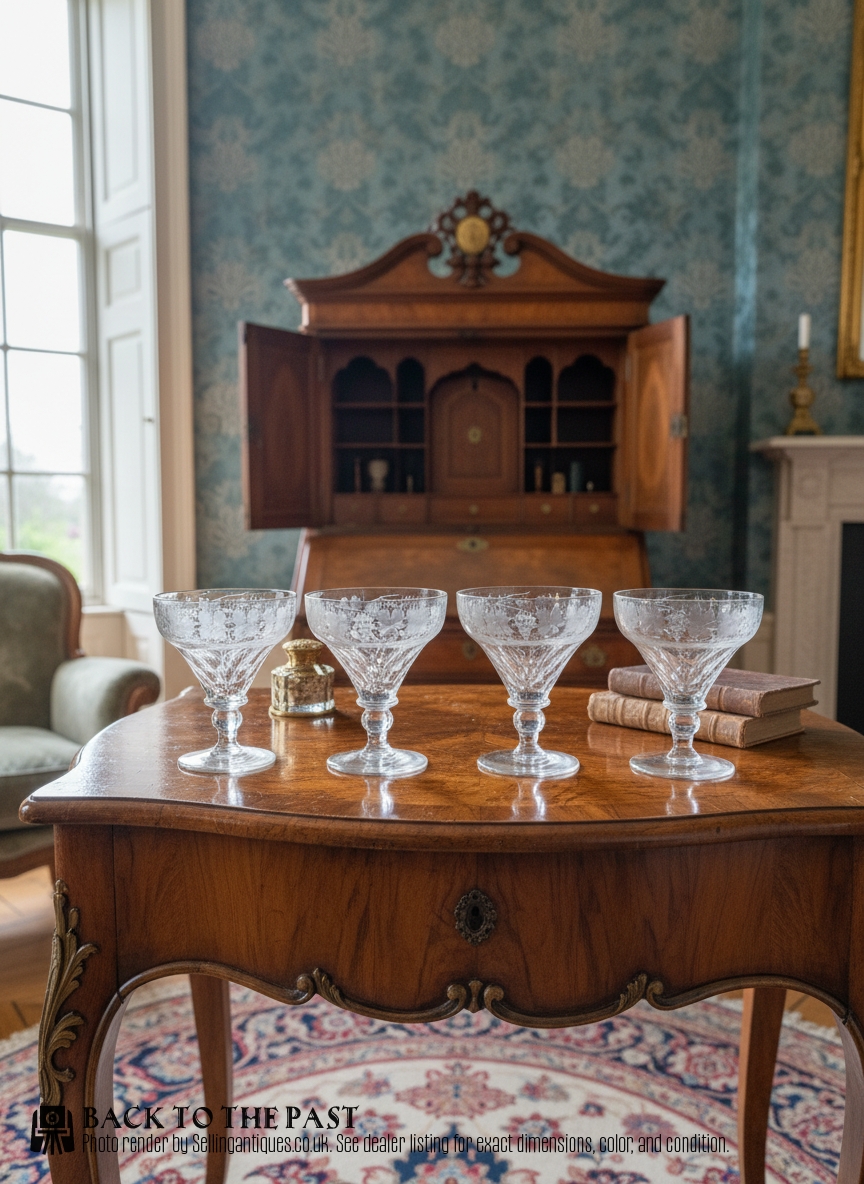
Antique Glass Goblets Set
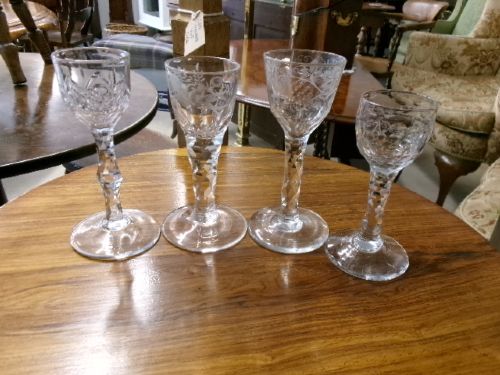
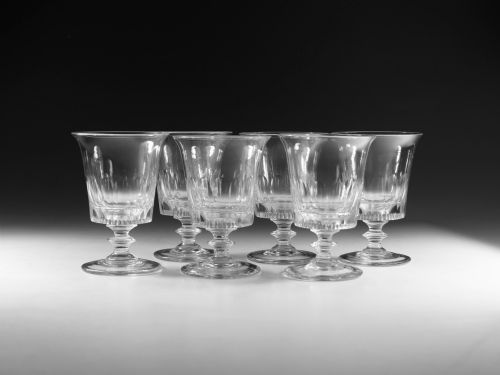
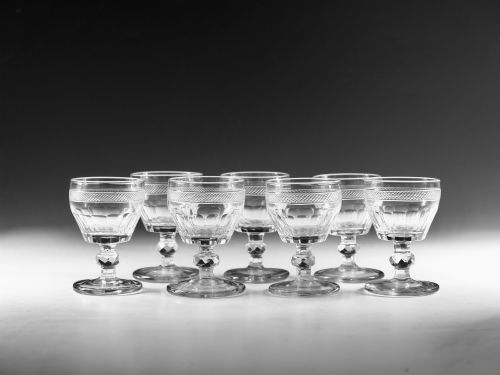
When you search for an antique glass goblets set, you encounter matching drinking vessels spanning the Georgian, Victorian, and Edwardian periods. The groupings range from small cordial and port glasses to large rummers and hock glasses.
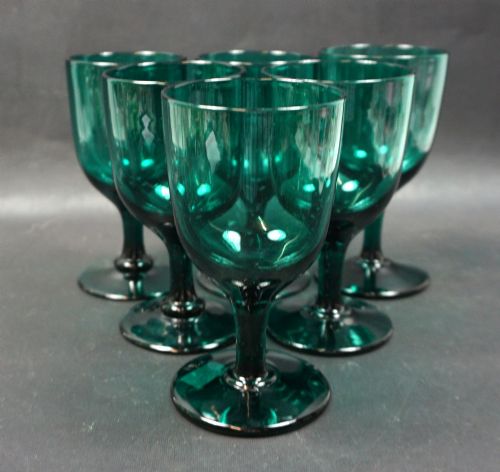
Sets most commonly appear as groupings of six, eight, or twelve matching vessels. Formats vary from clear lead crystal with cut facets to coloured glass including Bristol green, cranberry, and amber.
Materials and production methods
The pieces rely on blown glass and heavy lead crystal formed into stems, balusters, and wide foot bases. Makers employed techniques such as hand-blowing, cutting, etching, and intaglio engraving to shape the bowls.
Decoration often includes enamel paint, gold leaf, and applied heraldic motifs. Coloured glass varieties achieve their hues through specific mineral oxides added during the melting process.
Listings feature lead crystal, cranberry glass, and clear glass shaped into wine glasses, rummers, and cordial glasses across Georgian and Victorian eras.
Distinctions in quality and execution
Execution of the cutting and engraving separates standard vessels from finer service pieces. Crisp facets and deep intaglio work demand skilled hand labour compared to simple mould-pressed patterns.
Webb Corbett·Theresienthal
The Antique Glass Goblets Set Glossary
- Rummer
- A large, heavy drinking glass popular in the Georgian and Victorian eras, often featuring a thick stem and wide foot. These vessels typically served ale, wine, or punch.
- Roemer
- A traditional Germanic or Bohemian drinking glass featuring a wide bowl on a decorated stem, frequently produced in green glass. They often display enamelled heraldic motifs.
- Pontil mark
- A rough scar left on the base of blown glassware where the pontil rod was snapped away. Its presence indicates traditional hand-blown manufacturing methods.
- Intaglio
- A technique where designs are carved into the surface of the glass rather than carved in relief. This creates a frosted pattern that catches the light.
- Lemon squeezer base
- A square, moulded glass foot resembling a kitchen juicer, commonly found on Georgian rummers and wine glasses. The shape added stability to heavy lead crystal drinking vessels.
Antique Glass Goblets Set: Frequently Asked Questions
Were these sets originally meant for wine?
Many sets served specific historic drinks, from port and cordials to heavy ales in rummers. Glass sizes evolved alongside changing dining habits and wine styles.
Smaller glasses typically held fortified wines, while larger bowls accommodated claret, hock, or spirited beverages.
How can I date a glass set?
Dating relies on combining the form of the bowl, the shape of the stem, and the style of the foot. Georgian pieces often feature heavy lead crystal and thick feet, while Victorian sets frequently introduce bright colours and etching.
Manufacturing traces like ground pontil marks also help establish the production era.
Can I mix different coloured glasses together?
Harlequin sets deliberately combine various coloured vessels such as Bristol green, cranberry, and amber. This tradition allows tables to feature multiple tones while maintaining matching forms.
Collector preferences vary between uniform single-colour services and mixed tinted assortments.