


Vintage Champagne Coupes
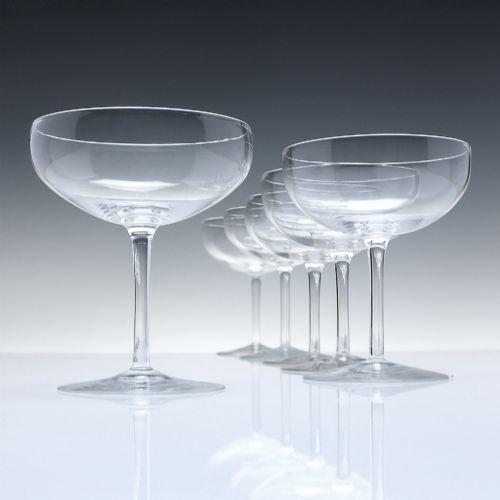
These vintage champagne coupes are historic vessels of glass and lead crystal, offering a distinct sense of occasion for drinking sparkling wine.
Vintage Champagne Coupes
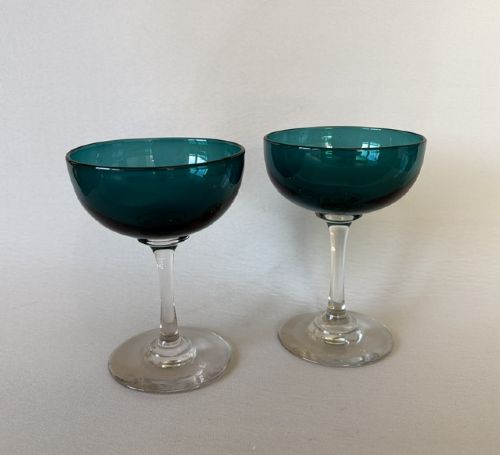
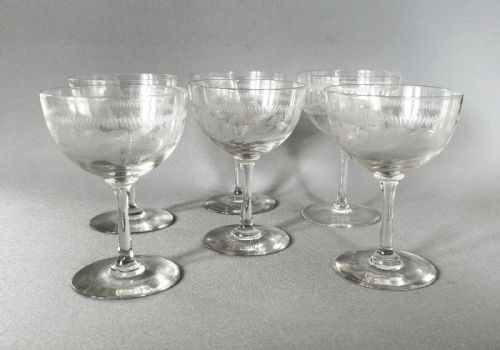
When you search for vintage champagne coupes, you are looking at historic drinking vessels shaped with shallow, wide bowls rather than the tall flutes common today. These glasses span periods from the Victorian and Edwardian eras up through the 1920s, showing origins in English workshops as well as Venetian glasshouses.
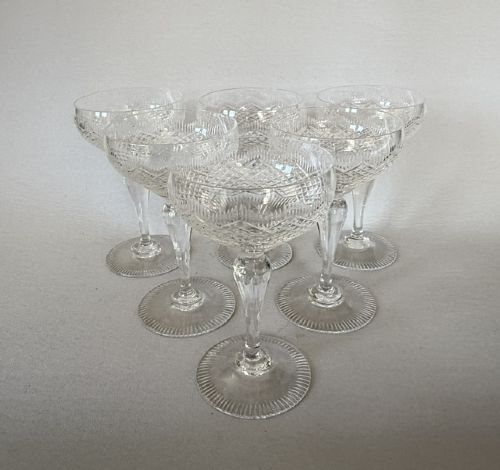
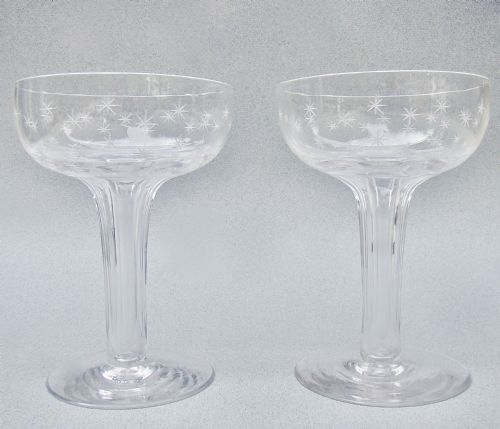
The versions you are most likely to meet on this page include sets of six small or large bowls, paired glasses, and larger collections such as sixteen amber glasses. They appear as champagne glasses, champagne bowls, and hollow stem champagne glasses.
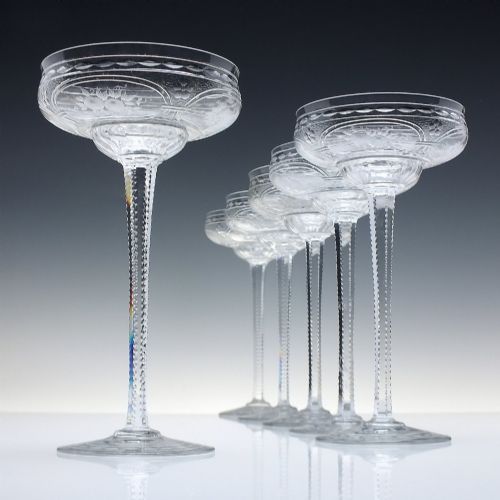
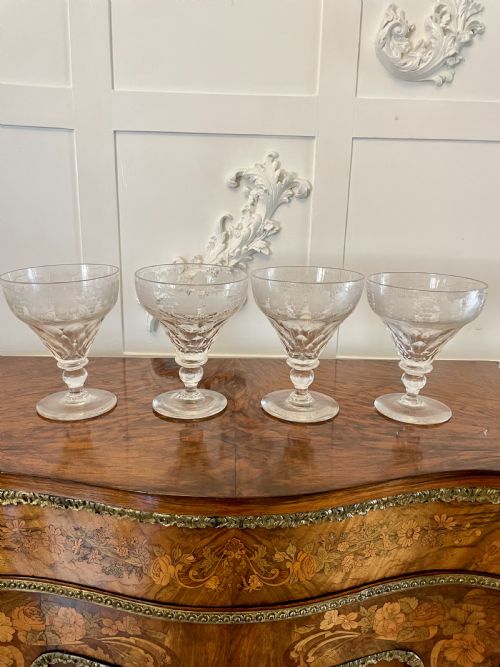
The forms display considerable variety across different decades, moving from Regency and Victorian styles with cut or etched decoration to Edwardian Greek key patterns and 1920s designs.
Quality factors in glass
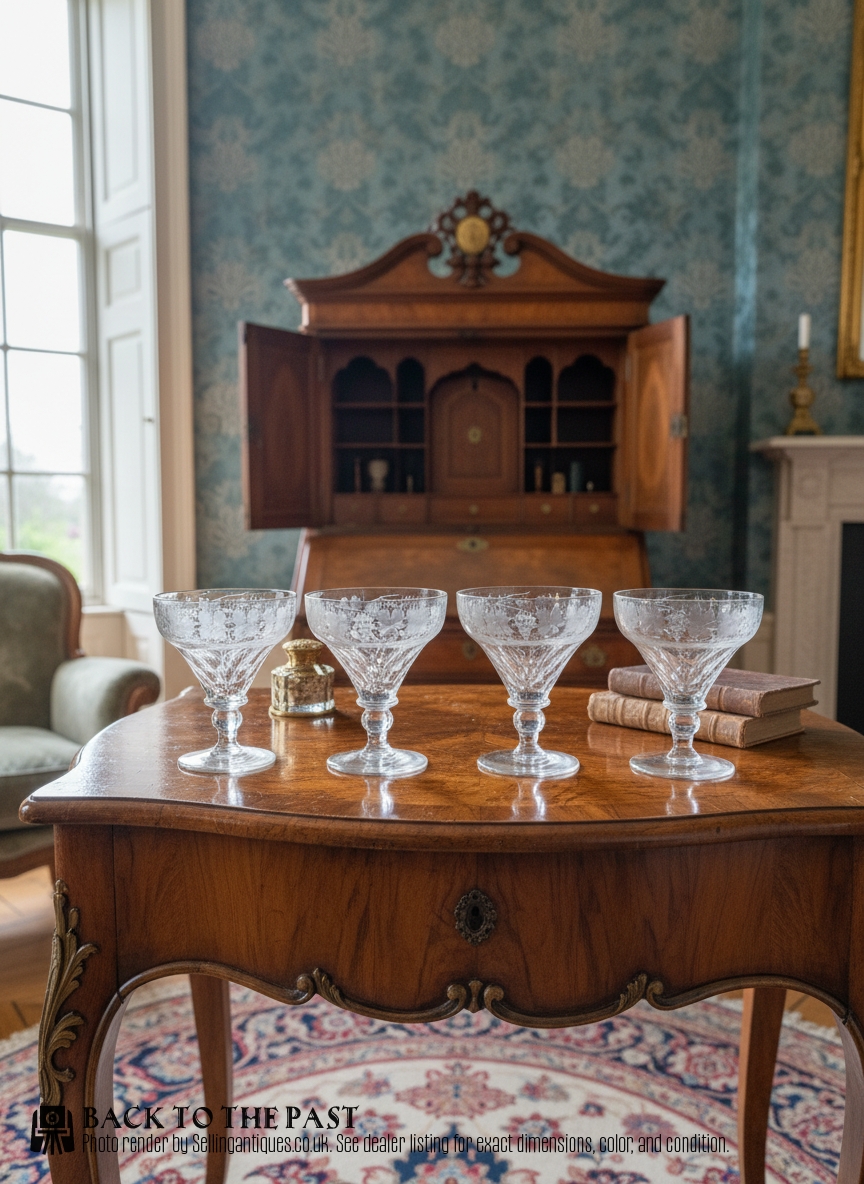
Quality in these drinking vessels rests upon the clarity of the material and the crispness of the hand-cut or engraved decoration. Sharp, deep facet cutting on stems and precise execution of motifs like Greek key patterns or fruiting vines separate finer examples from simpler production.
The presence of matched sets, whether in groups of four, six, or larger assemblies, influences the character of the glassware. Uniformity across a multi-piece set of bowls or glasses indicates careful original production and diligent preservation.
Periods represented on this page span the Regency, Victorian, Edwardian, and 1920s eras.
The Vintage Champagne Coupes Glossary
- Coupe
- A shallow, broad-bowled glass traditionally used for serving sparkling wine.
- Lead Crystal
- Glass containing metallic lead oxide which increases weight, brilliance, and refractive index.
- Facet Cut
- A decorative surface treatment featuring flat, polished planes ground into the glass.
- Cranberry Glass
- A pink-red transparent glass created by adding gold chloride to the molten batch.
- Hollow Stem
- A glass construction where the interior channel extends downward through the stem into the foot.
Vintage Champagne Coupes: Frequently Asked Questions
What is the best way to clean vintage glass?
Hand washing in warm water with a mild detergent is the safest method for cleaning historic glassware. Avoid sudden temperature changes to prevent thermal shock.
Dry each piece promptly with a soft, lint-free linen cloth to maintain the clarity of the cut and etched surfaces.
Can I use these glasses for modern sparkling wine?
These shallow bowls work well for serving champagne, prosecco, and sparkling cocktails. The wide opening allows the aromas to release quickly.
While traditional flutes concentrate bubbles, coupes offer a distinct historical aesthetic and tactile experience for entertaining.
How do I identify Victorian glassware?
Victorian pieces often display heavier lead crystal composition, deep cut patterns, and motifs such as stars or engraved foliage. Examining the pontil mark on the underside can also indicate period manufacturing methods.
Stylistic cues like heavy proportions and specific Victorian or Regency design details help distinguish these eras from later twentieth-century production.
Why do some glasses feature coloured overlays?
Coloured overlays are created by fusing a thin layer of coloured glass over a clear crystal base before cutting. This technique allows the artisan to cut through the outer colour to reveal the clear crystal beneath.
Cranberry, green, and red over crystal examples showcase this layered method, creating high contrast visual patterns.