



Traditional Glass Stemware
Traditional glass stemware brings tactile weight and period character to the table, and these pieces offer genuine historic presence for daily dining.
Traditional Glass Stemware
Traditional glass stemware comprises drinking vessels raised on stems, predominantly appearing as wine glasses, champagne coupes and goblets across this selection. Buyers seeking traditional glass stemware will encounter forms designed for dining and toasts from historical eras rather than modern production.
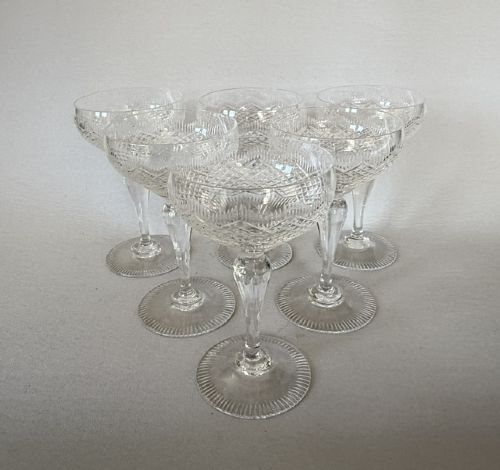
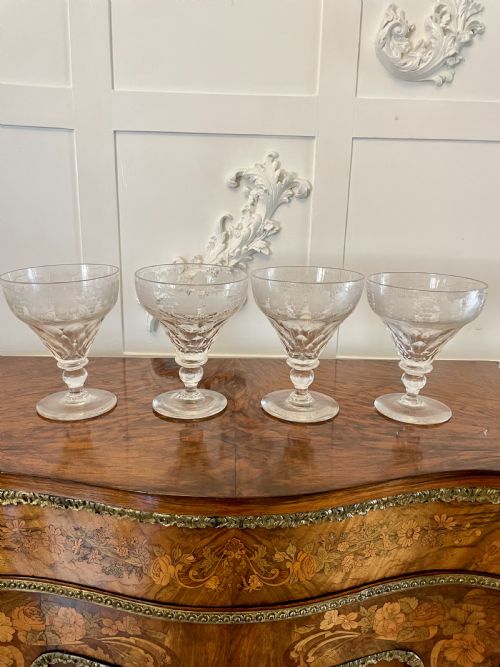
The objects span multiple periods, with Victorian examples appearing alongside Regency, Georgian, Edwardian and Art Deco pieces. Wine glasses and champagne bowls form the core of what is available, varying from single rummers to large sets of sixteen.
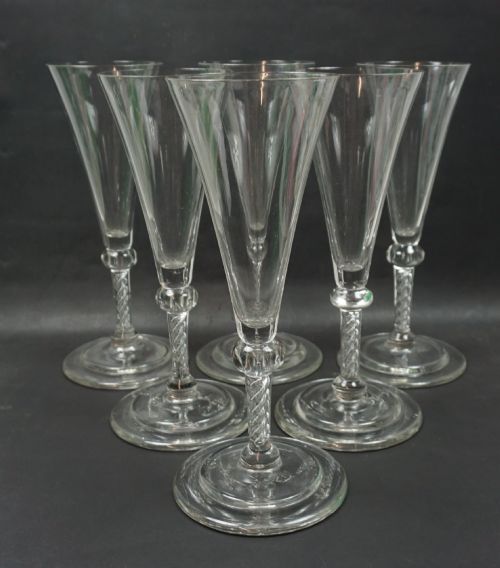
Origins stretch across the nineteenth and early twentieth centuries, capturing shifts in social dining habits and glass manufacturing. Sets range from small champagne bowls to very tall wine flutes on air twist stems.
How they were made
Makers utilised lead glass and crystal, shaping the metal through blowing before applying wheel-cutting and engraving techniques. Clear glass forms the basis for many pieces, whilst cranberry glass introduces rich colour through metallic oxide additions.
Surface decoration relies on skilled wheel-cutting, surface etching and fine engraving to catch the light on bowls and stems. Air twist stems demonstrate specialised manipulation of the molten metal during the blowing process to trap delicate spirals of air within the pillar.
An air twist stem traps breath inside spinning molten glass, freezing a tiny puff of history into the pillar for centuries.
What varies in quality
Quality rests upon the crispness of the wheel-cut facets and the depth and clarity of the engraved motifs. Superior examples display precise symmetry in the bowl and stem, whereas simpler pieces show softer lines and heavier walls.
The integrity of the metal itself marks distinction, with high-lead crystal offering superior refractive brilliance and resonance compared to standard utility glass. Consistency across a matched set elevates the standing of drinking vessels far above mismatched or single survivals.
The Traditional Glass Stemware Glossary
- Air twist
- A stem containing an internal spiral of tiny air bubbles formed during the drawing of the molten glass. This technique requires exceptional control by the glassblower.
- Rummer
- A heavy, large-bowled drinking glass popular for wine, rum or ale during the Georgian and Regency periods. It typically sits on a short, sturdy foot.
- Champagne coupe
- A shallow, broad-bowled stemmed glass designed originally for sparkling wine. The wide bowl allows the aromas of older styles of champagne to open quickly.
- Lead crystal
- Glass containing a significant proportion of lead oxide, which increases weight, clarity and the ability to hold deep, sharp wheel-cut decoration. It produces a clear ring when struck gently.
Traditional Glass Stemware: Frequently Asked Questions
Can I use these glasses for daily dining?
These drinking vessels were made for use and handle well during modern meals, provided they are treated with care. Sturdy Georgian and Victorian forms withstand gentle handling during dinner parties.
Store them upright on stable shelves where stems will not be knocked, and avoid stacking bowls inside one another to prevent rim chips.
How do I date a glass without a mark?
Dating relies on observing the form of the bowl, the thickness of the metal, and the style of the cutting or engraving. Pontil marks on the underside of the base also help establish the era of manufacture.
Compare the silhouette and decorative motifs against documented periods like Regency, Victorian or Edwardian to narrow down the decade of production.
Why do some sets have mismatched heights?
Handmade historical glass was produced without modern factory standardisation, meaning individual pieces in a set often vary slightly in height and weight. This variance confirms the traditional methods used by past workshops.
Harlequin sets deliberately assemble glasses of similar eras or patterns rather than matching factory runs, creating a varied table setting.