
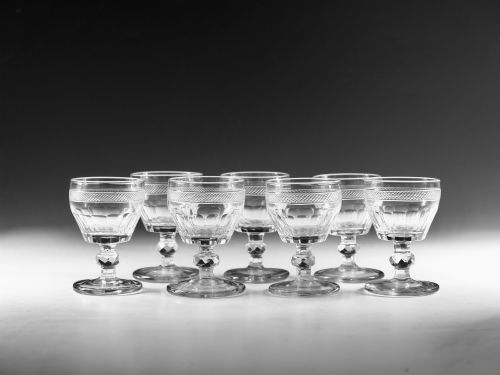


Facet Cut Stem Glasses
Facet cut stem glasses are drinking vessels with geometric stems, catching the light across Georgian, Victorian, and later centuries.
Facet Cut Stem Glasses
When you search for facet cut stem glasses, you are looking at drinking vessels defined by stems shaped with flat polished planes rather than smooth curves or heavy moulding. These pieces span several centuries of production, appearing in British and Bohemian glassware.
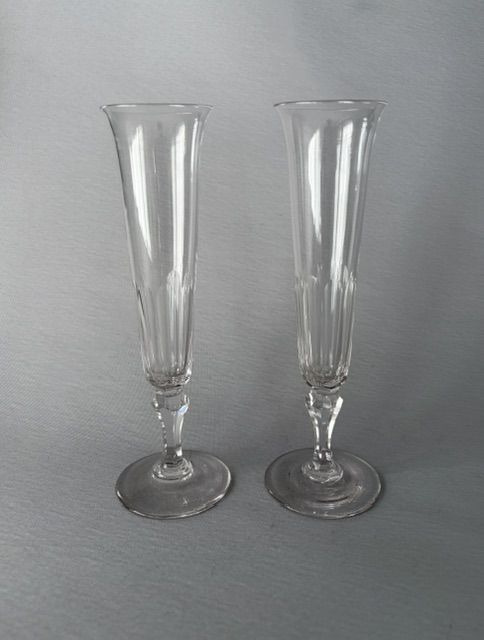
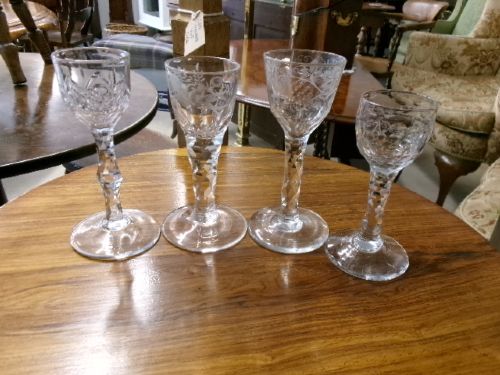
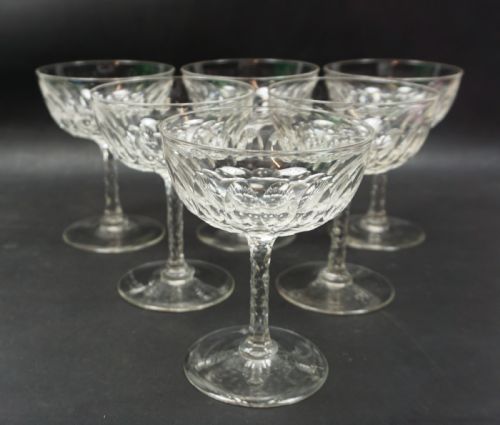
The versions you are most likely to meet on this page include Georgian wine glasses, cordials, and ale flutes alongside later Victorian and 19th-century champagne coupes and hocks. Forms range from simple drinking glasses to engraved goblets with wide foot bases.
The category encompasses both English tavern or table glasses from the 18th century and more decorative continental output. Collectors prize the way the stem facets refract light, a technique that emerged as a distinct aesthetic in drinking vessels.
How they were made
Makers formed these drinking vessels from lead crystal and clear glass, utilising high lead content to achieve brilliance and weight. The material allowed artisans to grind sharp, clean facets into the stem once the basic vessel was blown.
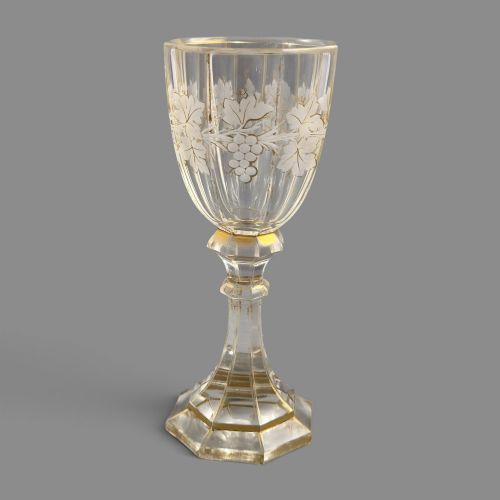
Decoration on the bowl often involved wheel engraving, depicting motifs such as hops and barley or Jacobite symbols alongside occasional gilding. The stem facets were ground and polished by hand, creating distinct polygonal patterns beneath the bowl.
Object types include wine glasses, champagne coupes, ale flutes, and port glasses decorated with engraving and gilding.
What varies in quality
The distinction between ordinary and exceptional pieces lies in the crispness of the facet cutting and the proportional balance of the bowl, stem, and foot. Sharp, evenly spaced facets demonstrate superior hand-polishing skill from the glasscutter.
Clarity of the metal and subtlety of any accompanying bowl engraving also separate standard utility glasses from high-status drinking vessels. The weight of the lead crystal and the stability of the wide foot base contribute to the overall execution.
James Giles·Moser
The Facet Cut Stem Glasses Glossary
- Facet cut
- A decorative technique where geometric planes are ground onto the surface of glassware to reflect light. This creates sharp angles along the stem.
- Lead crystal
- A type of glass containing lead oxide, which increases weight, refractive index, and clarity. It provides the ideal medium for deep cutting.
- Ale flute
- A tall, narrow drinking vessel designed for serving ales or beers, frequently featuring engraved decoration. These often sit on a wide foot base.
- Jacobite engraving
- Secret political iconography applied to 18th-century glassware, often featuring roses and specific symbols. Such decoration adds historical context to facet stemmed pieces.
- Römer
- A traditional continental European goblet style, typically featuring a large bowl on a decorated stem. These sometimes incorporate gilding and coloured glass.
Facet Cut Stem Glasses: Frequently Asked Questions
How do I date a facet cut stem glass?
Dating relies on observing the form of the bowl, the style of the foot, and the configuration of the stem facets alongside any engraving. Eighteenth-century examples often exhibit distinct tool marks and specific metal weights compared to later Victorian pieces.
Changes in glass technology and decorative motifs also help narrow down the period. Consulting comparative examples within the same material helps confirm the likely decade of manufacture.
What were facet cut stem glasses used for?
These vessels served various alcoholic drinks at the table, including wine, port, sherry, champagne, and ale. Different bowl shapes corresponded to specific beverages consumed during formal dining.
Smaller cordials and dram glasses handled potent spirits, while larger goblets accommodated communal toasts. The faceted stem offered a secure grip during use.
Are these glasses safe to drink from?
Most antique drinking vessels remain usable for dining provided they are free from structural cracks or active damage. Careful handling ensures they continue to function as intended.
Some collectors prefer to reserve them for occasional use or display due to their age and historical value. Modern beverages will not harm stable lead crystal during normal use.