


Antique Faceted Stem Glasses
Antique faceted stem glasses are elegant drinking vessels with cut stems, offering substantial weight and brilliant light refraction for your table.
Antique Faceted Stem Glasses
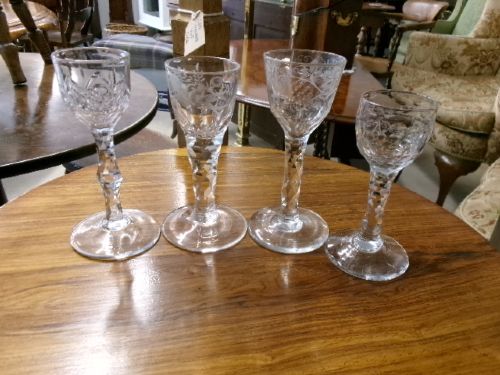
You find traditional silhouettes such as wine glasses, rummers, cordials, and goblets originating from the Georgian, Victorian, and Regency periods. These pieces range from simple clear glass to elaborately engraved and gilded examples.
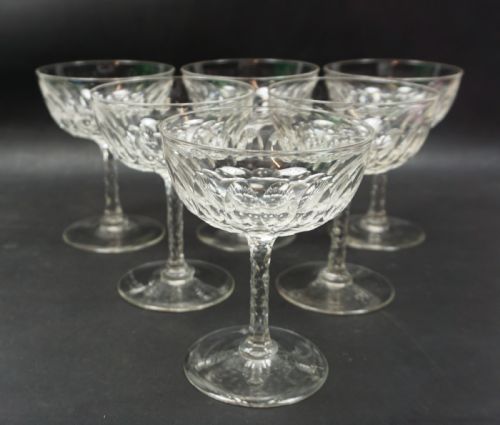
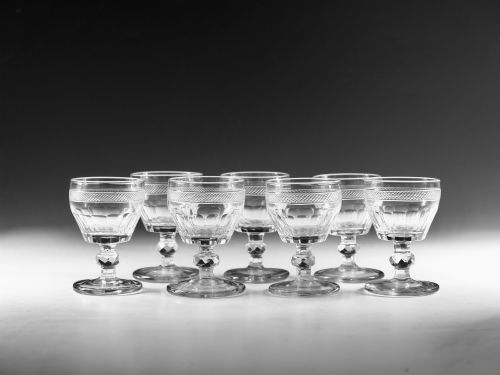
English and Bohemian makers produced these drinking glasses in various formats, including individual specimens and matched sets like champagne coupes or liquor glasses. The defining characteristic across these varied object types remains the cut stem.
How they were made
Craftsmen utilised lead crystal, lead glass, and clear glass to create these drinking vessels, often employing heavy metal content for superior clarity and heft. The metal was blown into initial forms before undergoing extensive surface work.
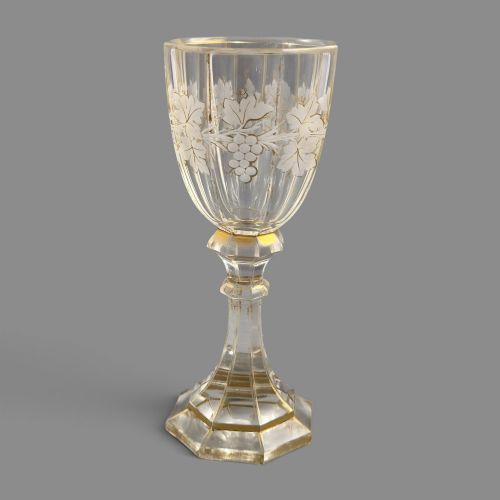
Artisans applied wheel-cutting techniques to fashion the distinctive facets along the stems, creating flat planes that catch the light. Additional decoration on the bowls involved detailed wheel engraving depicting botanical motifs, alongside touches of gilding.
Listings feature lead crystal and clear glass across eighteenth, nineteenth, and twentieth-century periods.
What varies in quality
The precision and crispness of the facet cutting along the stem determine the visual sharpness and tactile feel of the glass. Superior examples display clean, uniform angles that catch the light evenly without blurring.
The refinement of bowl engraving and the inclusion of hand-applied gilding separate standard drinking vessels from exceptional display pieces. Furthermore, the overall weight, clarity of the lead crystal, and presence of a well-balanced wide foot base influence the overall standard of the object.
Moser Bohemian·James Giles
The Antique Faceted Stem Glasses Glossary
- Faceted stem
- A glass stem shaped with multiple flat polished planes rather than a smooth round profile. This technique enhances the sparkle of the glass under candlelight.
- Rummer
- A large, wide-bowled drinking vessel popular in the eighteenth and nineteenth centuries. These sturdy glasses were frequently utilised for ale, wine, or punch.
- Jacobite engraving
- Decorative motifs cut or engraved onto glass bowls referencing the exiled House of Stuart. Collectors prize these symbolic political designs.
- Hook wine glass
- A specific continental form of glassware, particularly associated with Bohemian production. These glasses often feature distinctive coloured bowls and patterned stems.
- Ale flute
- A tall, narrow drinking glass designed to retain the carbonation of malt beverages. Eighteenth-century versions often featured hop and barley engravings.
Antique Faceted Stem Glasses: Frequently Asked Questions
What are antique faceted stem glasses?
These pieces are historical drinking vessels featuring stems shaped with flat cut planes. They encompass various forms including wine glasses, cordials, and rummers produced across multiple centuries.
The cutting technique provides both visual brilliance and a secure grip. Collectors encounter examples originating primarily from English and Bohemian workshops.
How were these glasses used originally?
People utilised these vessels for serving fine beverages such as wine, port, ale, and champagne during formal meals and gatherings. Different bowl shapes corresponded to specific drinks.
Larger rummers served robust ales and punch, while slender flutes preserved the effervescence of fermented brews. Smaller cordial and liquor glasses suited potent post-dinner drinks.
How do I identify Georgian glass?
Georgian pieces typically exhibit heavy lead metal content, deep pontil marks on the underside of the foot, and subtle surface irregularities from hand production. The forms reflect the prevailing neoclassical or Georgian design tastes.
Engraving styles from this era frequently incorporate naturalistic motifs like hops, barley, or symbolic political imagery. The presence of a wide foot base further supports this period attribution.