
Georgian Glass Wine Glasses
Georgian glass wine glasses bring the refined craftsmanship of the eighteenth and nineteenth centuries directly to the modern dining table.
Georgian Glass Wine Glasses
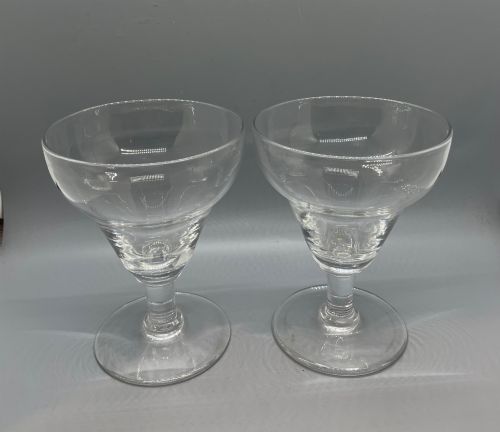
Georgian glass wine glasses encompass drinking vessels produced primarily across the eighteenth and early nineteenth centuries, reflecting diverse styles from plain stems to elaborate twists. Buyers exploring this category encounter everything from intimate single specimens to coordinated sets originating from English and Irish glasshouses.
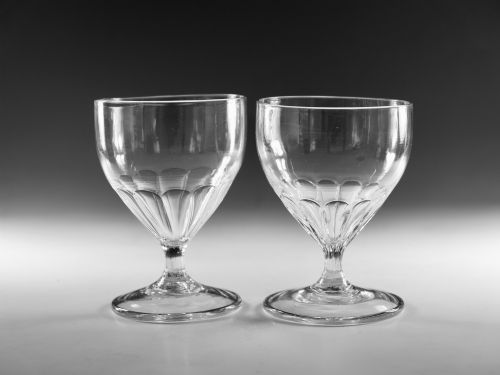
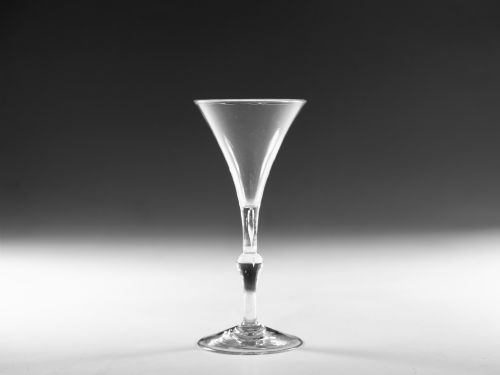
The assortment on this page spans distinct chronological markers, heavily weighted toward eighteenth-century examples alongside Regency and Victorian pieces. Forms range from heavy baluster goblets and tall flutes to robust rummers and delicate sweetmeat glasses.
Materials and production techniques
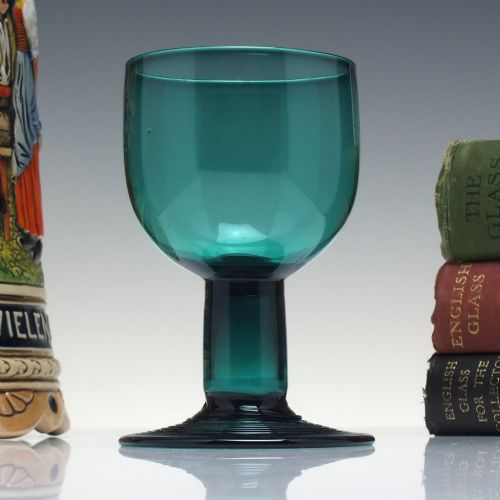
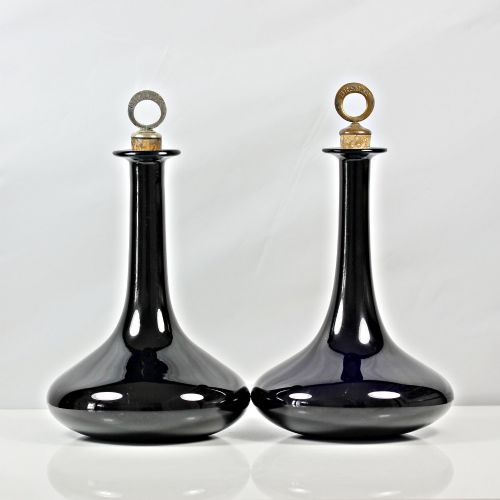
The dominant material across these listings is lead glass, often referred to as flint glass or lead crystal, which provided the heavy weight and brilliant refractive quality demanded by makers. Coloured variants utilised metallic oxides melted into the batch to achieve deep green, blue, amber, and amethyst hues.
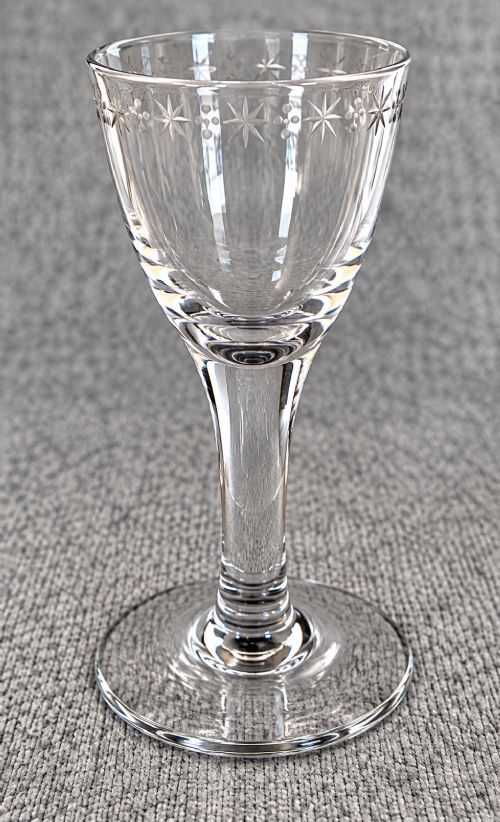
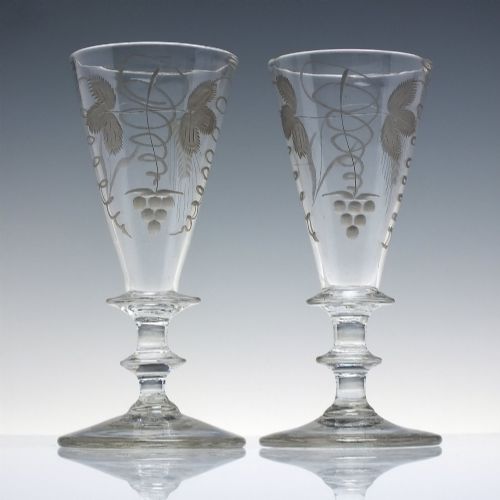
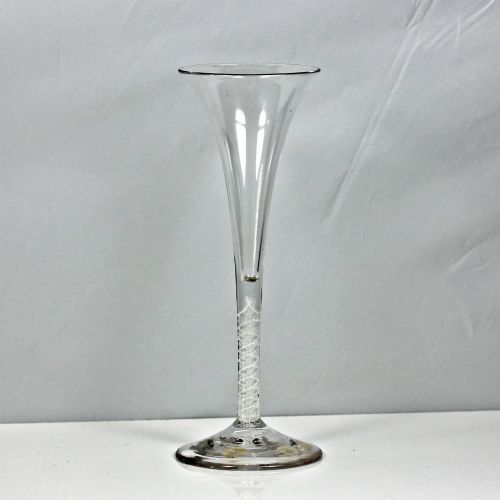
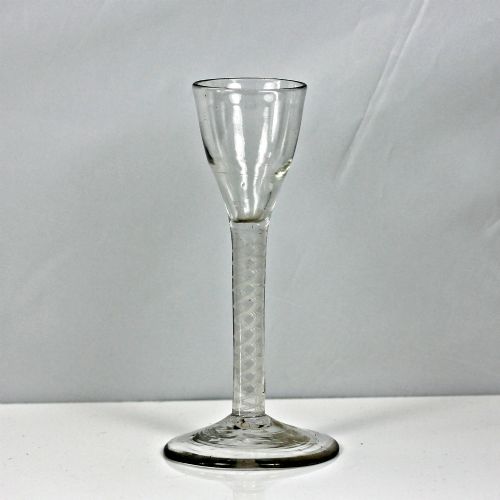
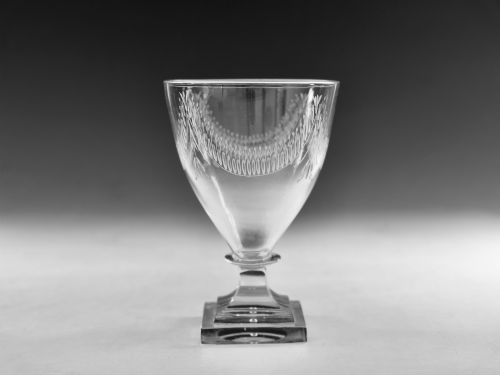
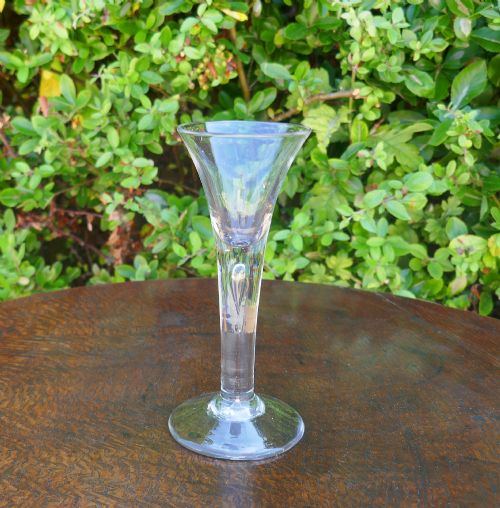
Stem formations required specialised manipulation while the metal remained hot, incorporating trapped air bubbles, multi-spiral air twists, or opaque white enamel threads drawn through the glass. Bowls and feet were frequently shaped using wooden or metal tools before undergoing surface embellishment through wheel engraving or geometric facet cutting.
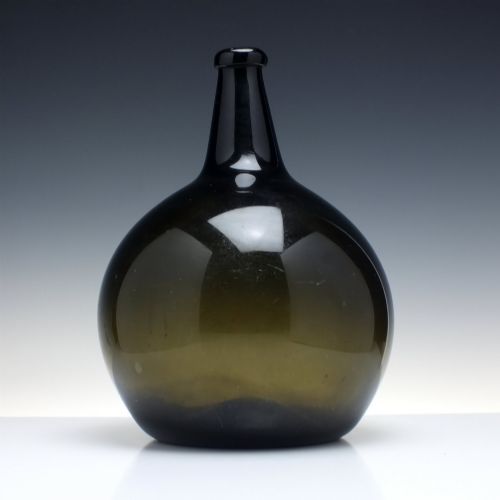
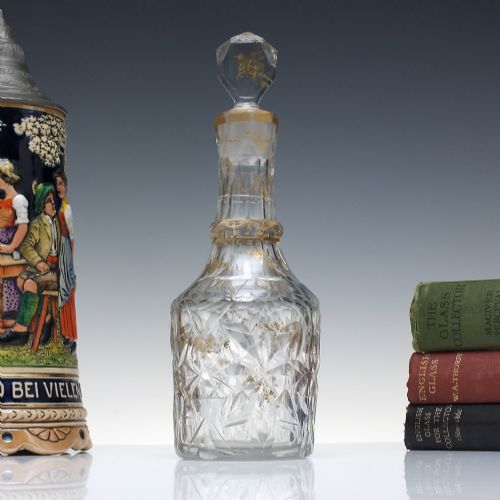
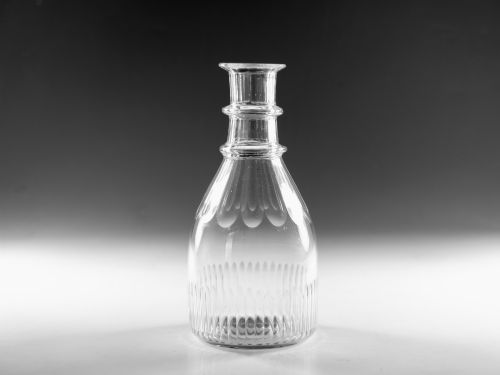
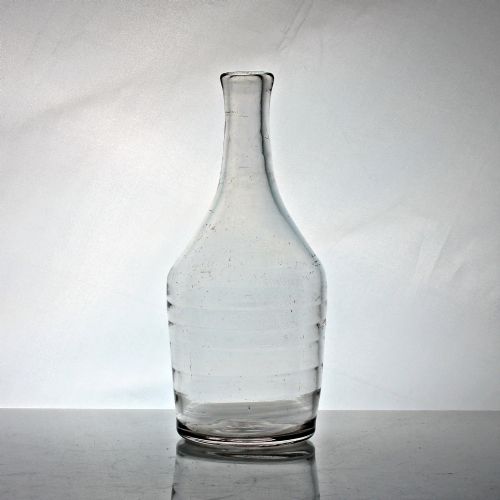
Recorded forms range from heavy baluster goblets and rummers to delicate air twist flutes and shoulder decanters.
Factors influencing quality
Quality in these drinking vessels rests upon the clarity of the metal, the precision of the stem formation, and the balance of the overall silhouette. Superior examples display heavy, resonant lead glass free from excessive cloudiness or heavy inclusions, combined with finely proportioned bowls and neatly finished feet.
The complexity of the interior stem structure and the crispness of any exterior engraving or facet cutting determine the upper tier of the range. Masterful execution of air twists or opaque enamel threads elevates a piece above standard utility ware, showing exceptional control by the glassblower.
Atelier of James Giles
The Georgian Glass Wine Glasses Glossary
- Air twist
- A stem containing elongated internal spirals of air trapped during the drawing process. This technique creates a delicate, shimmering effect within the glass.
- Opaque twist
- A stem enclosing fine threads of white or coloured enamel glass, often arranged in single or double series spirals. These decorative filaments contrast sharply with the clear metal around them.
- Baluster
- A heavy, swelling stem shape reminiscent of architectural pillars, frequently featuring multiple knops or nodes. It provides substantial weight and a solid grip to early drinking vessels.
- Rummer
- A large, robust goblet style popular from the late eighteenth century onward, typically featuring a short stem and a capacious bowl. They served multiple purposes for wine, ale, and spirits.
- Facet cut
- Geometric planes ground and polished into the surface of the bowl, stem, or foot to catch the light. This technique gained immense popularity during the Regency period.
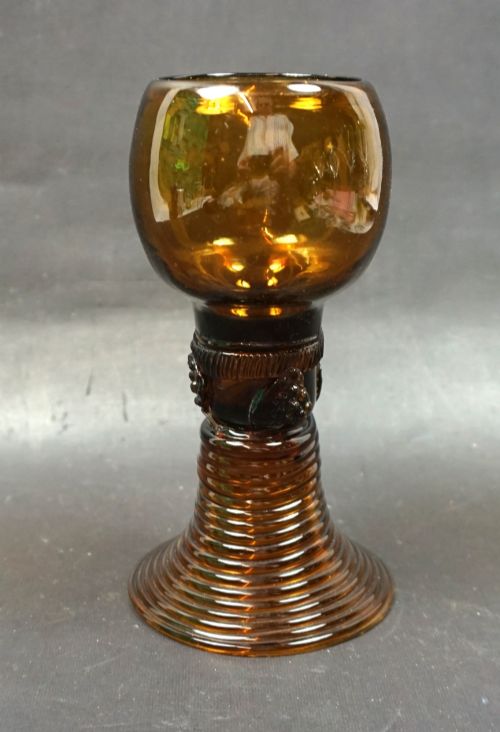
- Roemer
- A traditional continental drinking vessel featuring a wide bowl atop a ribbed or coiled stem and a hollow foot formed from wrapped glass trails.
Georgian Glass Wine Glasses: Frequently Asked Questions
What distinguishes an air twist stem?
Air twist stems contain fine, spiralling channels of trapped air running through the length of the glass. Glassmakers achieved this by piercing hot metal with pins and drawing the stem out.
This technique produced a distinctive optical effect that catches candlelight differently than plain or faceted stems. Collectors prize these pieces for the high degree of skill required in their manufacture.
How were coloured glasses produced?
Coloured glass was created by adding specific metallic oxides to the molten batch during the melting process. Cobalt produced deep blues, copper or iron oxides created greens, and manganese yielded amethyst tones.
These rich colours became particularly fashionable during the Regency period and remain highly sought after by collectors today. The depth of colour often varies depending on the thickness of the vessel wall.
What is a rummer used for?
Rummers are large, sturdy drinking vessels designed for everyday consumption of wine, punch, or ale rather than formal dining. Their robust construction and wider bowls suited the heavier drinking habits of the late eighteenth and early nineteenth centuries.
They frequently feature cut facets or simple engraved decoration around the rim. Their durability ensured that many survived in usable condition.