


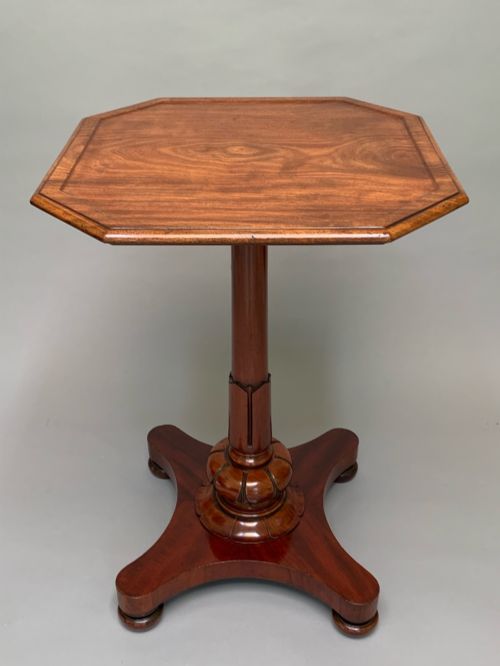
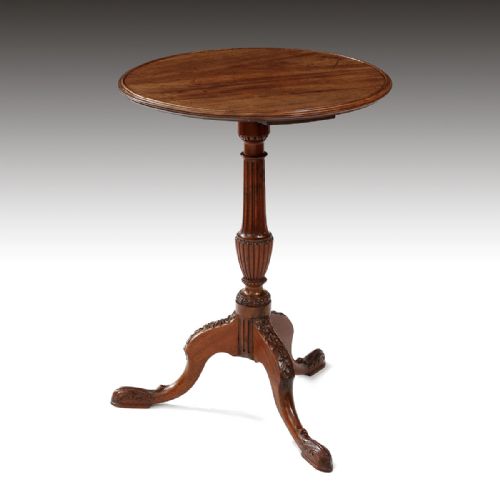
Antique Mahogany Wine Stand
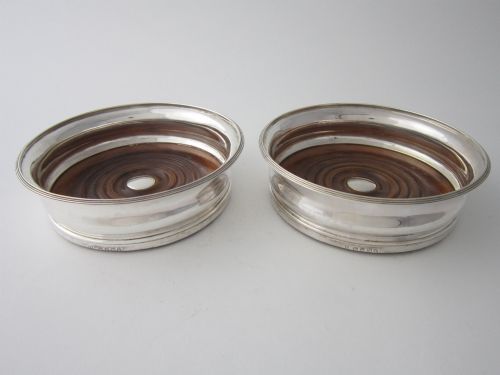
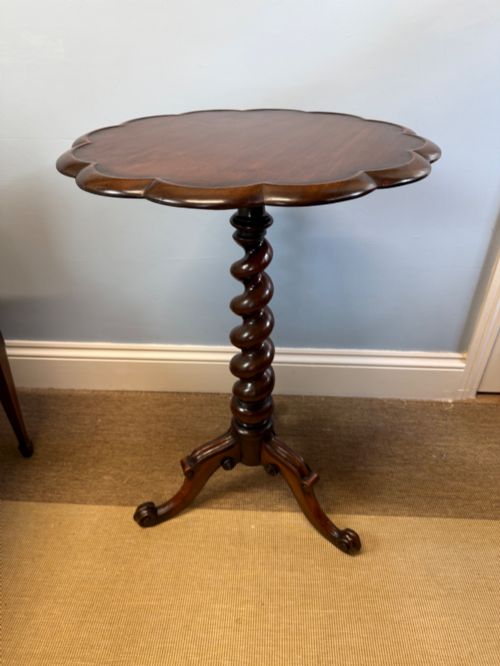
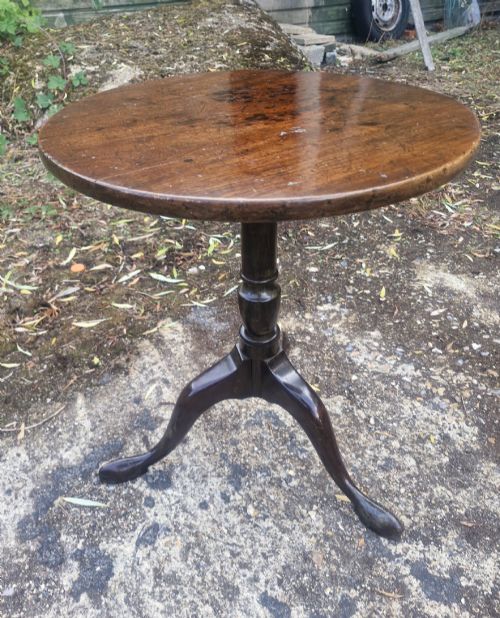
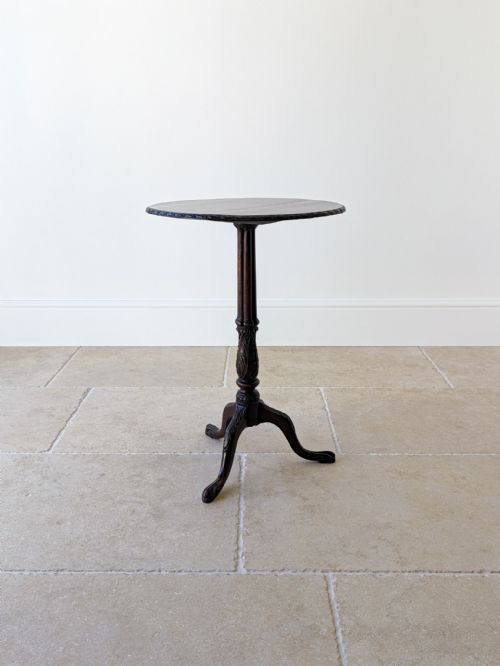
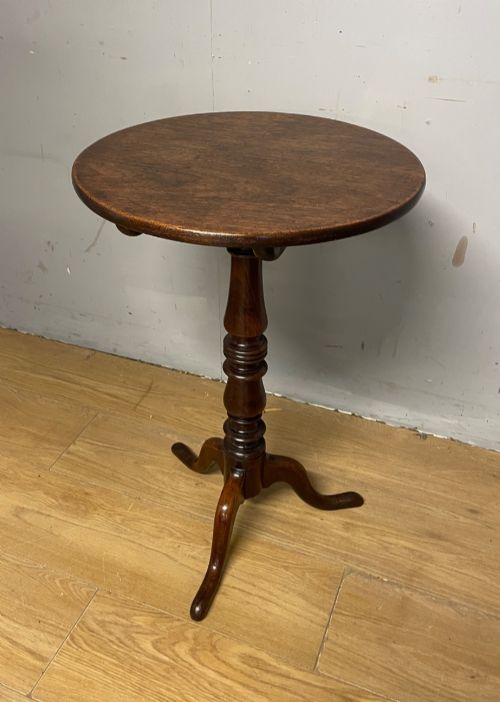
An antique mahogany wine stand is a compact table designed for drinks, holding examples from Georgian, Regency and Victorian periods.
Antique Mahogany Wine Stand
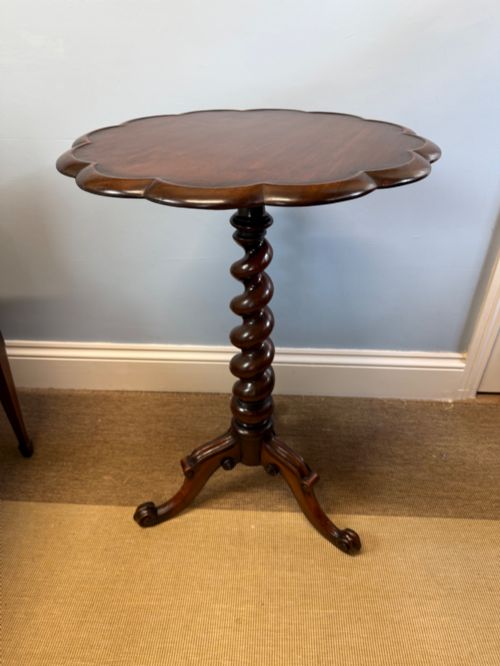
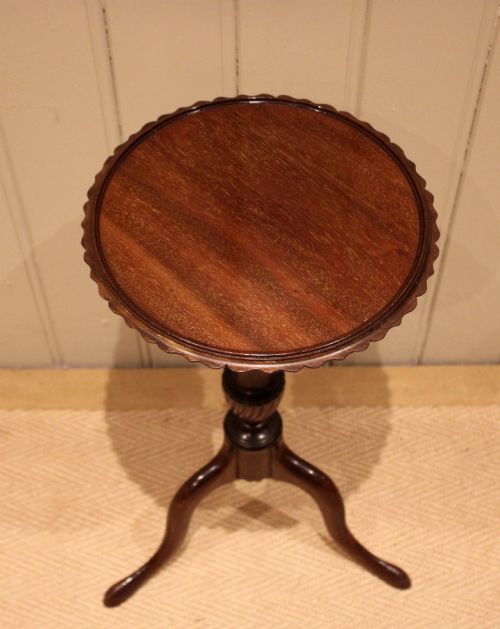
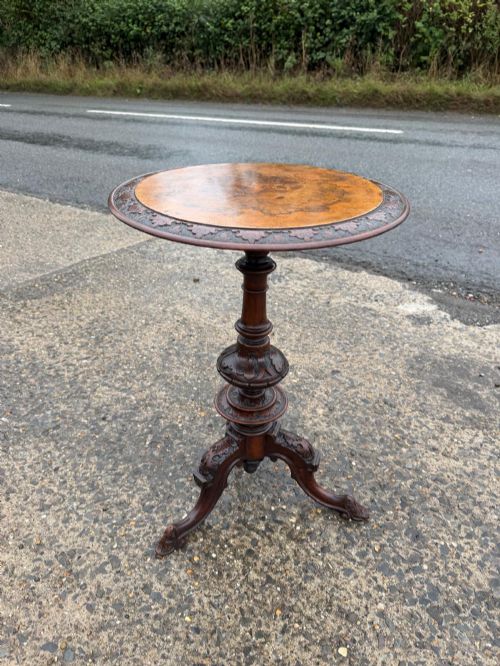
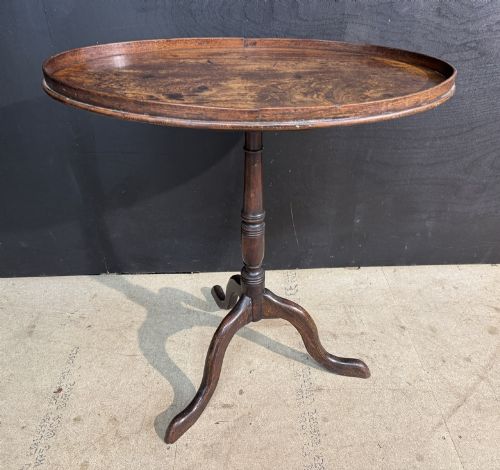
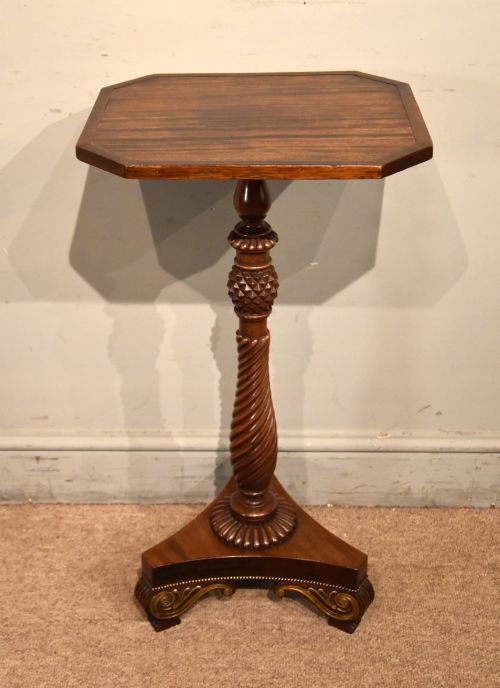
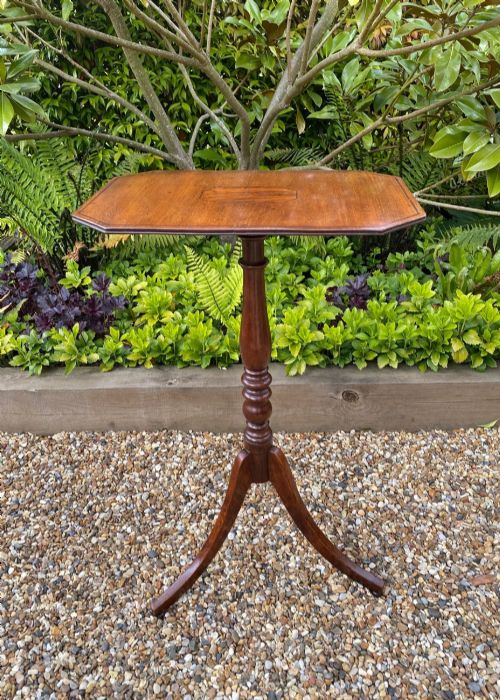
When you search for an antique mahogany wine stand, you encounter small tables, tripod stands and occasional pieces originating from Georgian, Victorian and Edwardian eras. These items served households by holding glassware, bottles or lamps in parlours and dining rooms. The forms include tilt-top tables, circular lamp tables and occasional side tables built for domestic utility.
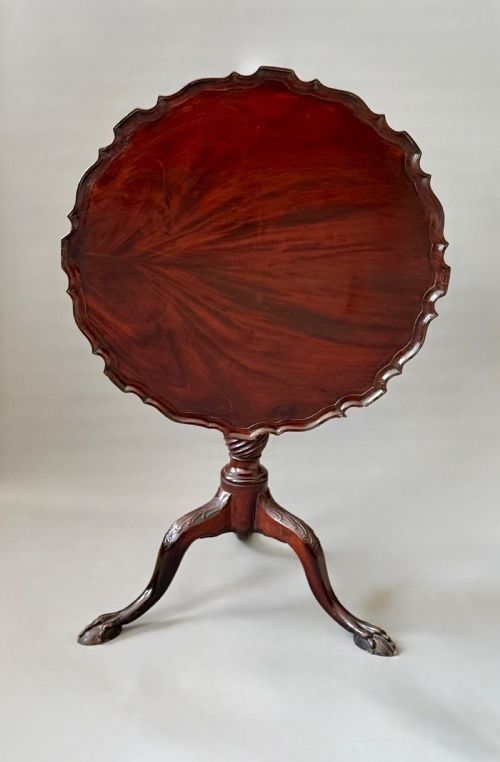
The most common examples on this page date from the nineteenth and early twentieth centuries, alongside pieces from the eighteenth century. You find tripod pedestal bases supporting circular, oval or pie crust tops. Certain items incorporate tilt mechanisms or snap tops for storage against walls when not in use.
Materials and Construction
Cabinetmakers constructed these tables predominantly using solid mahogany and mahogany veneers, occasionally incorporating burr wood, cherry wood or walnut. Timber preparation involved selecting rich grain patterns for table tops, supported by turned pedestals and three-legged tripod bases. Brass fittings, cast iron components and wood inlay appear on specific examples to accent the design.
Joining techniques relied on traditional cabinetmaking methods, securing pedestals to legs with stable joints and fitting tilt-top mechanisms with reliable catches. Polishing brought out the natural depth of the mahogany grain without excessive artificial colouring. Metal accents like brass bands reinforced cooling vessels and stands.
Listings feature mahogany, burr wood, cherry wood and ebonised wood across Georgian, Victorian and Edwardian periods.
Distinctions in Standard
Quality in an antique mahogany wine stand rests on the selection of timber figures, such as burr wood or finely grained mahogany. Master cabinetmakers achieved balance in tripod legs and crispness in carved details like pie crust rims or inlaid borders. Proportion and stability dictate the standing of a piece within its period.
The integrity of the tilt mechanism and the crispness of turning on the central pedestal separate standard production from superior examples. Original surfaces with patination reflect careful historical use, whereas altered structures or replacement bases diminish the integrity of the piece.
Gillow
The Antique Mahogany Wine Stand Glossary
- Tripod table
- A small occasional table supported by three legs radiating from a central pillar. This form gained popularity during the Georgian period for stability on uneven floors.
- Tilt-top
- A table top hinged to the pedestal so it can rotate vertically for storage. This mechanism allowed servants to clear floor space easily.
- Pie crust rim
- A raised, scalloped edge carved from the solid timber of the table top. It prevented glasses and decanters from sliding off during use.
- Wine cooler
- A vessel lined for holding bottles and ice, frequently set upon a dedicated stand. Examples range from brass-bound octagonal buckets to serpentine cabinets.
- Cellarette
- A freestanding or stand-mounted box designed to store wine bottles securely. These pieces often feature internal partitions for individual bottles.
Antique Mahogany Wine Stand: Frequently Asked Questions
What is a wine stand used for?
These pieces held wine bottles, glasses, kettles or lamps within easy reach during social gatherings in formal rooms.
Their compact size allowed servants to move them about the house as evening hospitality shifted from dining to conversation.
How do I identify a Georgian wine table?
Georgian examples display classic proportions, fine timber selection and restrained carving on the tripod legs and pillar.
Look for traditional construction methods, such as pegged joints and hand-turned pedestals characteristic of the eighteenth century.
What is a tilt-top mechanism?
A tilt-top mechanism utilises a catch block beneath the table surface allowing the top to pivot flat or vertical.
This clever design let households store the tables compactly against walls when the parlour was not in use.
Are these tables sturdy enough for daily use?
Tripod tables offer surprising stability on even surfaces due to the three-point contact of their legs.
Careful placement away from heavy traffic keeps the timber and joints secure during everyday service.