
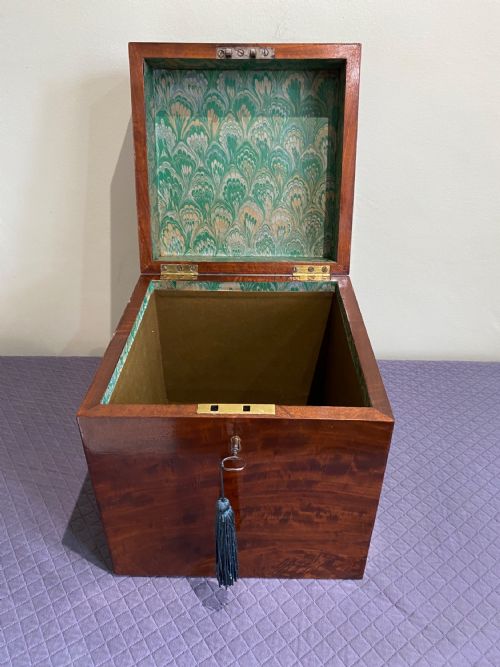


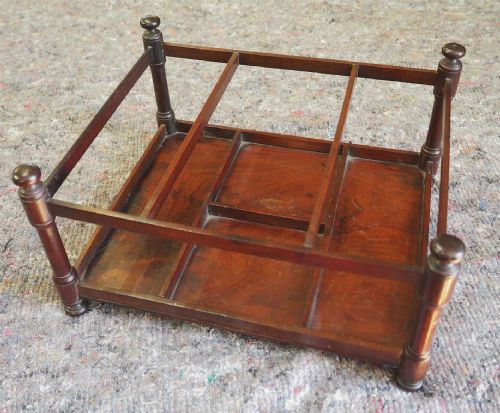


Mahogany Decanter Caddy
These mahogany decanter caddy pieces are sturdy table vessels designed to hold glass bottles securely, offering both function and rich timber grain for the home.
Mahogany Decanter Caddy
A mahogany decanter caddy is a specialised container or carrier designed for holding glass drinks bottles securely on a dining table or sideboard. When you search for this phrase, you are looking at items built to keep heavy glass safe during service and storage.
The versions you are most likely to meet on this page span the eighteenth century, the Georgian era, and the Regency period. They take forms such as bottle carriers, cellarettes, stands, and boxes.
Makers shaped these utilitarian objects from dense timber, often creating compartments for two or four sections to separate individual bottles. Surviving examples range from simple wooden holders to inlaid designs paired with silver plate.
How they were made
Craftsmen built these pieces primarily from solid timber like mahogany and padouk, relying on the natural strength and rich grain of the wood. Many examples incorporate brass for carrying handles, dividers, or protective feet.
Some pieces feature decorative touches such as satinwood or paper inlay, alongside bone details and fitted glass bottles. Joinery and hardware were chosen to withstand the heavy weight of full glass decanters.
Some holders were clearly designed with thirsty guests in mind, featuring four distinct sections to ensure nobody ever ran dry.
What varies in quality
Quality in these items rests on the choice of timber and the precision of the compartment dividers. Finer examples display carefully selected grain patterns and robust brass mounts that integrate smoothly with the wooden structure.
The complexity of the form also marks out superior pieces, from freestanding bottle stands to multi-section carriers with integrated handles. Simpler holders focus strictly on utility, whereas better specimens balance robust construction with refined decorative detailing.
The Mahogany Decanter Caddy Glossary
- Cellarette
- A low cabinet or box designed to hold bottles of wine and spirits near the dining table. They often feature internal divisions to keep glass vessels secure.
- Tantalus
- A locking beverage stand that displays decanters while preventing access to the contents without a key. The frame holds the bottles firmly by their necks.
- Padouk
- A heavy tropical hardwood with a reddish hue used in colonial furniture making. It provides exceptional durability for items subjected to regular handling.
- Satinwood
- A pale, lustrous timber utilised for contrasting inlay work and decorative banding. Craftsmen favored it to highlight geometric patterns on box surfaces.
- Treen
- Small handmade wooden household objects and utensils. This term describes utilitarian items shaped from timber for daily domestic use.
Mahogany Decanter Caddy: Frequently Asked Questions
What is a mahogany decanter caddy used for?
These pieces were built to hold glass decanters and bottles safely during dining or evening service. They kept heavy glassware organised on the table or sideboard.
Collectors today use them for display purposes or to hold vintage bottles in a traditional dining room setting.
How do I date an 18th century caddy?
Dating relies on observing the wood species, hardware construction, and joinery methods used in the piece. Eighteenth-century items often show hand-cut elements and heavy brass fittings.
Comparing the style, such as Georgian proportions or Sheraton inlay, against known period examples helps narrow down the decade of manufacture.
What is the difference between a caddy and a cellarette?
A caddy is typically a portable carrier or box with handles meant to sit on a tabletop for serving drinks. A cellarette is usually a larger freestanding container or floor-standing chest.
Both serve the primary function of storing glass bottles, but their scale and placement in the room differ significantly.
Are these items sturdy enough for daily use?
Most of these pieces were constructed from dense hardwoods like mahogany to endure the heavy weight of glass bottles. Their original purpose required robust joinery and durable materials.
Modern owners often continue to use them for holding drinks, provided the timber and internal dividers remain stable and secure.