


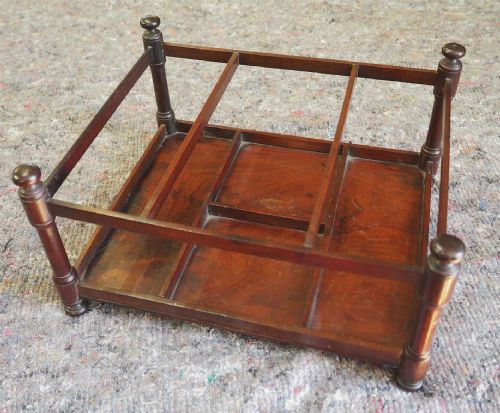

Dark Wood Bottle Caddy
These dark wood bottle caddy pieces offer a practical way to hold vintage decanters and bottles close at hand.
Dark Wood Bottle Caddy
A dark wood bottle caddy is a functional container designed to hold multiple glass bottles or decanters securely together. When exploring dark wood bottle caddy selections, buyers frequently encounter mahogany frames dating from the eighteenth and nineteenth centuries.
The objects span several distinct forms, including multi-section carriers, cellarettes, and open wine coolers. Georgian examples sit alongside Edwardian tantalus sets and Anglo-Indian colonial pieces within the recorded inventory.
Makers utilised rich timbers like mahogany, padouk, and oak to construct these robust tabletop and floor-standing accessories. Each configuration reflects the entertaining habits of its period, prioritising secure transport and elegant display for wine and spirits.
How they were made
Craftsmen built these pieces using solid timbers such as mahogany and padouk, frequently accentuating the grain with decorative inlay work. Structural strength was essential for bearing the heavy weight of glass bottles filled with liquid.
Metal components played a crucial functional role in construction. Brass handles, mounts, and silver-plated hardware reinforced the wooden frames and provided secure gripping points for transport.
Interior divisions were carefully fitted to match the specific diameters of period decanters and wine bottles. These partitions kept vessels from colliding and chipping during movement around the dining table.
Some antique carriers feature hidden compartments designed specifically to keep corkscrews from rolling away between courses.
What varies in quality
The refinement of the timber selection dictates the visual appeal of the piece. Highly figured mahogany or exotic padouk with deep natural chatoyancy commands greater admiration than plain, utilitarian oak.
The integration of metal hardware demonstrates the standard of workshop execution. Substantial brass fittings and crisp silver plating indicate a higher tier of production than simple iron fasteners.
Joinery execution distinguishes everyday utility items from superior examples. Precise corner joints and well-fitted internal dividers show the maker's care and skill.
Gillows
The Dark Wood Bottle Caddy Glossary
- Cellarette
- A lockable container used to store wine bottles near the dining table. They often feature fitted interior compartments and substantial wooden construction.
- Tantalus
- A locking beverage stand that holds decanters securely while exposing their contents. The frame prevents guests from removing the bottles without a key.
- Padouk
- A dense tropical hardwood known for its reddish-brown colour and durability. It frequently appears in colonial furniture and cabinetmaking.
- Inlay
- A decorative technique where contrasting materials are inserted into recesses in the wood surface. Common motifs include geometric lines and lighter wood veneers.
- Treen
- Small handmade wooden objects for domestic use. The term encompasses turned and carved items from domestic hardwood timbers.
Dark Wood Bottle Caddy: Frequently Asked Questions
What is a dark wood bottle caddy?
A dark wood bottle caddy is a portable or stationary wooden frame designed to organise and transport multiple glass bottles or decanters. These items typically feature compartments or metal dividers to keep glassware separated and stable.
Historically used in elite dining rooms and drawing rooms, they allowed hosts to present wine and spirits directly at the table. Surviving examples showcase various historical periods from the Georgian era through to Edwardian times.
How were cellarettes used?
Cellarettes served as secure storage containers for wine bottles when dining rooms lacked built-in cellars or sideboards with fitted bottle drawers. Servants would fill them with bottles before the meal and keep them close to the dining table for easy access.
Many featured internal metal linings or lead inserts, which allowed ice or cold water to chill the wine. Locking mechanisms ensured valuable vintages remained secure from unauthorised consumption.
How do I care for antique wood?
Antique wooden caddies require stable indoor humidity and protection from direct sunlight to prevent the timber from drying out or splitting. Gentle dusting with a dry cloth keeps the surface clean without damaging the historic finish.
Applying occasional appropriate wax preserves the sheen of mahogany and oak. Avoid placing damp bottles directly onto bare wood to prevent water rings and staining.
How can I tell the period?
Dating these pieces relies on examining the cabinetmaking techniques, wood species, and hardware styles. Georgian pieces often display rich mahogany with hand-cut joinery, while Edwardian examples might incorporate silver-plated fittings and locks.
Design motifs also offer clues, such as Chippendale influences or Anglo-Indian colonial carving details. Comparing the construction methods to dated examples helps narrow down the decade of manufacture.