





Mahogany Bottle Holder
A mahogany bottle holder brings refined utility to the dining table, securing your wine and decanters with traditional grace.
Mahogany Bottle Holder
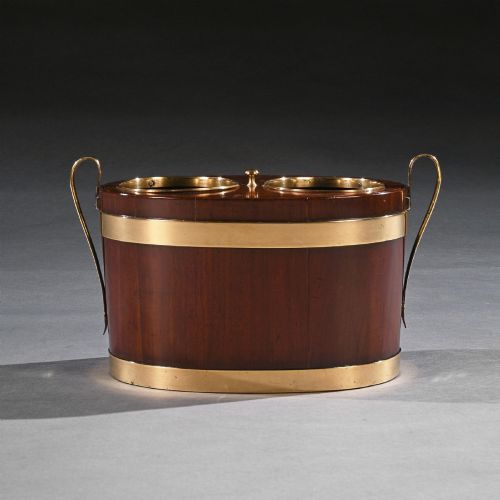
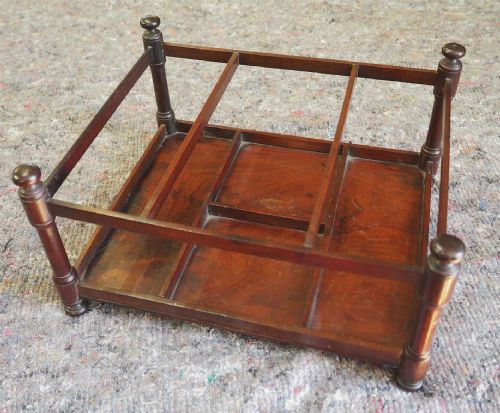
When you search for a mahogany bottle holder, you encounter a selection of historic dining accessories designed to manage wine and decanters at the table. These objects range from single-bottle cradles and coasters to multi-section carriers and substantial wine coolers spanning the eighteenth, nineteenth, and early twentieth centuries.
The versions you meet most frequently on this page belong to the Georgian and Regency periods, often constructed as table wine coolers, bottle caddies, or sets of coasters. They reflect the formal dining habits of their eras, utilising rich timbers and supportive metal hardware to safely circulate bottles among guests.
How they were made
Maker's work centres on solid mahogany and satinwood veneers, fashioned into staved buckets, turned coasters, and framed carriers. Cabinetmakers shaped these dense woods carefully, often incorporating contrasting stringing or elaborate grain patterns to enhance the visual appeal of the dining accessory.
Metal mounts in brass and silver plate provide essential structural reinforcement and decorative contrast, securing the wooden staves and cradling heavy glass vessels. Interiors frequently feature felt linings, lead crystal inserts, or lead crystal decanters, marrying fine woodwork with durable functional hardware.
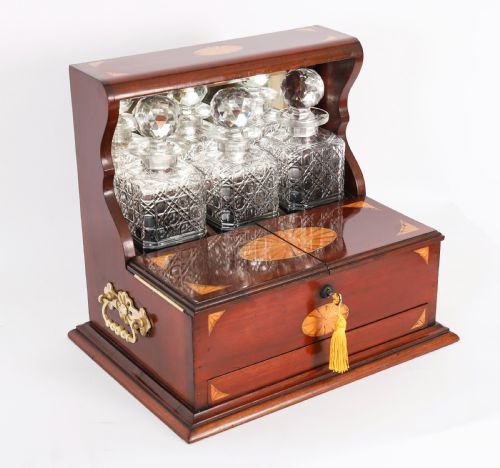
Some nineteenth-century models double as game boxes, hiding a hidden pastime beneath the crystal decanters.
What varies in quality
Quality rests in the harmony of the timber selection and the precision of the metalwork mounts. Superior pieces display carefully chosen mahogany grain, tight brass binding, and robust structural joinery that withstands the practical demands of holding heavy glass bottles.
The refinement of decorative details, such as delicate satinwood inlay or the substantial weight of silver plate fittings, separates standard utility items from exceptional examples of period craftsmanship.
The Mahogany Bottle Holder Glossary
- Wine coaster
- A small, circular tray with a raised rim, designed to hold a wine bottle and protect the dining table from drips. They often feature a felt base and a wooden or metal perimeter.
- Tantalus
- A locking beverage cabinet that secures decanters within a wooden frame, preventing unauthorized access to the contents. They commonly incorporate brass mechanisms and cut crystal bottles.
- Wine cooler
- A vessel used to chill or hold wine bottles during a meal, frequently built as a larger mahogany tub with metal liners and carrying handles. Georgian examples often stand on dedicated legs or plinths.
- Old Sheffield plate
- A composite material formed by fusing a thin sheet of silver to a thicker copper base, utilised on coaster rims and mounts before modern electroplating techniques became widespread.
Mahogany Bottle Holder: Frequently Asked Questions
How were wine coasters used?
Wine coasters sat on the dining table and were slid between guests after the servants retired, allowing people to pour their own wine. The raised rims and felt bases protected polished mahogany tabletops from ring marks and spills.
Many featured small wheels or rollers underneath to glide smoothly across the surface during dinner parties.
How do I identify a Georgian piece?
Georgian pieces display the rich, dense timber characteristics and restrained classical proportions typical of eighteenth and early nineteenth-century cabinetmaking. Look for traditional joinery, heavy brass or copper bands, and patination accumulated through decades of use.
Stylistic cues often align with the reigns of the Georges, showing Sheraton or Regency influences in their turning and inlay.
Can I use these with modern bottles?
Many historic bottle holders accommodate standard modern wine bottles, though interior dimensions vary according to the original purpose. Coasters and single cradles generally fit standard glass dimensions comfortably.
Larger multi-section carriers or tarantulas are best measured individually if you intend to use them with contemporary glassware or specific bottle shapes.