


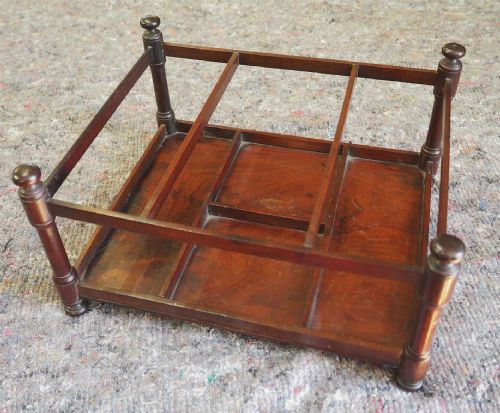


Antique Mahogany Tantalus
An antique mahogany tantalus is a locking spirits cabinet designed to secure expensive decanters away from servants and children.
Antique Mahogany Tantalus
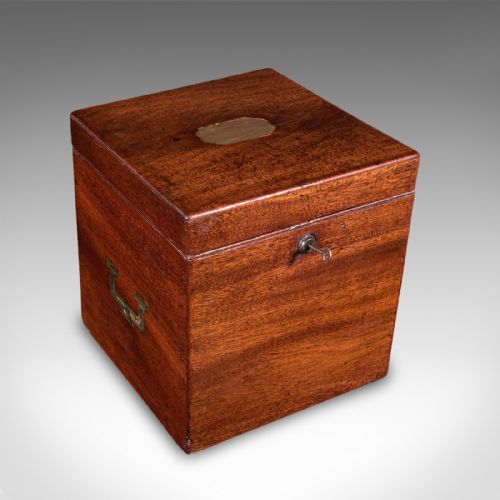
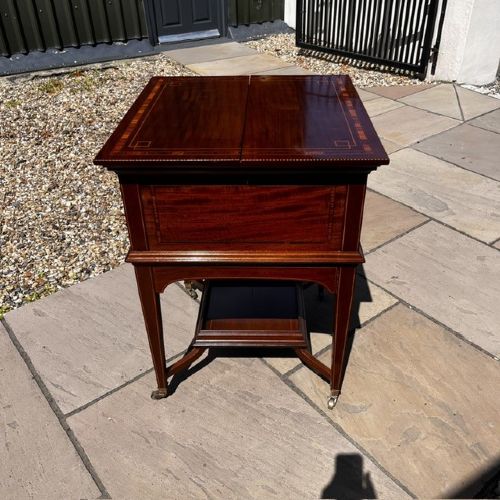
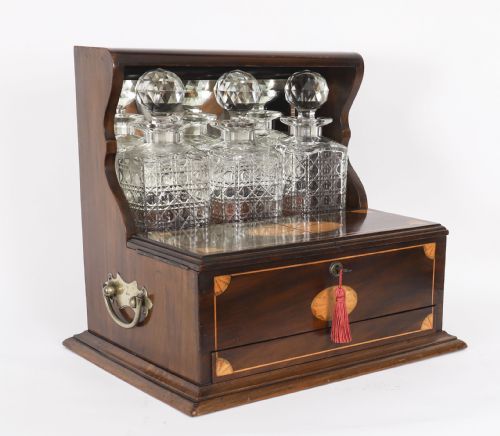
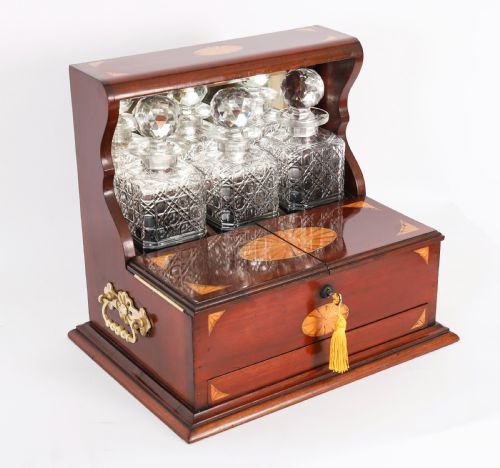
When you search for an antique mahogany tantalus, you are looking at solid hardwood drink holders and locking security frames produced during the Georgian, Victorian, and Edwardian eras. The most common versions on this page are Victorian and Edwardian three cut crystal decanter tantalus and games combinations, often featuring satinwood inlay and flame mahogany grain.
Earlier examples stretch back to the eighteenth century through George III decanter boxes, holders, and campaign sets. These domestic and officer pieces span simple portable bottle chests to elaborate compendiums incorporating games compartments and mirror glass backs.
How they were made
Cabinetmakers constructed these pieces primarily from solid hardwood, utilising mahogany and flame mahogany veneers with contrasting satinwood inlay and marquetry decoration. The frames incorporate fitted brass locking mechanisms and carrying handles designed to secure heavy glass bottles during transit or storage.
The contents typically rely on cut crystal decanters paired with brass hardware and occasionally mirror glass panels. Nineteenth-century workshops combined bottle security bars with folding games boards to create multi-purpose social furniture.
Invented to frustrate thirsty but unauthorized household staff, these clever locking bars made sure the gin remained safely locked away.
What varies in quality
The standard of an antique mahogany tantalus rests on the crispness of the cabinetwork and the matching quality of its cut crystal decanters. Superior examples display refined satinwood inlay, unbroken flame mahogany grain, and fully functional original brass locking mechanisms.
Later mass production yielded simpler timber frames with plain glass, whereas pieces associated with the Georgian period or Sheraton Revival styles show finer proportion and hand-finished joinery.
The Antique Mahogany Tantalus Glossary
- Tantalus
- A locking drink container that holds decanters in place with a metal bar. It is named after the mythological figure Tantalus because the contents remain visible yet tantalisingly out of reach when locked.
- Flame mahogany
- A decorative wood veneer showing a flickering flame-like grain pattern. Cabinetmakers selected it for the primary visible surfaces of high-end nineteenth-century boxes.
- Satinwood inlay
- A contrasting pale timber inserted into the darker mahogany surface. It creates geometric borders and decorative motifs.
- Campaign set
- A portable drinks or spirit chest built for travel. These eighteenth-century pieces feature durable hardwood construction and brass mounts.
Antique Mahogany Tantalus: Frequently Asked Questions
How does the locking mechanism work?
A metal retaining bar passes across the stoppers of the decanters and fastens into a locking upright at the side of the cabinet. Turning the key allows the bar to slide upwards, releasing the bottles.
Most mechanisms require a working key to lift the security bar, which prevents the decanters from being removed without authorization.
What periods do these pieces come from?
The listings span from the eighteenth century through the Georgian and Victorian eras up to the Edwardian period. Eighteenth-century examples tend to be decanter boxes and campaign sets.
Nineteenth-century pieces frequently take the form of late Victorian and Edwardian combinations that house three cut crystal decanters alongside games equipment.
Are the decanters original to the box?
Many tantalus sets retain their matched cut crystal decanters, though replacements occur due to breakage over the decades. Inspecting the fit within the wooden base helps determine if the bottles belong to the cabinet.
Matching crystal patterns and correct height clearances under the locking bar indicate a period-appropriate configuration.
How should I care for the wood and brass?
Maintain the mahogany and satinwood surfaces with light application of traditional wax polish rather than modern silicone sprays. Keep the timber away from direct heat sources to prevent veneer lifting.
Clean the brass hardware gently without abrasive compounds to preserve the aged metal patina, and lubricate the locks sparingly if necessary.