
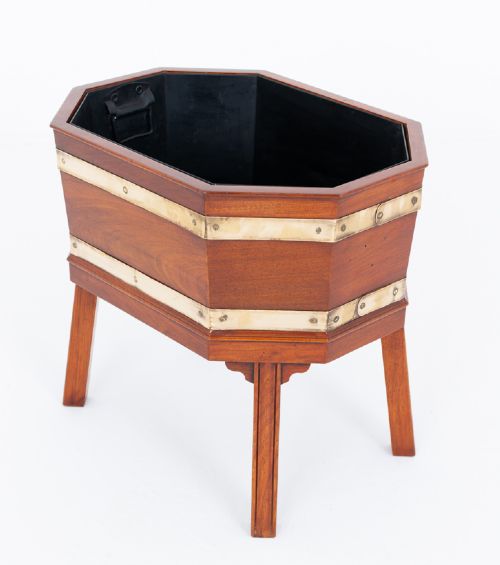


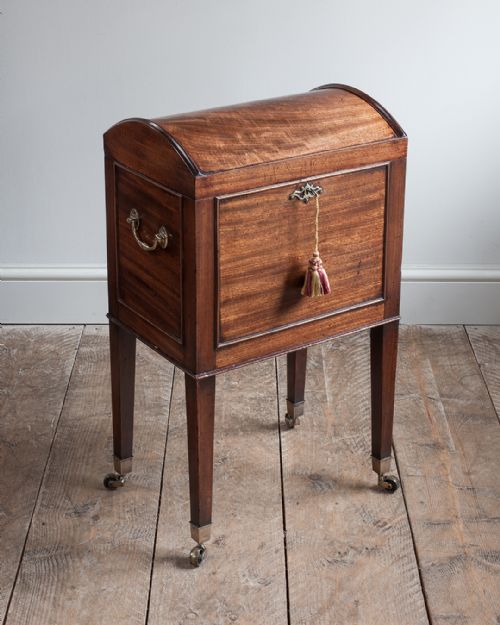


Wooden Bottle Caddy
These wooden bottle caddy pieces keep your vintage spirits secure and orderly.
Wooden Bottle Caddy
When you search for a wooden bottle caddy, you encounter sturdy timber cellarettes, tantalus frames, and decanter stands designed for holding glass vessels securely. These items date primarily from the Georgian, Victorian, and Edwardian eras, serving domestic storage needs in dining rooms and sitting rooms.
Mahogany and oak dominate the selection, often featuring brass mounts, silver plate accents, or inlaid satinwood details. The forms range from sarcophagus-shaped boxes and four-section bottle carriers to locking tantalus frames built to keep guests from sampling the stock unattended.
How they were made
Cabinet makers utilised solid mahogany, oak, and occasionally elm or satinwood, building robust frames joined with traditional corner construction. Timber surfaces received hand-rubbed finishes that brought out the natural grain of the wood.
Metalwork played a structural and decorative role, with brass carrying handles, hinges, and lock plates fitted alongside silver-plated components on later tantalus designs. Cut glass decanters and bottles were then custom-fitted into the wooden compartments.
Listings feature eighteenth-century, Georgian, Victorian, and Edwardian periods in woods including mahogany, oak, walnut, and satinwood.
What varies in quality
Quality rests on the selection of timber figures, such as highly grained mahogany or figured elm, paired with substantial brass or silver-plated hardware. Finer examples display meticulous carving, well-fitted internal dividers, and original locking mechanisms with functional keys.
The integrity of the timber joints and the presence of matching, undamaged cut glass decanters elevate certain pieces above standard utilitarian boxes. Simpler constructions with replacement hardware or missing internal sections sit at the other end of the scale.
The Wooden Bottle Caddy Glossary
- Cellarette
- A lockable cabinet or box designed to hold wine bottles and decanters near the dining table. These containers often featured lead linings in earlier periods to hold melting ice.
- Tantalus
- A locking wooden frame that secures decanters by their necks, preventing access to the contents while displaying the glass bottles within. Edwardian and Victorian households favoured these for keeping spirits safe.
- Sarcophagus
- A monumental box shape with a domed or sloping lid, popular for larger wine coolers during the Regency and Georgian periods. This architectural form lent a weighty presence to dining rooms.
- Satinwood
- A pale, highly reflective timber utilised for decorative veneers and inlay work on late nineteenth-century and Edwardian pieces. It provided a bright contrast against darker woods like mahogany.
Wooden Bottle Caddy: Frequently Asked Questions
What is a tantalus?
A tantalus is a locking wooden frame that holds decanters upright, securing the stoppers in place with a metal bar.
This device prevented unauthorized access to expensive spirits while still allowing guests to view the cut glass bottles.
How do I date a cellarette?
Dating relies on examining the timber species, construction methods, and hardware styles present on the piece.
Georgian examples often feature solid mahogany with brass carrying handles, while Victorian and Edwardian items frequently incorporate locking tantalus mechanisms.
Were these used for wine?
These pieces held wine bottles, decanters, and spirits safely during storage and service in dining rooms.
Many included internal compartments or fitted dividers to stop glass vessels from clinking together during movement.
Are the decanters original?
Decanters and bottles found in these carriers and tantalus frames are often period-matched cut glass pieces.
Because glass suffered breakage over centuries of use, replacement bottles appear frequently in surviving assemblies.