
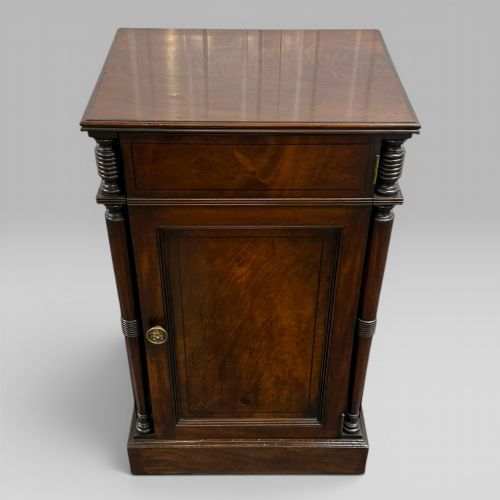

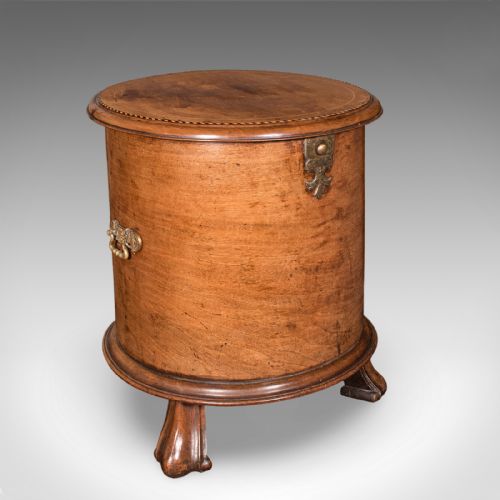
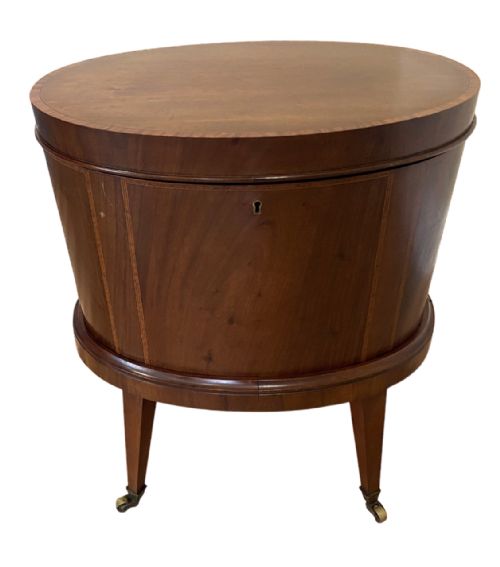


Brown Wood Cellarette
A brown wood cellarette is a dedicated container for holding bottles, bringing period character and practical storage to a dining room.
Brown Wood Cellarette
A brown wood cellarette is a period storage piece designed to keep wine and spirits at hand during meals. These items range from compact oval vessels to large sarcophagus-shaped floor standing coolers.
The selections encountered here span the Georgian, Regency, and Victorian eras, alongside later revival pieces. Many examples adopt classical architectural lines, including pedestal forms and paw feet.
Cabinet makers also produced related forms such as wine coolers, jardinieres, and teapoys. Mahogany remains the dominant timber, often enhanced by inlay or brass mounts.
Judging the range
Quality in these pieces rests upon the selection of timber and the precision of the cabinet work. Highly figured grains and complex veneers distinguish finer workshop output from simpler utilitarian items.
The integrity of the internal fittings and the crispness of any carved or applied brass details indicate the standing of the original maker. Proportion and balance across larger sarcophagus or pedestal forms dictate the visual success of the piece.
Mahogany and walnut appear frequently as primary timbers, complemented by decorative accents of burr maple, satinwood, and boxwood.
Gillows·Maples & Co
The Brown Wood Cellarette Glossary
- Cellarette
- A lockable container used for storing wine bottles near the dining table. They typically feature internal divisions to protect glass bottles.
- Sarcophagus
- A monumental coffin shape popular for large Regency wine coolers. This heavy architectural profile often sits upon low paw feet.
- Teapoy
- A small table or box designed to hold tea canisters. These pieces often share the refined cabinet making techniques found on larger wine coolers.
- Jardiniere
- An ornamental stand or vessel for holding plants. Examples from the period frequently utilise the same timber and metal band construction as cellarettes.
- Satinwood
- A pale yellow exotic hardwood used for contrasting inlay and veneer work. It brings a bright decorative element to darker mahogany carcasses.
Brown Wood Cellarette: Frequently Asked Questions
What is a brown wood cellarette used for?
These containers were originally built to hold wine bottles near the dining table before dining rooms had permanent sideboards with built-in storage. They kept bottles cool and secure during long meals.
Today, they function well as standalone decorative items or as specialised storage for modern collections of wine and spirits.
How do I date a cellarette?
Dating relies on observing the prevailing style, timber choices, and construction methods. Georgian and Regency pieces favour architectural proportions and mahogany, while Victorian examples often feature heavier carved decoration.
Hardware such as brass bands and handles also provides clues to the manufacturing period.
Where should I place a cellarette?
A cellarette suits a dining room, hallway, or living space where its timber grain and period presence can be appreciated. Floor standing models require sufficient clearance to display their shape and foot details.
Keep them away from direct heat sources to protect the polished wood surfaces and veneers.
Are these pieces waterproof inside?
Period cellarettes and wine coolers were lined to hold ice and bottles, but original linings may no longer be watertight after centuries of use. It is wise to check the interior condition before attempting to use them with ice or liquids.
Most owners prefer to use them dry for display or modern bottle storage.