
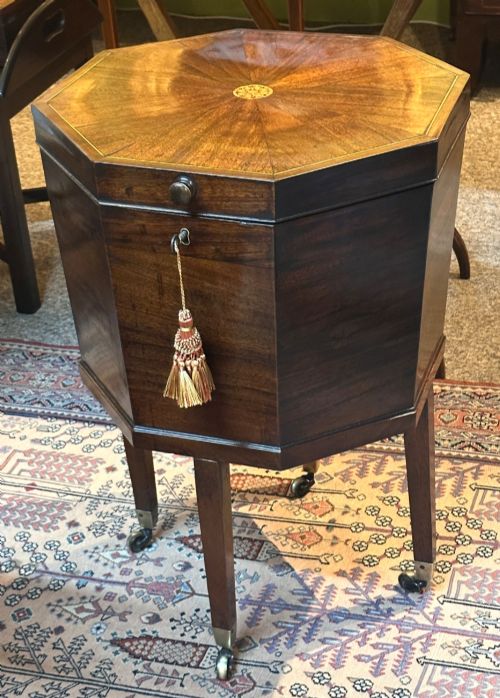
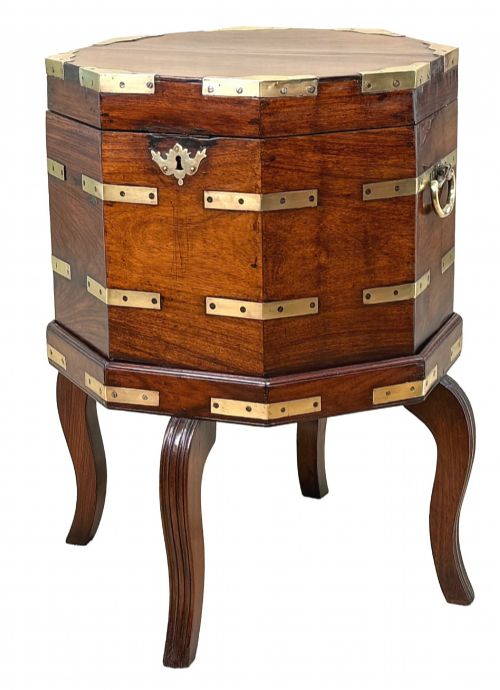
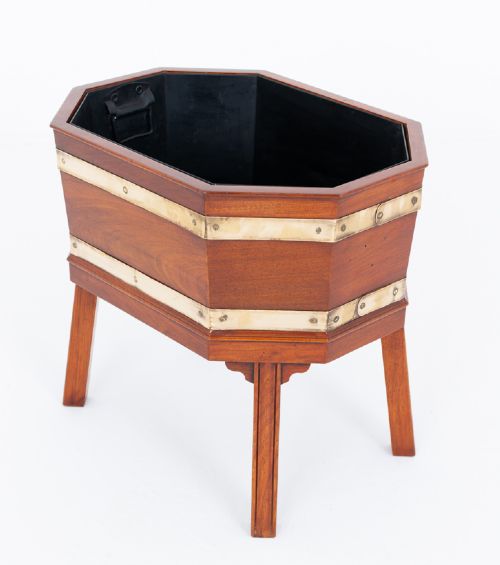
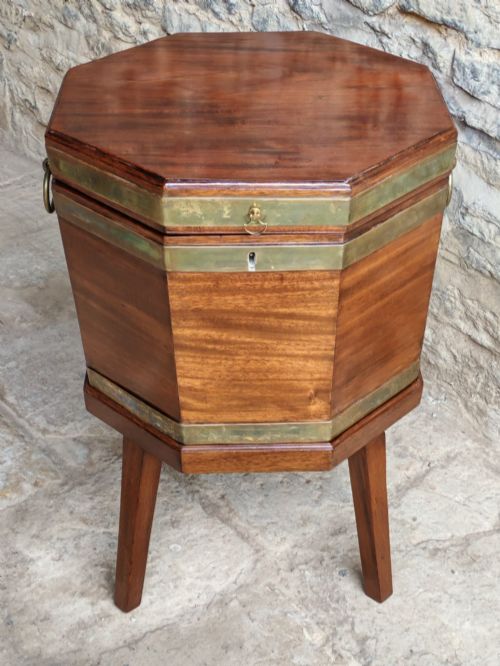

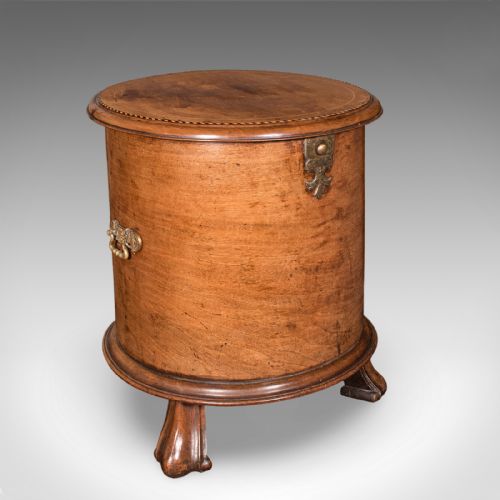

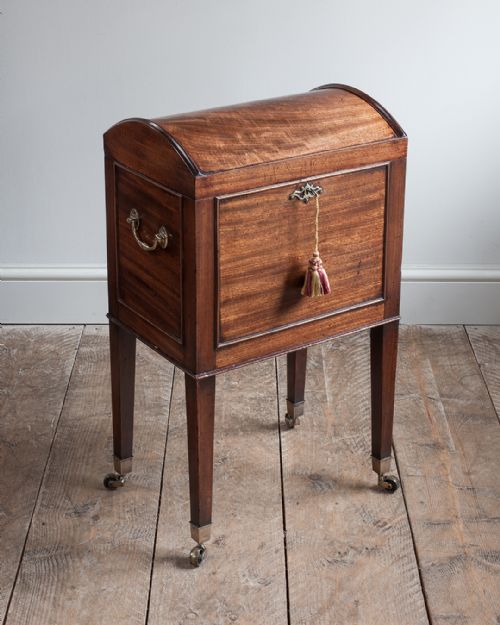


Mahogany Wine Caddy
A mahogany wine caddy brings proper Georgian order to the dining room, keeping bottles safely housed in solid timber.
What a mahogany wine caddy is
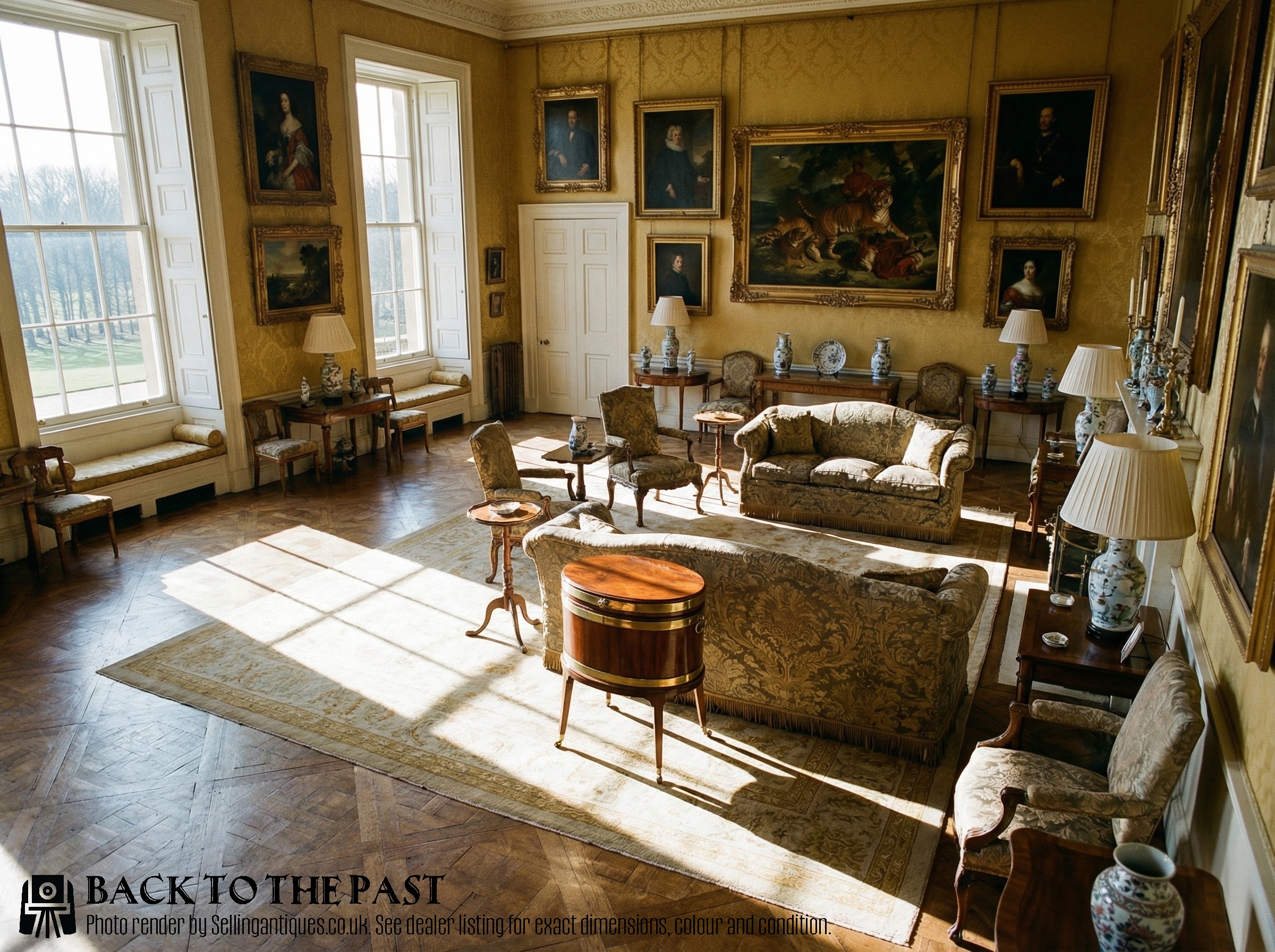
A mahogany wine caddy serves as a portable container for storing and transporting bottles during formal dining. These pieces include sarcophagus cellarettes, oval wine coolers, and bottle carriers designed to keep bottles secure.
The versions most commonly met on this page date from the eighteenth and nineteenth centuries, spanning the Georgian and William IV periods. They range from compact two-bottle carriers to large brass-bound floor cellarettes.
How they were made
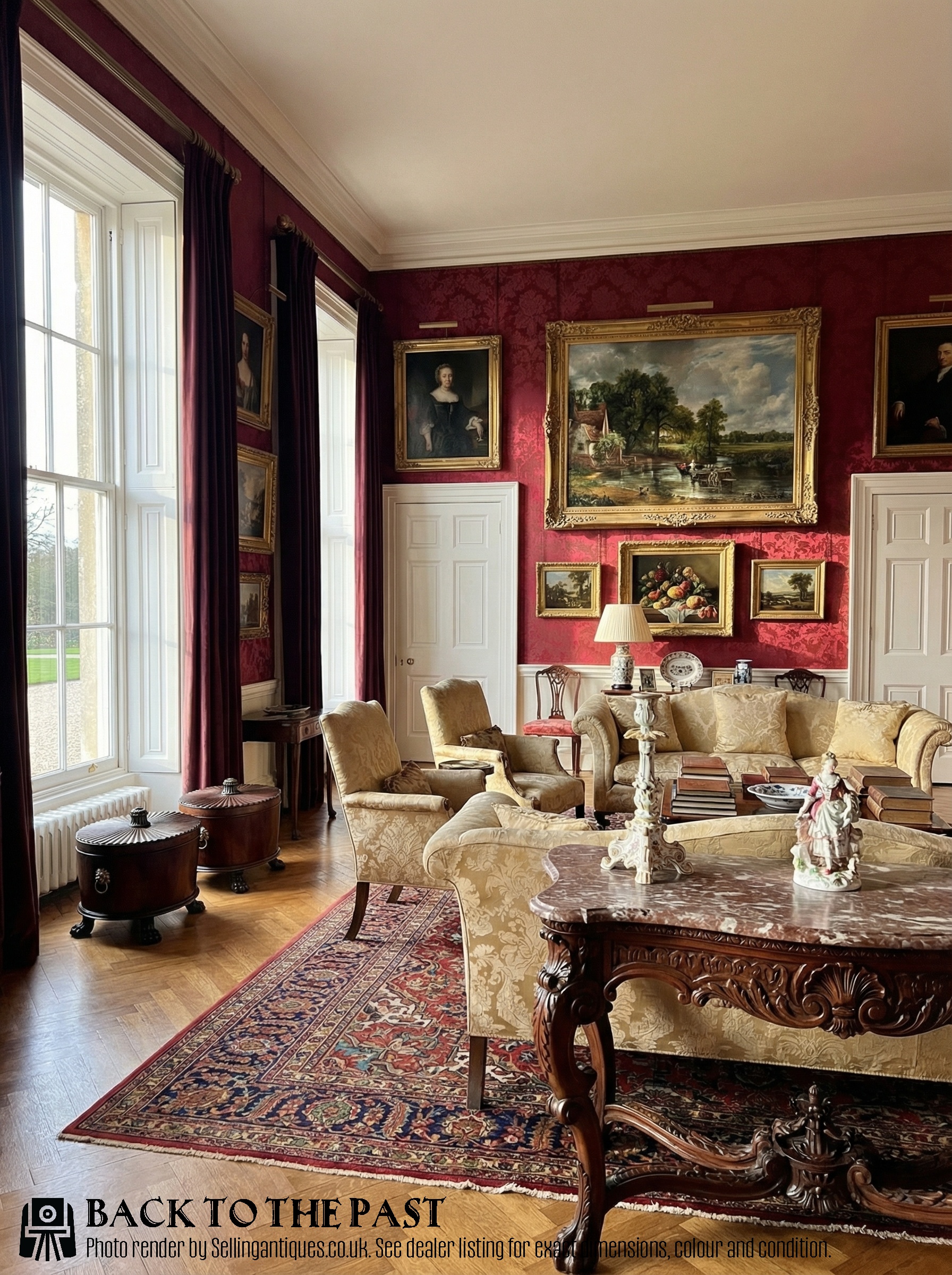
Cabinet makers utilised dense, richly figured mahogany to construct the bodies, often achieving a fine patina through traditional finishing methods. Selected pieces incorporate brass bands and mounts for structural reinforcement and decorative contrast.
Joinery techniques from the eighteenth and nineteenth centuries ensure sturdy construction across boxes, carriers, and large cellarettes. Metalwork components, including handles and dividers, were fitted by hand to secure the internal sections.
Retail Price Guide 2026
Typical UK retail prices for mahogany wine caddy, calculated from the Sellingantiques database of over a million retail prices indexed since 2003. This retail price guide relies exclusively on Sellingantiques data; no external sources or auction records are used, so the figures do not describe the wider market.
Some nineteenth-century wine containers were built heavy enough to deter thirsty footmen from sampling the cellar.
What varies in quality
Quality rests primarily on the depth of the mahogany grain and the crispness of any brass detailing, which separates standard boxes from finer examples. The presence of original fitted interior sections for multiple bottles also elevates a piece.
Proportion and overall timber selection dictate the visual weight of the item, with superior pieces showing careful attention to the natural figuring of the wood. The condition of the original surface patina further distinguishes better examples.

The Mahogany Wine Caddy Glossary
- Cellarette
- A lockable container used to hold bottles of wine beneath the sideboard or beside the dining table. They frequently stand on legs or low plinths.
- Wine Cooler
- A vessel designed to hold bottles and ice during meals, often taking an oval form with brass banding. These items are distinct from smaller tabletop carriers.
- George III
- The period of British history spanning from seventeen sixty striker to eighteen twenty, noted for refined cabinet making. Pieces from this era often employ high-grade mahogany.
- Patina
- The surface sheen and colour developed by aged timber through handling and polishing over generations. A good patina indicates untouched age.
- Sarcophagus
- A monumental architectural box shape with a domed lid, popular for large cellarettes during the Georgian period. This form provides substantial internal capacity for multiple bottles.
Frequently Asked Questions
What is a wine caddy used for?
A wine caddy holds and transports bottles between the cellar and the dining table. They were essential accessories in formal nineteenth-century dining rooms.
Smaller carriers held two or four bottles, while larger cellarettes stored multiple bottles upright or on their sides.
How do I date a mahogany cellarette?
Dating relies on stylistic markers, construction methods, and timber characteristics from periods such as the Georgian era or the reign of William IV. Brass mounts and box forms evolved from straight-sided eighteenth-century designs to more curved sarcophagus shapes.
Examining internal dividers and hardware helps confirm the original period of manufacture.
Are brass mounts original?
Original brass bands, handles, and feet show appropriate signs of age and wear that match the timber body. They are secured with period-appropriate fastenings rather than modern screws.
Checking the fit against the mahogany grain reveals whether the metalwork belongs to the original construction.
How should I care for mahogany?
Mahogany requires stable room temperatures away from direct sunlight and heat sources to prevent the timber from splitting. Regular dusting with a soft cloth maintains the surface finish.
Applying traditional wax polish occasionally preserves the natural patina without building up excessive residue.