





Antique Lacquered Tea Table
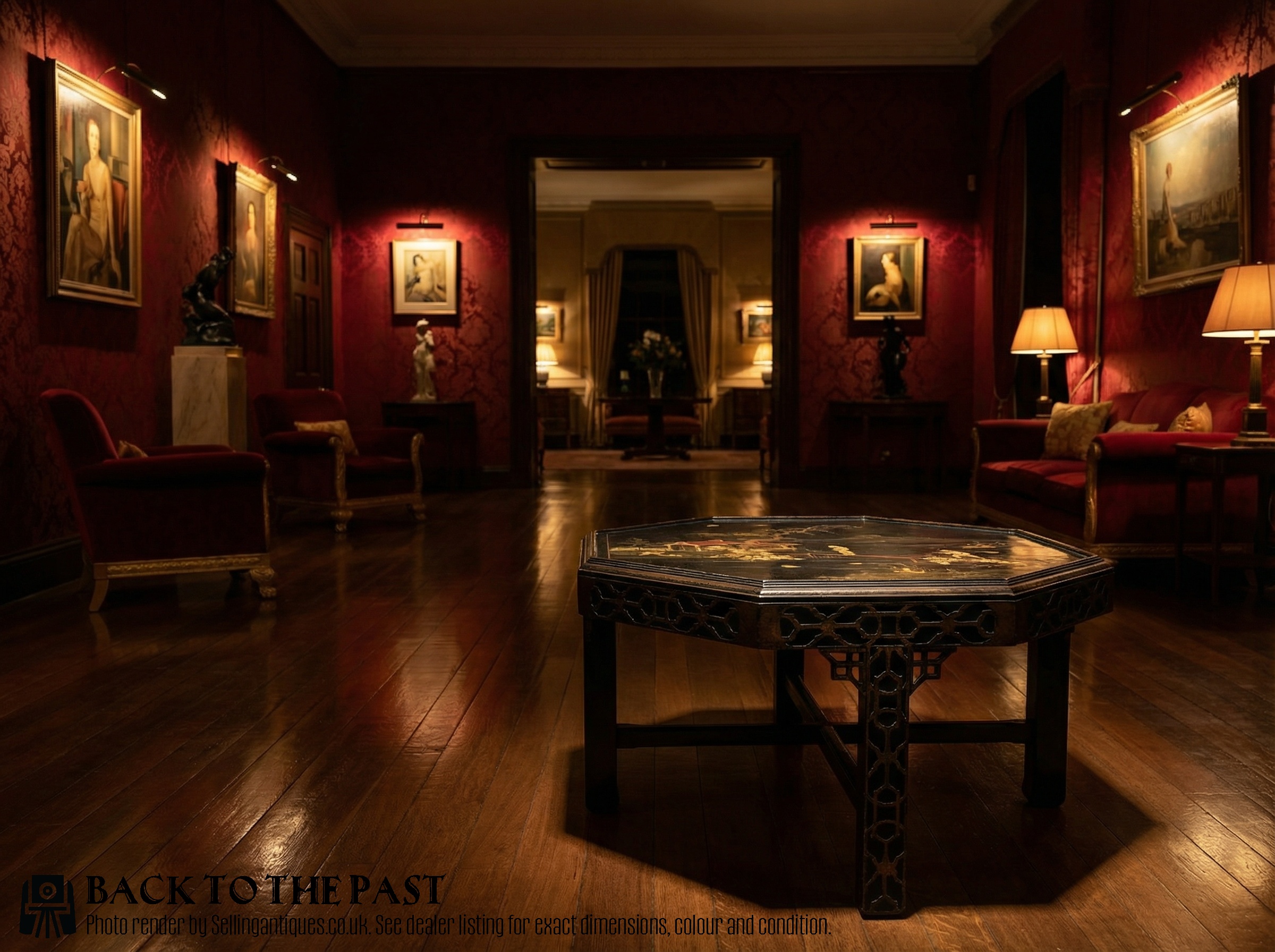
An antique lacquered tea table brings rich surface pattern and dark polished depth into a room.
Antique Lacquered Tea Table
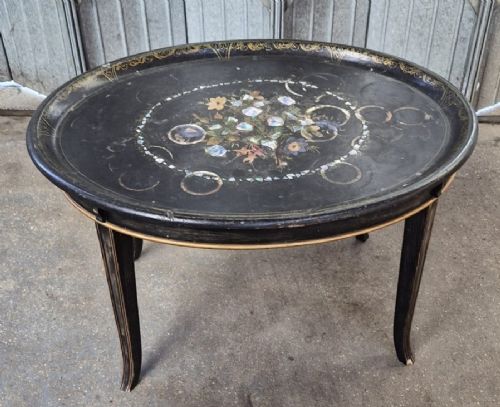
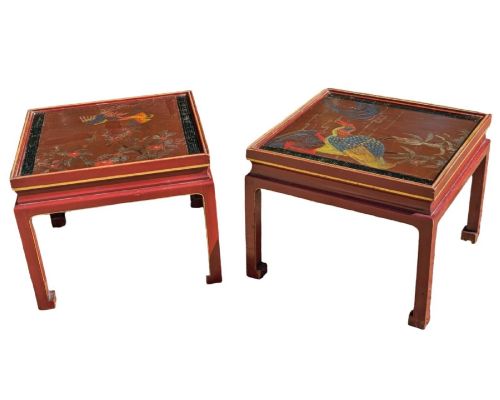
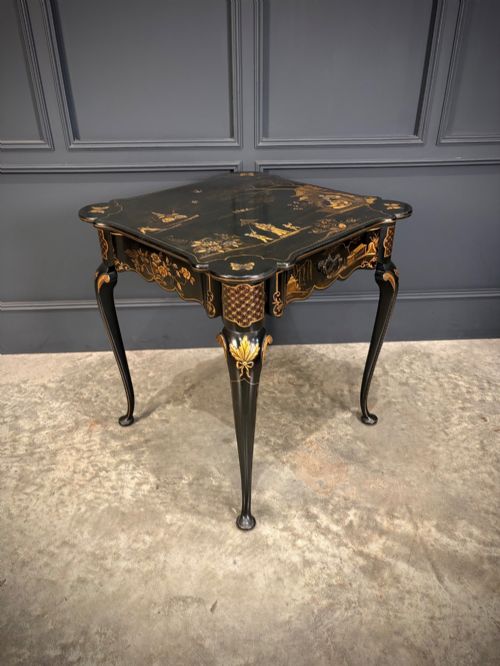
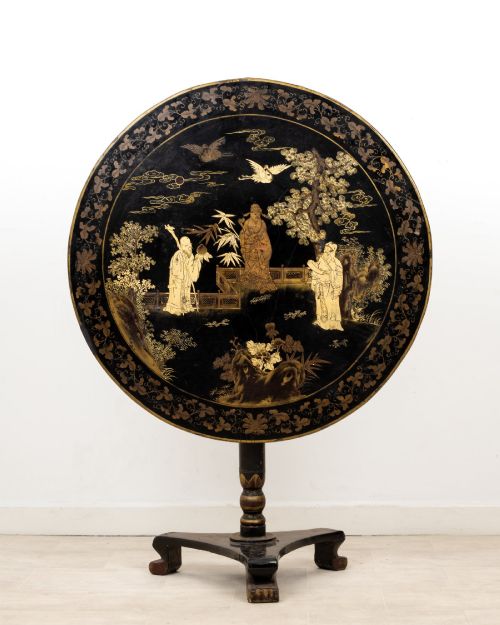
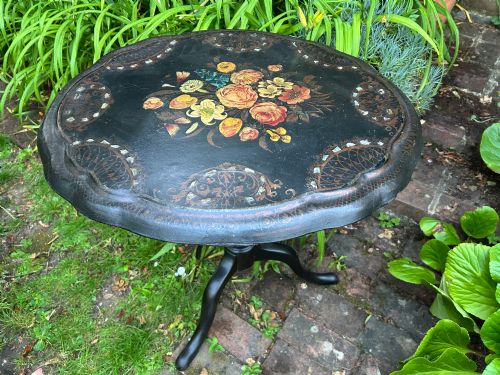
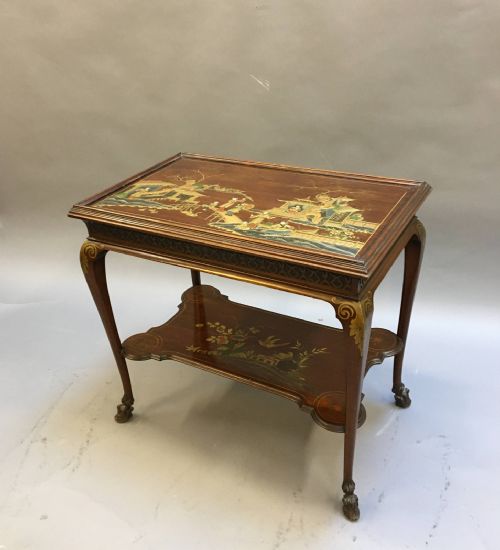
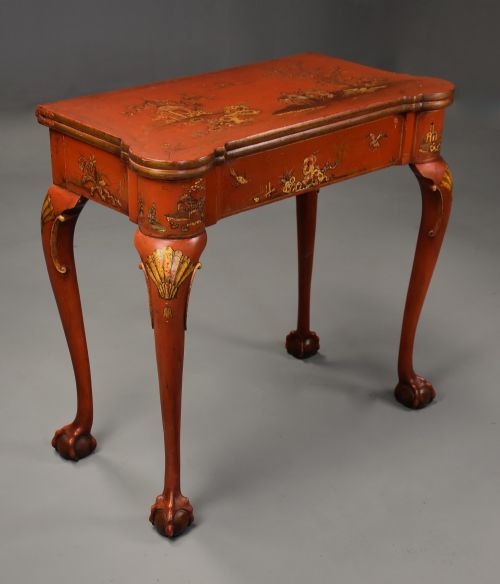
An antique lacquered tea table takes many forms across periods from the eighteenth century to the early twentieth century, including tilt top occasional tables, card tables, and serving trays mounted on later stands. These surfaces serve as functional tea tables, coffee tables, and display pieces in living spaces.
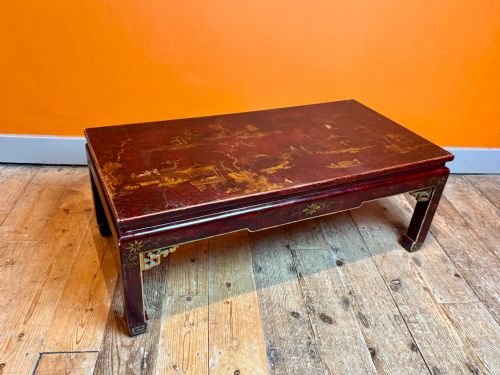
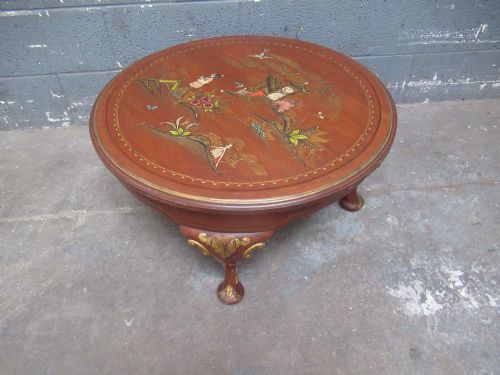
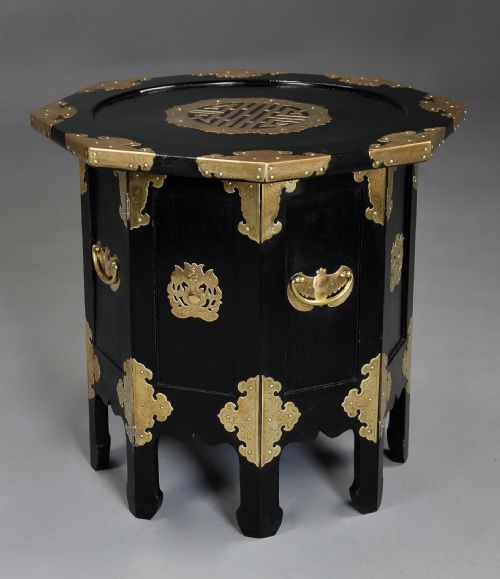
The Chinoiserie style dominates the selection alongside regional variations such as Anglo-Indian, Anglo-Burmese, and Japanese designs. Common formats include octagonal occasional tables, demi lune card tables, and circular coffee tables produced in dark ebonised finishes, red lacquer, and painted wood.
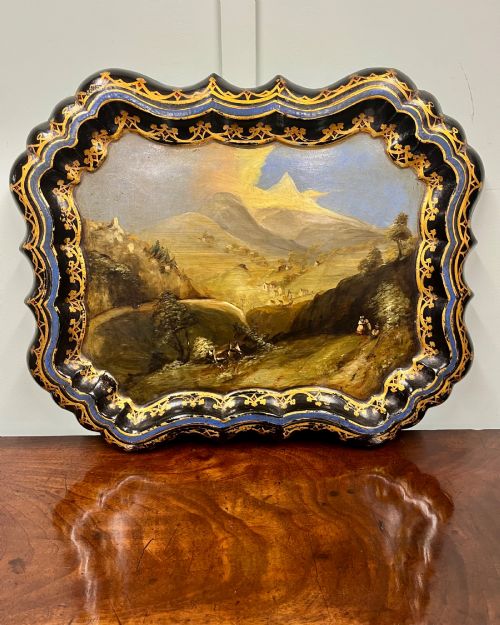
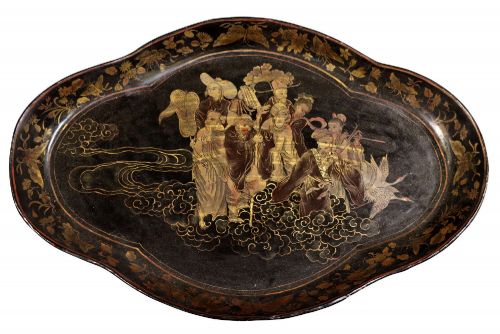
Makers adapted traditional forms like the tray on stand, pairing detachable papier-mâché or metal trays with folding or fixed wooden bases. Surviving examples reflect both English workshop production and direct imports from Asian and Indian makers.
How they were made
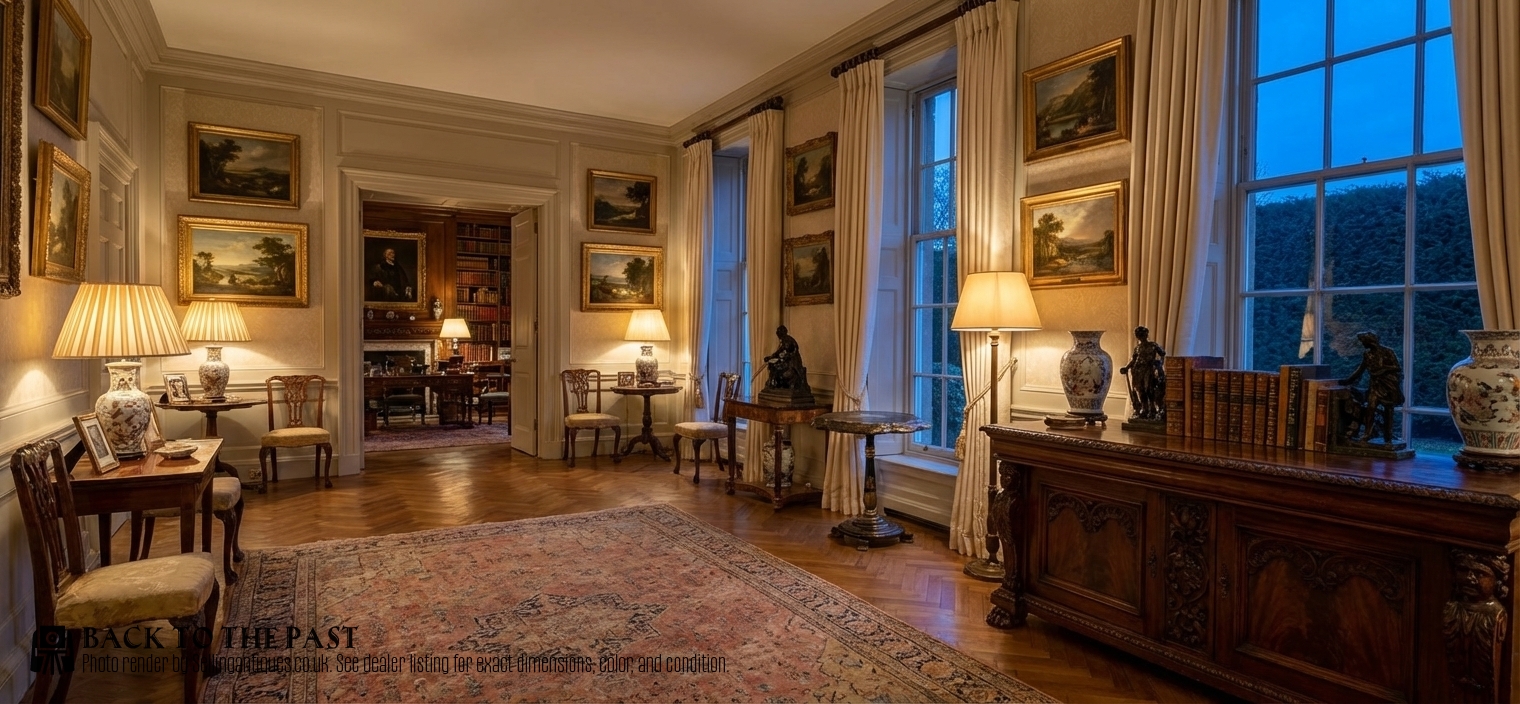
Craftsmen built the foundations using timber such as elm, alongside compressed papier-mâché for lightweight tray surfaces. These wooden and composite structures received multiple coats of lacquer, paint, or ebonised finishes to create smooth, durable tabletops.
Decoration relied on applied gold leaf, gilt highlights, and intricate ink work to render figurative Chinoiserie scenes and floral motifs. Brass fittings and hardware secured the folding mechanisms on tilt top and card tables.
Antique Lacquered Tea Table Retail Price Guide 2026
Typical asking prices for lacquered tea table among the pieces listed under this phrase on Sellingantiques today, from the lower quarter to the upper quarter. They describe what is for sale here now, not the wider market.
Listings feature tables spanning the eighteenth, nineteenth, and early twentieth centuries, constructed from lacquer, papier-mâché, wood, and brass.
What varies in quality
The fineness of the hand-painted detailing and the depth of the lacquer layers distinguish master workshops from standard production. Superior examples exhibit crisp gold leaf application, precise ink work, and well-preserved surface polish without heavy restoration.
Structural integrity depends on the original pairing of trays and stands, as well as the stability of tilt top mechanisms and joints in elm or lacquered wood. Tables bearing signatures or attribution to notable makers command greater interest among collectors.
Jennens & Bettridge·Henry Clay
The Antique Lacquered Tea Table Glossary
- Chinoiserie
- European decorative style reflecting Chinese artistic motifs, popular in furniture and lacquerwork. It typically employs figures, pagodas, and landscapes rendered in gold and black.
- Papier-mâché
- Composite material made from paper pulp mixed with glue and resin, pressed into moulds and dried. It forms a hard, smooth surface ideal for painted trays and small tables.
- Tilt top
- Table construction featuring a mechanism that allows the tabletop to pivot into a vertical position. This design enabled compact storage against walls when not in use for tea or games.
- Toleware
- Painted or enamelled sheet metal items produced in the eighteenth and nineteenth centuries. Tables utilising toleware incorporate durable metal trays as removable tops.
Antique Lacquered Tea Table: Frequently Asked Questions
What is an antique lacquered tea table used for?
These tables function as low coffee tables, occasional display surfaces, and serving stations in contemporary living areas. Their compact dimensions make them suitable for holding drinks, books, or decorative objects.
Historically, many designs served multiple purposes, functioning as card tables with folding leaves or as removable trays for serving tea before being placed back onto dedicated stands.
How do I identify a papier-mâché table?
Papier-mâché tables feature smooth, seamless tops that feel lighter than solid wood while remaining rigid. They often take the form of removable serving trays resting on wooden stands.
Under magnification, the material reveals a compressed fibrous structure beneath the dark lacquer and painted Chinoiserie decoration rather than natural wood grain.
What is the difference between Chinoiserie and Japanese styles?
Chinoiserie represents the European interpretation of Chinese art, featuring whimsical landscapes, pavilions, and figures rendered in gilt and black lacquer. These designs were widely produced in England and Europe.
Japanese pieces, such as Meiji period items or elm Chabudai tables, reflect authentic domestic forms and distinct regional motifs associated with Japanese craftsmanship rather than European fantasy.
How do I care for an antique lacquer surface?
Keep lacquered tables away from direct sunlight and heat sources to prevent the finish from drying, cracking, or fading over time. Dust gently with a dry microfibre cloth.
Avoid using chemical polishes, abrasive cleaners, or excess water, as moisture can penetrate hairline fractures in the lacquer and damage the underlying wood or papier-mâché.