
Antique Indian Wooden Box
An antique indian wooden box brings the rich history of global trade and domestic craft straight into a modern room.
Antique Indian Wooden Box
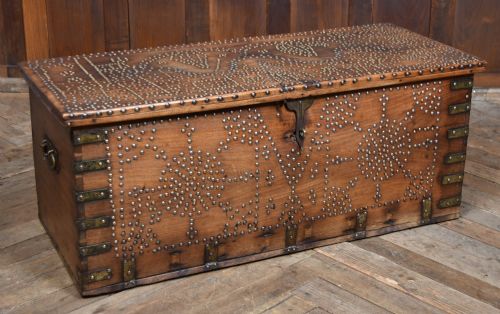
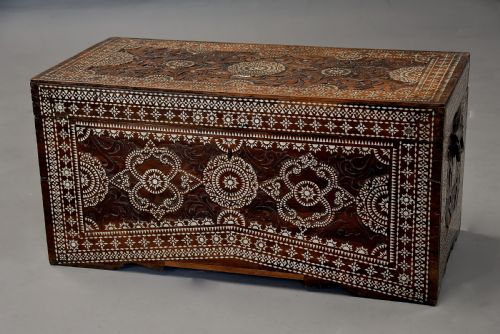
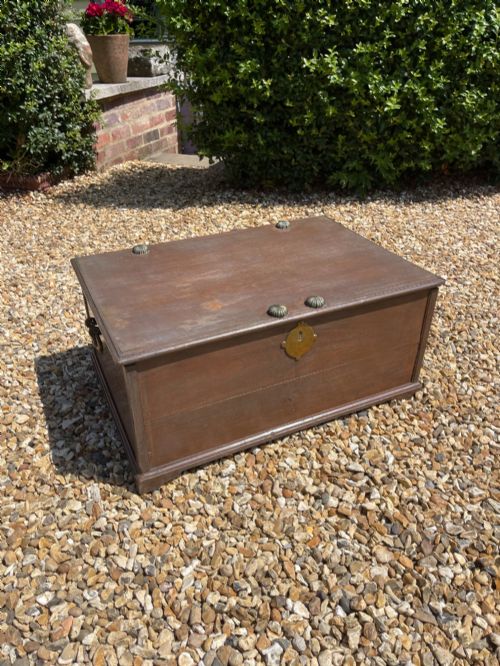
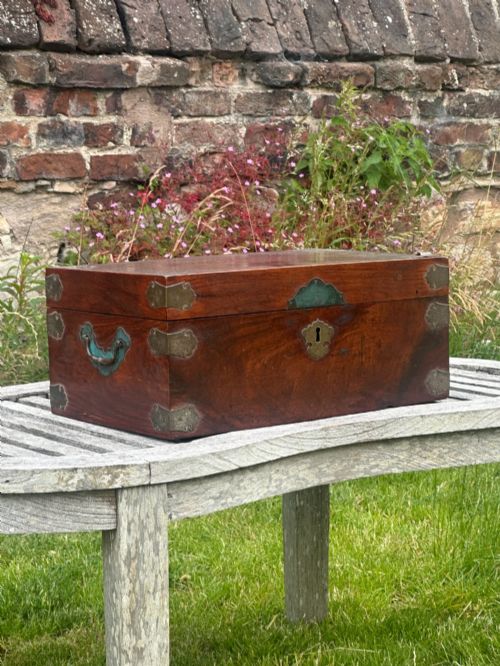
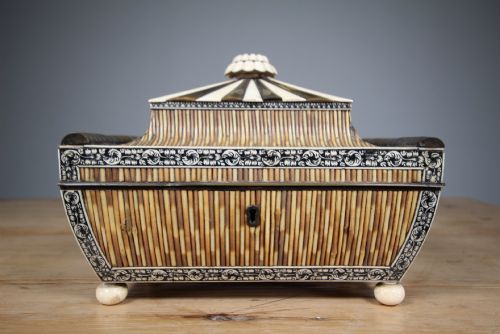
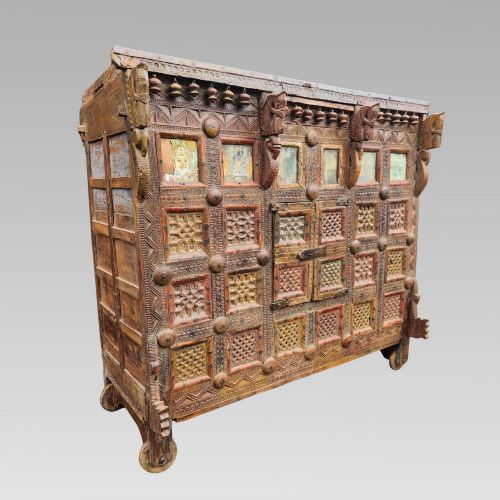
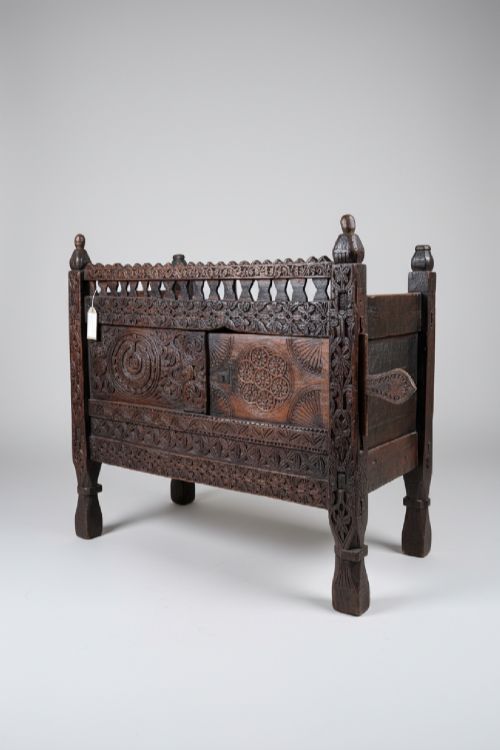
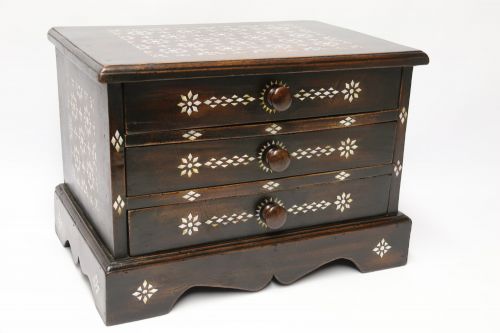
An antique indian wooden box encompasses a diverse range of forms, from large dowry chests and campaign trunks to small spice boxes, jewellery caskets, and writing slopes. The examples met most frequently on this page date from the nineteenth century and the early twentieth century, reflecting both colonial trade routes and traditional domestic life. Buyers will find pieces originating from distinct regions and stylistic traditions, including Anglo-Indian colonial workshops and rural communities.
The practical function of these objects varied immensely according to their original purpose, ranging from heavy merchant trunks designed for sea travel to delicate caskets meant for dressing tables. Larger pieces often double as storage chests, blanket boxes, or low cabinets, while smaller variants served travellers, officers, and merchants on the move. Each form tells a specific story about utility, preservation, and the movement of goods across empires.
Materials and construction
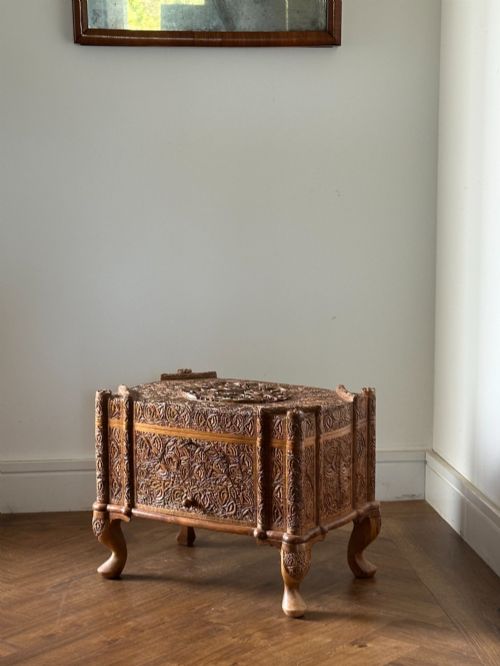
The construction of an antique indian wooden box relies on dense, durable timbers suited to tropical climates, with teak, padouk, camphor wood, and ebony appearing regularly across the inventory. These woods were chosen for their resistance to humidity and insects, providing a stable foundation for intricate carving, turnery, and joinery. Artisans frequently combined these substantial hardwoods with contrasting decorative elements.
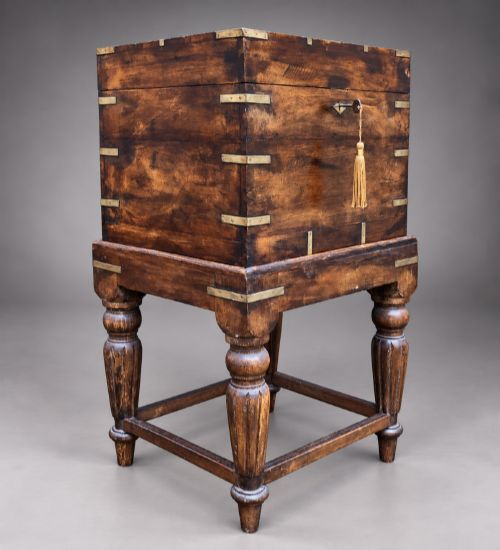
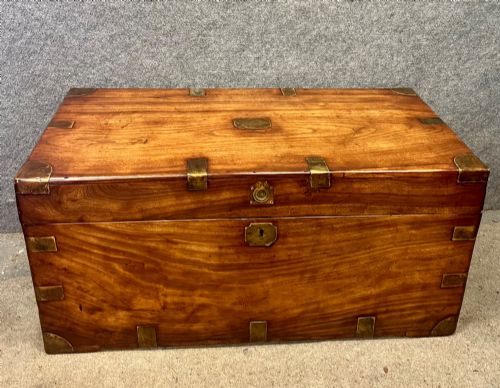
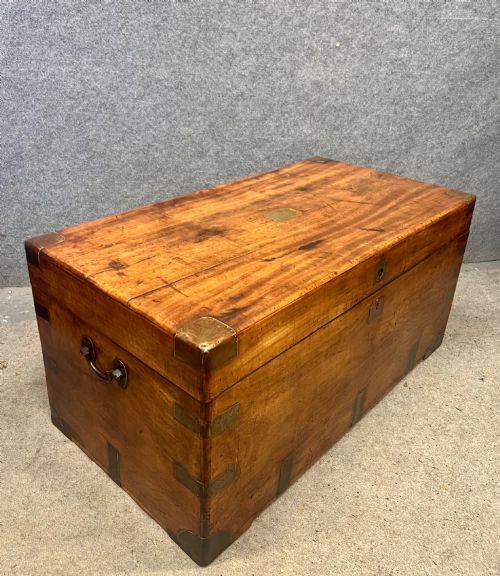
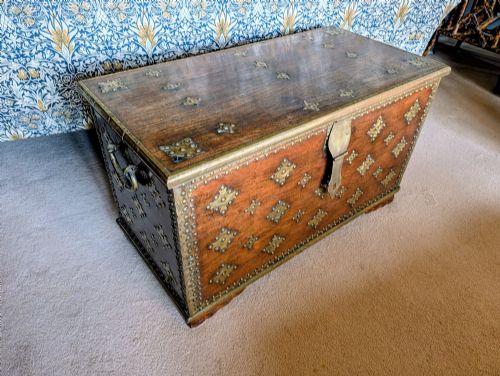
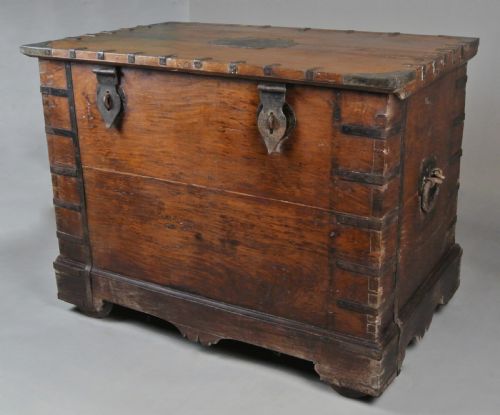
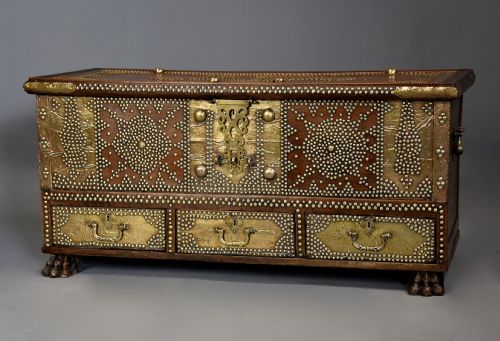
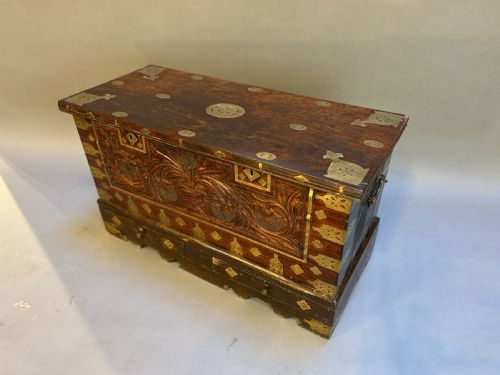
Metalwork and inlay played a vital role in finishing these pieces, with brass corner brackets, straps, and heavy iron bindings reinforcing the structural joints of campaign styles. In addition to protective metal hardware, many surfaces display elaborate detailing through bone inlay, mother of pearl, or deep surface carving. This combination of robust timber framing and decorative embellishment defines the physical presence of the work.
Many nineteenth-century campaign trunks retain hidden secret drawers tucked behind false bottoms for smuggling private letters or currency.
Variations in quality
Quality in an antique indian wooden box is determined by the crispness of the carving, the integrity of the joinery, and the selection of the timber. Finer examples display deeply undercut, symmetrical foliage or figures, whereas lower tiers show shallower, hastily executed work. The density and grain of the wood itself, such as highly figured padouk or well-matched camphor panels, elevate the standing of a piece.
The retention of original hardware, locks, and internal fittings also dictates the grade of the object. Pieces that retain their heavy brass strapwork, functional secret compartments, or original stands command greater interest than those altered or stripped of their fittings. The harmony between structural engineering and decorative restraint separates standard utility items from masterworks.
The Antique Indian Wooden Box Glossary
- Campaign chest
- A modular chest designed in sections for easy transport by military officers during the nineteenth century. These items typically feature recessed brass handles and corner protection.
- Damchiya
- A traditional low storage cabinet or dowry chest originating from regions such as Rajasthan, often featuring ornate carved panels and heavy wooden locking mechanisms.
- Zanzibar chest
- A heavy storage box characterised by brass studding, strapwork, and elaborate hardware reflecting trade links between India and East Africa.
- Cellarette
- A lockable container or chest designed to hold bottles of wine and spirits securely during transport or dining use.
- Teapoy
- A small table or stand traditionally used to hold tea caddies, often featuring carved legs and colonial design influences.
Antique Indian Wooden Box: Frequently Asked Questions
How do I care for an antique wooden box?
Keep these items away from direct sunlight and extreme temperature fluctuations to prevent the timber from splitting. Apply a microcrystalline wax occasionally to nourish the hardwood surface.
Avoid using modern liquid polishes, which can build up on carved details and damage the original finish. Dust regularly with a dry, soft cloth.
What was a dowry chest used for?
A dowry chest served to store textiles, garments, and valuables prepared for a bride's new household. These large trunks acted as central pieces of furniture in traditional homes.
Families often commissioned elaborate carvings to display their status and prosperity within the community.
Why do some trunks have brass bindings?
Brass bindings and corner brackets provided structural reinforcement for trunks subjected to the rigours of long-distance travel and maritime shipping. They protected vulnerable edges from impact.
Over time, these functional elements evolved into a distinct decorative style associated with campaign and colonial furniture.
How can I tell a campaign chest apart from a standard chest?
Campaign chests are built in separate stacked sections with flush-fitting brass handles that do not protrude from the drawer fronts. This design allowed officers to pack and move their belongings quickly.
Standard domestic chests lack this modular construction and flush hardware arrangement.