
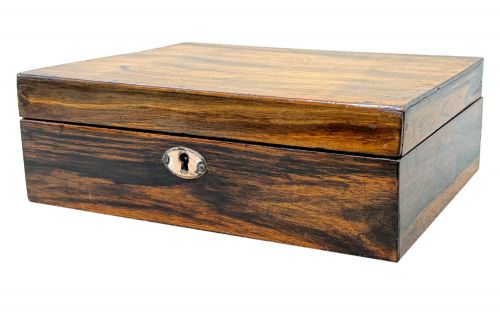


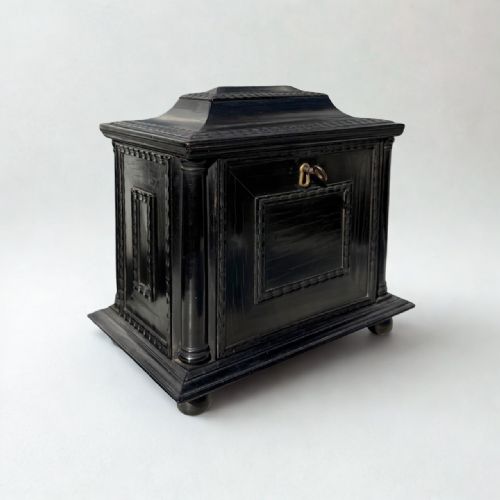


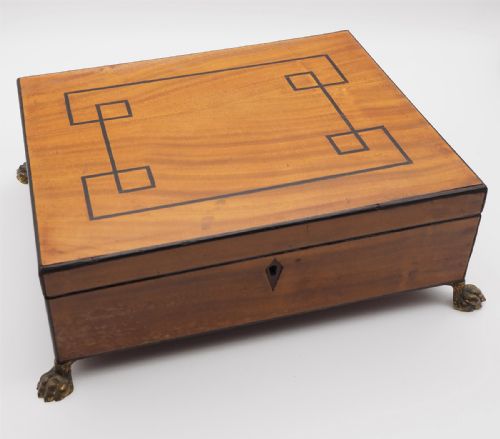


Ebony Wooden Casket
These ebony wooden casket examples are dense, dark timber boxes built to hold valuables, bringing heavy grain and deep colour to a desk or dressing table.
Ebony Wooden Casket
When you search for an ebony wooden casket, you encounter heavy dark timber boxes designed to safeguard jewellery, letters and small treasures. The examples found here span the seventeenth century up through the Victorian era and into the twentieth century, taking forms such as table cabinets, work boxes and trinket boxes.
The most typical pieces you meet on this page lean towards nineteenth-century production, alongside earlier Flemish Baroque and Italian Renaissance revival examples. Makers utilised solid ebony or veneered panels upon secondary woods, frequently combining the dark timber with contrasting inlays like bone, ivory or lighter fruitwoods.
Geographic origins vary significantly across the selection, ranging from British Regency workshops to Anglo-Indian carvers and continental European centres. Such diversity means a buyer might select a heavily carved solid ebony box from the East or a geometric parquetry casket from Flanders.
How they were made
Craftsmen built these caskets using dense tropical hardwoods, applying ebony either as a solid structural material or as thin veneers over secondary supports like walnut, kingwood and fruitwood. The natural density of ebony allowed artisans to carve crisp architectural mouldings and deep relief patterns directly into the surface.
Decoration relied heavily on contrasting inlays and applied elements, incorporating brass stringing, bone, mother-of-pearl and porcupine quill into the dark ground. Parquetry and mosaic techniques created geometric precision, while specialised boxes utilised tortoiseshell or satinwood interiors to complement the sombre exterior.
Listings feature woods including ebony, walnut, fruitwood, coromandel and burr yew across various centuries.
What varies in quality
Quality rests upon the purity and selection of the timber, distinguishing solid ebony construction from simpler veneered carcases or stained substitutes. Superior examples display tight, uniform grain without artificial colouring, whereas lesser pieces rely on heavy surface finishes to hide underlying timber flaws.
The precision of the decorative inlay and the execution of carved details separate standard production from masterwork pieces. Crisp mitres in brass stringing, secure bone or mother-of-pearl tesserae, and finely dovetailed interior compartments indicate superior workshop standards.
The Ebony Wooden Casket Glossary
- Ebony
- A dense, heavy heartwood yielded by several species of trees, known for its deep black or very dark brown colour. It takes a high polish and does not float in water.
- Parquetry
- A geometric mosaic of wood pieces used for decorative floors and box lids. Artisans bevel and fit contrasting timber veneers together to form repeating patterns.
- Coromandel
- A valuable cabinet wood from India and Southeast Asia, featuring dark brown or greenish-black streaks on a chocolate background. It is frequently confused with ebony but possesses distinct figuring.
- Tunbridge Ware
- A type of decorative woodwork produced in Kent, featuring tiny mosaic tiles made from different coloured woods. These tiles form pictorial or geometric designs on box lids.
- Table Cabinet
- A small, portable cabinet designed to sit on a desk or table rather than the floor. They usually contain multiple interior drawers and compartments for valuables.
Ebony Wooden Casket: Frequently Asked Questions
What were ebony caskets used for?
These boxes served primarily to secure personal valuables, jewellery, and confidential correspondence away from dust and prying eyes. Their sturdy construction made them suitable for keeping high-value items safe on dressing tables or writing desks.
Over time, many functioned as collector's cabinets or work boxes for needlework and small keepsakes. Their decorative presence also allowed them to simply sit on display as symbols of wealth and sophisticated taste.
How do I care for antique ebony?
Maintain stable humidity and temperature levels in the room to prevent the underlying wood and secondary veneers from warping or cracking. Avoid placing the box near direct sunlight or heat sources that might dry out the natural timber.
Dust the surface gently with a dry, soft cloth rather than using modern aerosol polishes or silicone sprays. If the wood appears dry, apply a very sparing amount of appropriate microcrystalline wax to protect the finish.
Are all black boxes made of solid ebony?
Many boxes finished in a dark colour are actually constructed from cheaper secondary woods like fruitwood or walnut that have been ebonised with a black stain or finish. True solid ebony is exceptionally heavy and dense, sinking readily in water and showing natural grain variations under close inspection.
Veneered pieces feature a thin layer of genuine ebony applied over a stable core timber, which helps prevent the expensive hardwood from splitting due to seasonal humidity changes.