



Victorian Anglo Indian Box
A victorian anglo indian box brings the rich craftsmanship of the colonial era into the home, offering both intricate detail and practical storage.
Victorian Anglo Indian Box
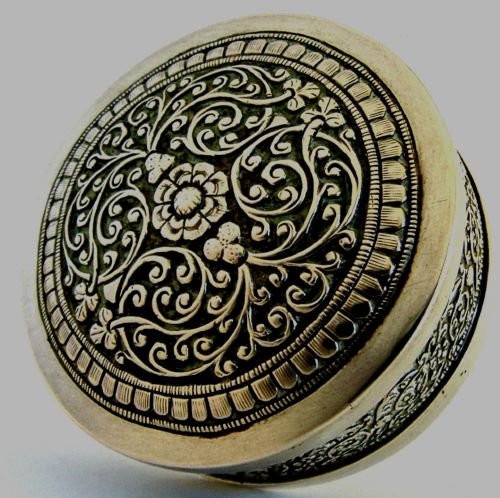
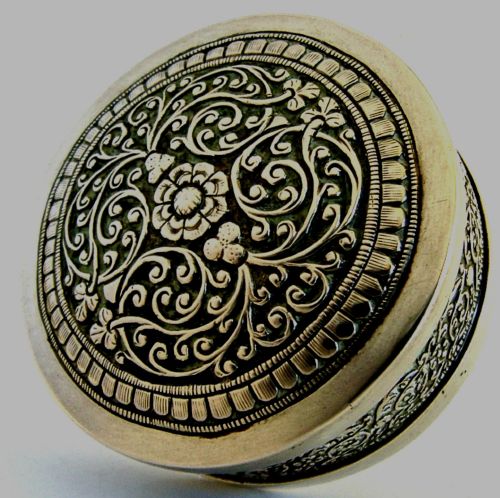
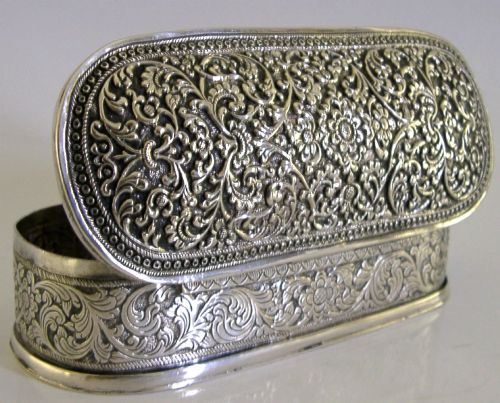
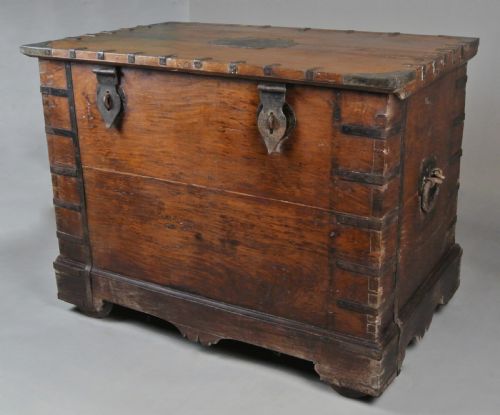
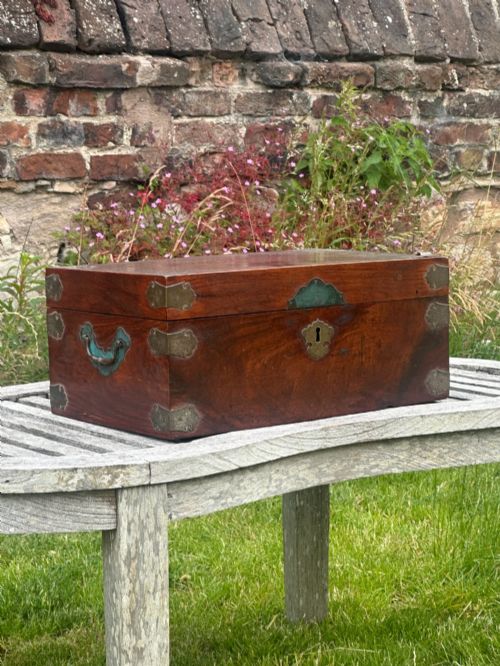
A victorian anglo indian box encompasses a diverse group of containers produced during the nineteenth century under British colonial rule in India and Ceylon. These objects range from small trinket boxes and writing slopes to large campaign chests and dowry trunks designed for travel or domestic organisation.
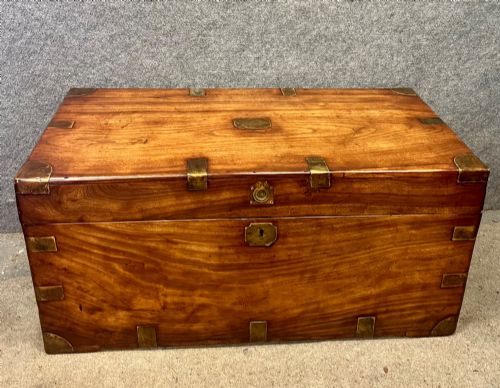
The most common forms encountered on this page include heavy teak or camphor wood trunks bound in brass, alongside smaller stationary boxes and writing slopes fashioned from exotic timbers. Many pieces combine traditional local carving traditions with the functional requirements of British military officers and merchants stationed abroad.
Materials and construction
Local hardwoods such as teak, camphor, ebony, and padouk form the structural foundation of these items, selected for their durability and resistance to tropical climates. Craftsmen frequently incorporated brass binding, corner plates, and flush handles to reinforce the heavy timber constructions for military transport.
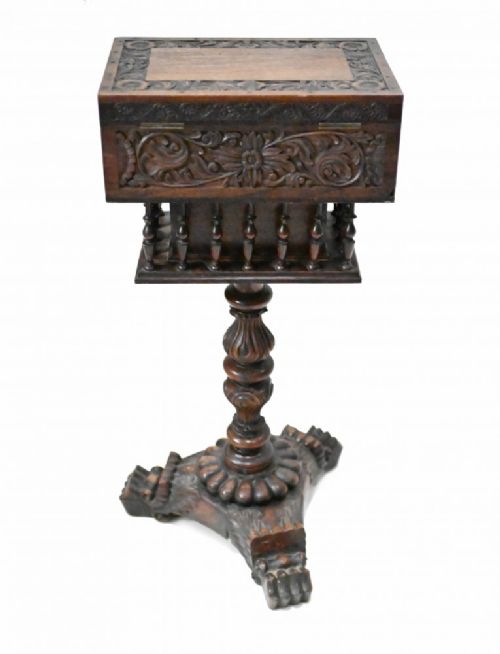
Surface decoration relies on skilled carving, bone or ivory inlay, and specialised micro-mosaic work like Sadeli ware. Artisans also utilised porcupine quill, silver mounts, and tortoise shell to create highly textured geometric and floral patterns across the lids and panels.
Some nineteenth-century caskets incorporate secret compartments requiring hidden wooden pins to release the locking mechanism.
Assessing quality and execution
The distinction between standard utility items and finer examples often rests on the complexity of the internal fittings and the precision of the joinery. Writing slopes with fully fitted compartments, secret drawers, and intact leather surfaces represent a higher standard of workshop production.
The fineness of the carved ornamentation and the intricacy of inlay work dictate the visual hierarchy among these objects. Dense geometric bone inlay and carefully balanced porcupine quill arrangements demonstrate superior artisan skill compared to simpler plain timber surfaces.
The Victorian Anglo Indian Box Glossary
- Campaign chest
- A modular wooden trunk built in sections with recessed brass handles and corner brackets designed for military transport. These pieces separate into distinct parts for ease of carriage during colonial service.
- Sadeli mosaic
- A complex micro-mosaic technique utilising horn, bone, and metal to create geometric banding on boxes. Artisans cut tiny rods of material and bundle them together to form intricate repeating patterns.
- Writing slope
- A portable slant-topped box that opens to reveal a slanted writing surface, inkwells, and storage compartments for paper and correspondence. These fitted interiors often include secret compartments behind removable panels.
- Porcupine quill
- A decorative medium using dried quills arranged in geometric patterns beneath glass or left exposed on the exterior of wooden caskets. This technique is particularly associated with nineteenth-century Ceylonese craftsmanship.
- Padouk
- A heavy, durable tropical hardwood with a reddish hue utilised in colonial furniture and storage boxes. The dense grain accepts fine carving and polished finishes exceptionally well.
Victorian Anglo Indian Box: Frequently Asked Questions
What is a campaign box?
A campaign box is a portable piece of furniture designed for military officers on active service overseas. These items feature protective brass corners and recessed hardware to withstand frequent transport.
Built from robust timbers like teak or camphor, they served multiple functions as writing desks, storage chests, and travelling wardrobes.
How do I care for exotic wood boxes?
These wooden items require stable indoor humidity to prevent the natural timber from splitting or warping over time. Keep them away from direct heat sources and sudden temperature changes.
Apply a light application of appropriate wax polish occasionally to maintain the sheen of ebony, padouk, or teak surfaces.
What are writing slopes used for?
Writing slopes provided a portable desk space for correspondence and document storage during the Victorian era. The hinged lid opens to create an inclined writing surface lined with leather or velvet.
Internal partitions hold inkwells, nibs, and stationery, while hidden compartments secure private letters and valuables.
How do I identify Ceylonese boxes?
Ceylonese boxes from the nineteenth century frequently incorporate distinct decorative elements such as porcupine quill work or calamander wood. These regional pieces often feature dense surface ornamentation contrasting with plain ebony borders.
Local workshops utilised native materials to produce specialised sewing boxes, card cases, and writing chests for the export market.