



Black Carved Wood Box
A black carved wood box brings both utility and intricate regional folk artistry into a room.
Black Carved Wood Box
A black carved wood box encompasses vessels designed for storage, writing, smoking accessories, and display, originating from varied cultural traditions across the nineteenth and early twentieth centuries. These objects range from small trinket cases and match holders to substantial trunks and humidors.
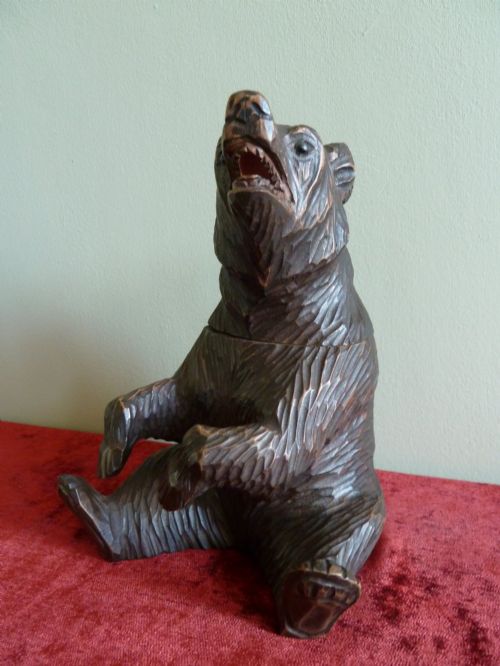
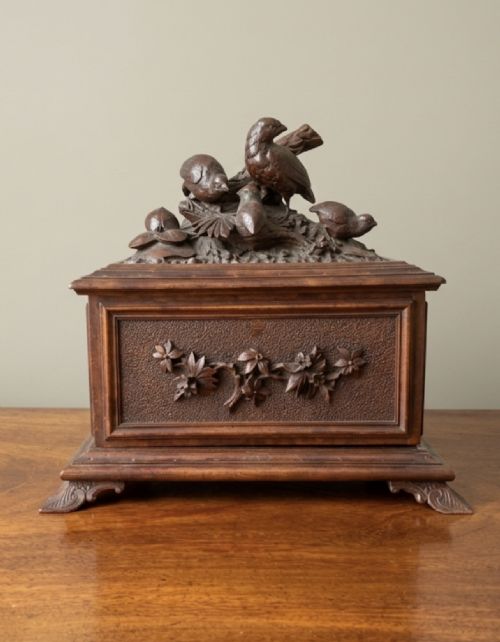
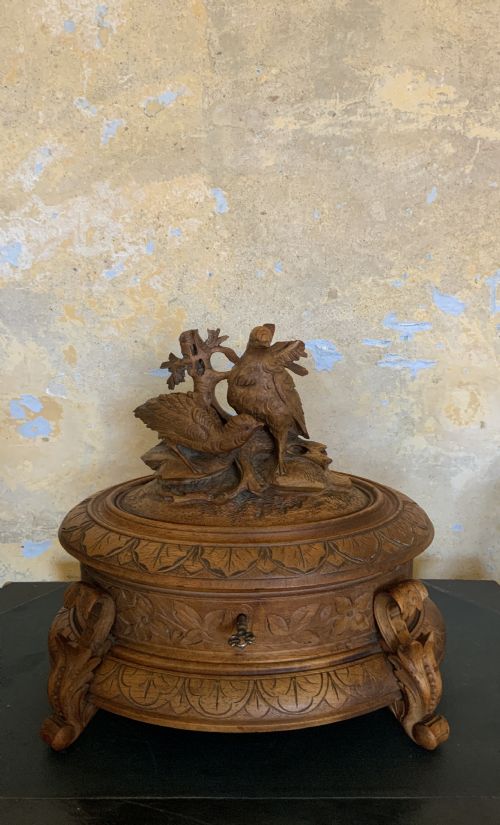
The Black Forest tradition dominates the selection, frequently presenting sculptural animal forms like bears, dogs, and gnomes carved from linden wood, walnut, and other timbers. Alongside these European examples sit Anglo-Indian, Ceylonese, and Chinese pieces utilising dense exotic hardwoods and lacquered finishes.
Buyers encounter everything from simple desk tidies and game boxes to large blanket trunks. The unifying thread remains the dark surface and carved detail, which together define the aesthetic of these historical containers.
How they were made
Carpenters and carvers utilised regional timbers such as linden wood, walnut, ebony, camphor wood, and pine, often applying dark stains, lacquers, or polish to achieve the characteristic deep black tone. European makers relied on chisels and gouges to shape realistic animal figures and foliage, while Asian workshops employed intricate surface carving and lacquer techniques.
Internal fittings, hinges, and locks frequently incorporate brass to secure lids and compartments. Marquetry inlay appears on select surfaces, contrasting the dark wood with lighter botanical motifs or geometric patterns.
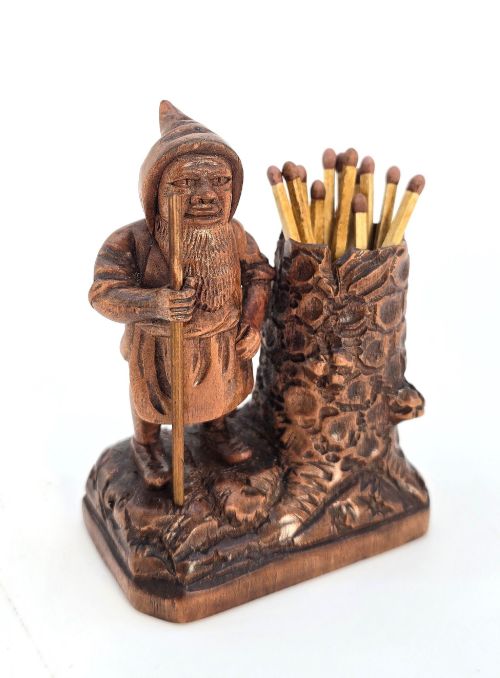
A carved limewood gnome stands ready with a match striker, steadfastly guarding the desk.
What varies in quality
The depth and ambition of the carving separate standard workshop pieces from superior examples, particularly in Black Forest animal studies where muscular tension and fur texture demand precise handwork. Naturalistic proportions and expressive detail in figures like bears or dogs indicate a more skilled hand.
Material selection also dictates the hierarchy, with dense solid timbers like ebony or finely grained linden wood holding crisp edges far better than softer or patched woods. Intact original hinges, working locks, and well-preserved surface finishes elevate a piece significantly.
The Black Carved Wood Box Glossary
- Humidor
- A specialised box designed to store cigars at a controlled humidity. These containers often feature fitted wooden interiors and airtight lids.
- Linden wood
- A pale timber favoured by European carvers for its fine, even grain and lack of prominent growth rings. It accepts intricate detail without splintering.
- Marquetry
- The art of applying small pieces of veneer to a structure to form decorative patterns. This technique appears on select Swiss and European boxes.
- Trinket box
- A small container intended for holding jewellery or small personal items. These pieces frequently feature velvet or paper linings.
Black Carved Wood Box: Frequently Asked Questions
What were these wooden boxes used for?
These boxes served practical domestic functions tailored to the items of the period, from holding cigars and tobacco to securing letters, jewellery, and writing instruments.
Larger versions functioned as blanket chests or storage trunks, while smaller lidded vessels sat upon desks as inkwells or match strikers.
How do I identify Black Forest carvings?
Black Forest carvings are typically distinguished by naturalistic animal subjects, particularly bears and dogs, rendered in deep brown or black stained linden wood and walnut.
Originating in Switzerland and Germany during the nineteenth century, these pieces often incorporate realistic foliage and rugged textures.
Are Anglo-Indian boxes different from European ones?
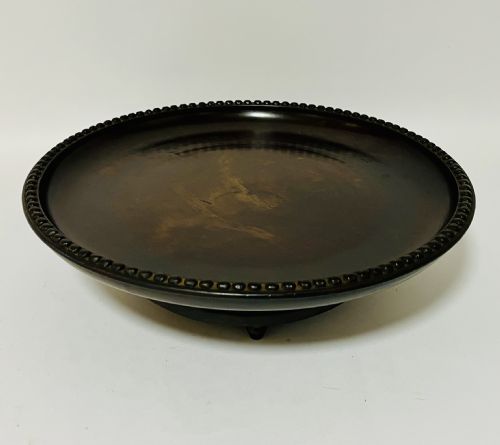
Anglo-Indian and Ceylonese boxes utilise dense tropical hardwoods such as solid ebony rather than the European linden wood or walnut common in alpine carving.
They frequently display intricate overall surface carving or contrasting details rather than the sculptural animal figures found in Swiss work.
How should I care for an antique wooden box?
Keep wooden boxes away from direct sunlight and dramatic fluctuations in temperature or humidity to protect the timber and prevent warping.
Dust gently with a dry, soft cloth and avoid applying modern chemical polishes that can degrade nineteenth-century finishes.