







Fitted Sewing Box Table
A fitted sewing box table combines a neat surface with internal compartments for needlework, offering both utility and character to a room.
Fitted Sewing Box Table
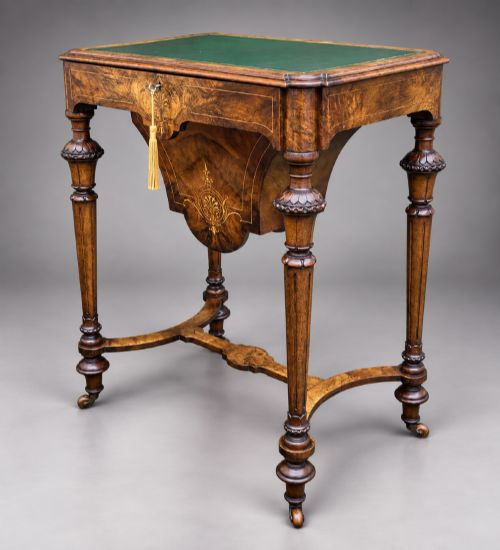
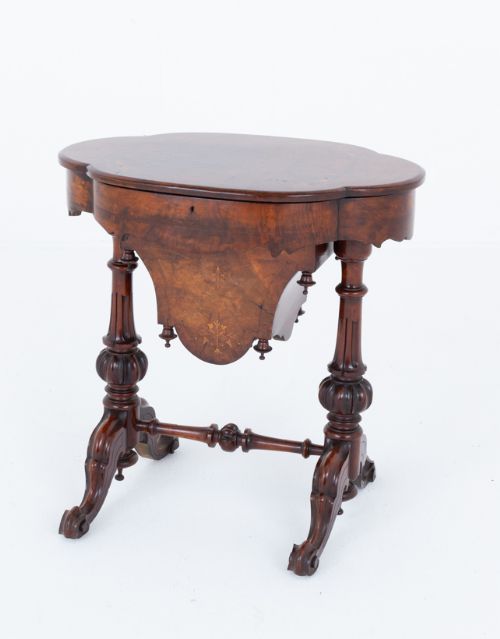
A fitted sewing box table is a dedicated piece of furniture designed to house sewing implements, threads, and materials while serving as a functional small table.
The examples seen on this page span the Victorian and Edwardian periods, appearing in forms such as work tables, occasional tables, and jewellery boxes.
Origins include domestic British workshops alongside Chinese Export and Anglo-Indian variants, showing diverse regional interpretations of the form.
How They Were Made
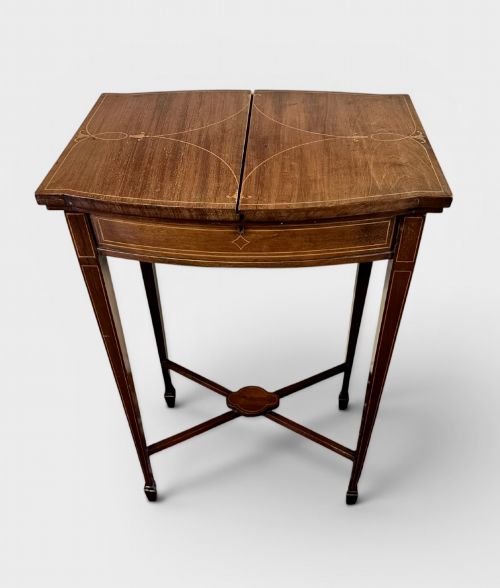
Cabinetmakers utilised rich timbers such as burr walnut, walnut, and mahogany, often enhanced with delicate boxwood inlay and marquetry detailing.
Internal compartments incorporate textile, fabric, and leather linings to protect delicate contents, while structural supports include carved and turned wooden elements alongside brass fittings.
Materials recorded on this page include burr walnut, walnut, mahogany, brass, boxwood inlay, fabric, leather, and textiles.
What Varies in Quality
The standard of a fitted sewing box table rests on the selection of timber veneers, particularly the figuring of the burr walnut and the precision of the boxwood inlay.
Construction details such as carved and turned supports, functional internal partitions, and the overall harmony of proportions distinguish finer pieces from simpler domestic examples.
The Fitted Sewing Box Table Glossary
- Burr walnut
- A highly figured timber harvested from the wart or burl of the walnut tree, prized for its swirling grain patterns and rich colour. It was frequently utilised for decorative veneers on high-quality Victorian furniture.
- Marquetry
- The art of applying small pieces of veneer to a structure to form decorative patterns or pictures. Craftsmen used contrasting woods such as boxwood to create intricate geometric designs.
- Chinese Export
- Items produced in China specifically for Western markets, often featuring distinct regional craftsmanship and materials. These pieces blend Eastern woodworking techniques with European furniture forms.
- Work table
- A specialised small table containing fitted compartments or a suspended fabric bag for needlework and small crafts. They became particularly popular during the nineteenth century for domestic use.
- Cradle base
- A supportive framework that allows the upper box or table section to tilt or swing between upright supports. This construction is commonly found on mid-nineteenth-century sewing and lamp tables.
Fitted Sewing Box Table: Frequently Asked Questions
What is a fitted sewing box table?
A fitted sewing box table is a compact piece of nineteenth-century furniture featuring a lidded compartment with internal divisions for storing threads, needles, and sewing tools.
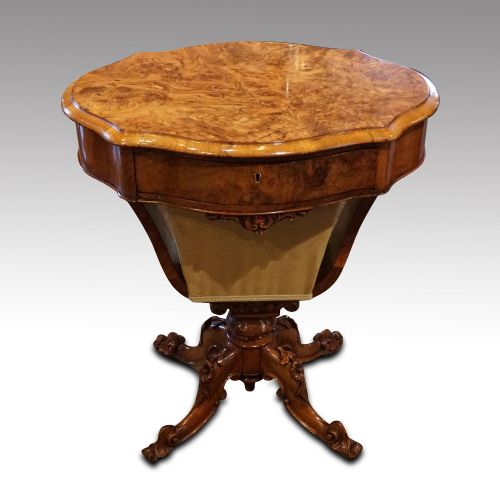
Beneath the storage section, many variants include a suspended fabric bag or lower shelf, combining a practical workspace with the surface utility of an occasional table.
How were these tables used?
These tables served as dedicated stations for domestic needlework, embroidery, and mending tasks undertaken in the parlour or drawing room.
The internal fitted trays kept small implements organised, while the top surface could hold a lamp or ongoing reading material when sewing was put aside.
How do I identify a Victorian sewing table?
Victorian sewing tables typically appear in walnut, burr walnut, or mahogany, often showcasing rich timber grain and period-specific construction methods like carved and turned supports.
Many examples date from the mid to late nineteenth century and incorporate boxwood inlay, hinged lids, and compartmentalised interiors designed for specific needlecraft accessories.
Where were these tables made?
While the majority originated in British workshops during the Victorian and Edwardian eras, the listings also include pieces from Chinese Export and Anglo-Indian origins.
These international pieces demonstrate how local cabinetmakers adapted traditional European sewing table forms using native timbers and distinct decorative techniques.
How do I care for burr walnut veneer?
Burr walnut veneer benefits from stable room environments away from direct heat sources and strong sunlight, which can dry out and fade the timber over time.
Routine maintenance involves gentle dusting with a soft, dry cloth, avoiding harsh chemical polishes that might damage the historical surface finish.