




Inlaid Rosewood Workbox
An inlaid rosewood workbox brings rich dark timber and bright geometric detailing to a dressing table or writing desk.
Inlaid Rosewood Workbox
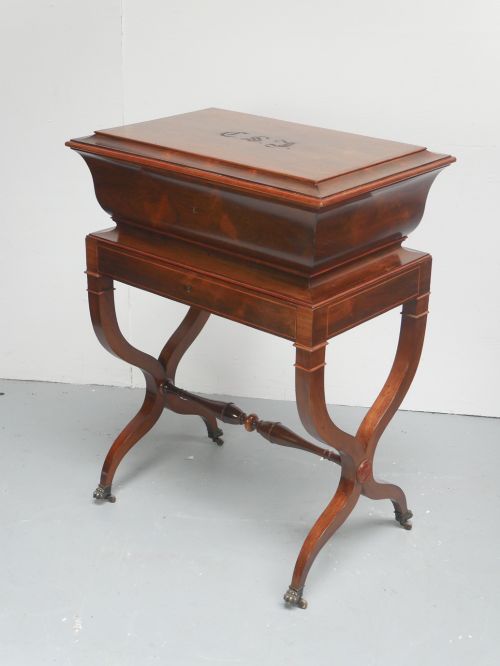
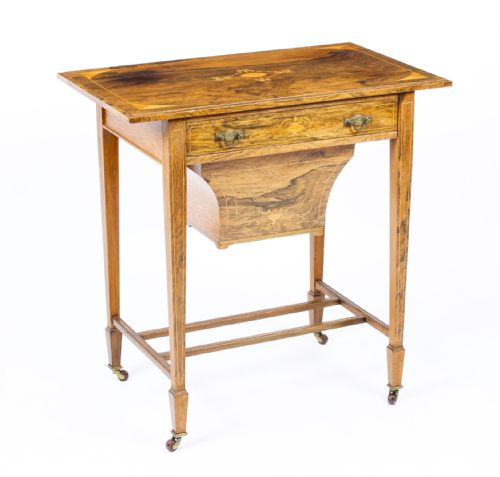
An inlaid rosewood workbox is a portable container designed for needlework, sewing, and small valuables, appearing across the Regency, Victorian, and Edwardian periods. These pieces range from compact tabletop caskets to larger work tables fitted with internal compartments.
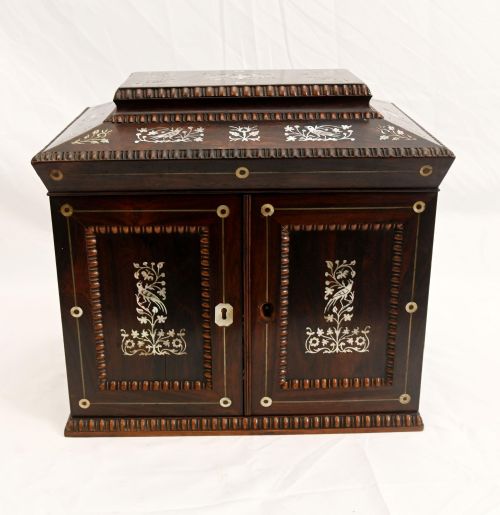
The version most commonly met on this page is the Victorian or Regency box, constructed from dense rosewood and decorated with contrasting materials. Many examples survive with fitted interiors intended for cotton spools, thimbles, and pins.
Makers produced these containers in various forms, including sarcophagus shapes and standard rectangular chests, often lined with velvet or silk. Some incorporate specialised spaces for jewellery alongside standard needlework equipment.
How they were made
Cabinetmakers constructed these boxes using dense rosewood timbers, frequently incorporating brass or mother-of-pearl to create geometric and floral patterns. Specialised techniques such as Tunbridge Ware surface decoration appear on specific Victorian examples.
Interiors typically combine timber partitions with delicate linings of velvet and silk, occasionally paired with bone accessories and silver stringing. Metal hinges and escutcheons secure the lids and compartments of both small caskets and larger tables.
Listings feature items from the 19th Century, Regency, Victorian, and Edwardian periods, utilising materials such as rosewood, mother-of-pearl, and velvet.
What varies in quality
The division between standard and superior pieces rests on the precision of the inlay and the complexity of the interior fittings. Elaborate mother-of-pearl or brass stringing integrated cleanly into the rosewood grain indicates a higher standard of cabinetmaking.
Intact silk and velvet linings, alongside original bone or fitted compartments, distinguish well-preserved examples from those that have undergone significant replacement or later restoration.
Lesage
The Inlaid Rosewood Workbox Glossary
- Tunbridge Ware
- A form of woodwork characterised by minute mosaic patterns made from many different coloured woods. This technique created detailed geometric borders and pictorial scenes on Victorian boxes.
- Sarcophagus
- A box shape featuring a domed or tiered lid resting on a rectangular base, popular during the Regency and Victorian eras. This architectural form gave containers a substantial appearance on a table.
- Mother of pearl
- The iridescent inner layer of certain mollusk shells, used by makers to cut thin pieces for inlay. It provides a bright contrast against dark rosewood surfaces.
- Stringing
- Thin lines of contrasting timber, brass, or other materials inlaid into channels cut into the main wood surface. This technique outlined box lids and drawer fronts.
Inlaid Rosewood Workbox: Frequently Asked Questions
What is an inlaid rosewood workbox used for?
An inlaid rosewood workbox served as a container for sewing equipment, threads, needles, and small personal valuables. Ladies utilised them in the parlour or bedroom for needlework tasks.
Over time, many of these boxes transitioned into general storage for letters and jewellery rather than active sewing.
How do I tell a Regency box from a Victorian one?
Regency boxes often feature bold brass inlay and architectural forms like the sarcophagus shape. They date from the early nineteenth century and lean toward classical restraint.
Victorian examples frequently incorporate mother-of-pearl, silver stringing, or Tunbridge Ware. Their decoration tends to be busier and more varied than earlier pieces.
Are the interiors usually original?
Many workboxes retain their original wooden trays, bone fittings, and compartments. However, the silk and velvet linings frequently show signs of replacement due to age and wear.
Checking for glue residue or modern textiles helps determine whether the interior fabric dates to the original period of manufacture.
Can I use a work table as a side table?
Work tables on stands were designed for occasional use in sitting rooms alongside chairs or sofas. Their height and surface area suit placement next to furniture for holding small items.
The internal compartments remain accessible beneath the lids, combining display space with practical storage.