






Brown Walnut Worktable
These brown walnut worktable examples combine nineteenth-century craftsmanship with practical compartments designed for sewing, writing, and small household tasks.
Brown Walnut Worktable
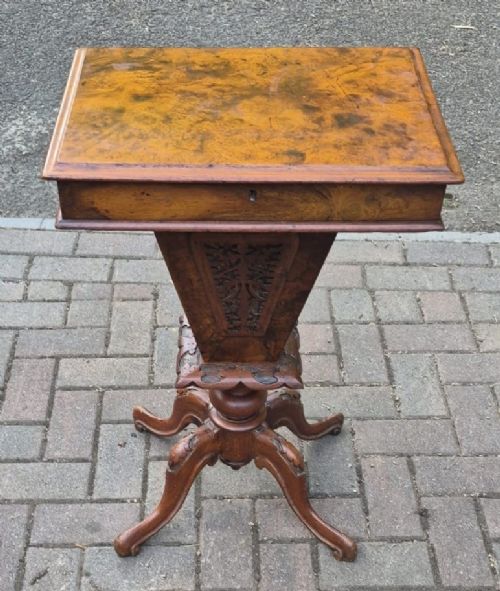
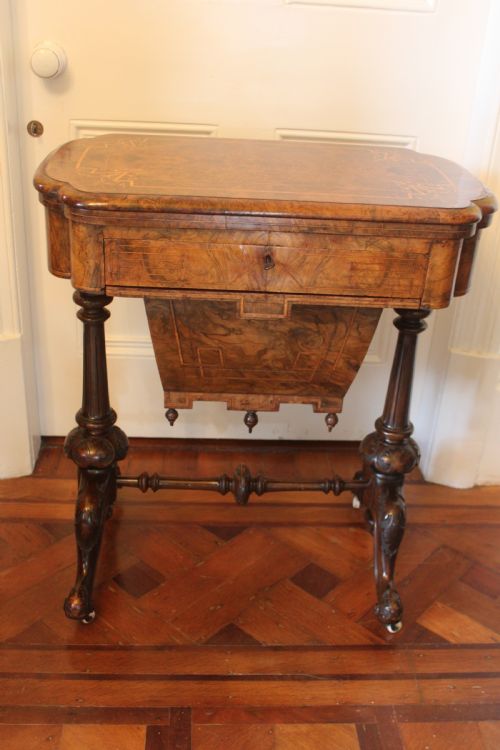
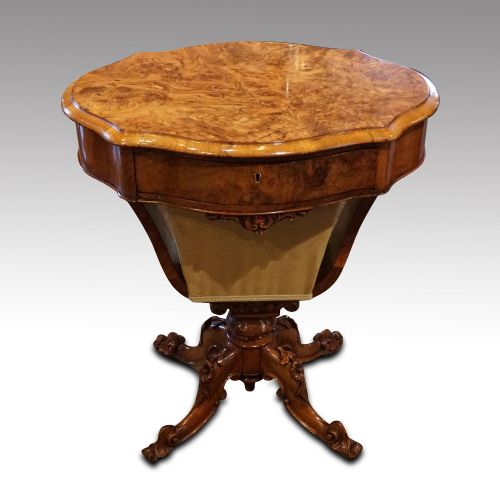
A brown walnut worktable is a versatile nineteenth-century piece designed primarily for domestic needlework, correspondence, and light pursuits. These tables typically feature fitted internal compartments, sliding fabric bags, or enclosed boxes supported by carved, turned, or pedestal bases.
The versions most commonly encountered on this page date from the Victorian era, spanning various decades of the nineteenth century alongside occasional mid-twentieth-century adaptations. Forms range from rectangular sewing boxes and games tables to trumpet-shaped workboxes and oval writing surfaces.
Materials and construction methods
Construction relies predominantly on solid walnut and burr walnut veneers selected for their rich, figured grain patterns. Cabinetmakers enhanced these surfaces using meticulous fruitwood, boxwood, and marquetry wood inlay to create decorative geometric or floral motifs.
Structural elements frequently incorporate brass hardware for locks and hinges, whilst internal compartments utilise softer secondary woods. Supports involve intricate turned columns, carved tripod bases, or cone-shaped pedestals joined with period cabinetmaking techniques.
Some sewing tables hide tiny wooden compartments deep inside their flared pedestals, perfect for concealing long-lost thimbles and secret notes.
Distinctions in quality and execution
The finest examples display exceptionally figured burr walnut veneers matched symmetrically across the top and lid surfaces, whereas lesser pieces utilise plain walnut boards with minimal grain variation. Precision in the marquetry and string inlay also separates standard production items from superior workshop commissions.
Hardware integrity and the complexity of the interior layout determine functional standing. Tables with intact, original fitted compartments, working locks, and sturdy carved supports represent the higher echelon of nineteenth-century cabinetwork.
The Brown Walnut Worktable Glossary
- Burr walnut
- A prized timber harvested from walnut tree growths, featuring swirling, highly decorative grain patterns. Cabinetmakers applied it as a veneer to prominent exterior surfaces.
- Marquetry inlay
- Decorative patterns formed by fitting contrasting thin pieces of wood into a prepared wooden ground. This technique defines the ornamental tops of many Victorian examples.
- Trumpet workbox
- A distinctive table style featuring an octagonal, flared body resembling a musical instrument. It usually houses a fitted interior compartment above a fabric sewing bag.
- Games table
- A multi-functional furniture form incorporating a reversible or folding top designed for board games and card play. These often double as standard sewing tables.
Brown Walnut Worktable: Frequently Asked Questions
What is a brown walnut worktable used for?
These tables served primarily as multi-purpose furniture for domestic tasks like sewing, embroidery, and letter writing. The integrated compartments and hanging bags kept materials organised within the parlour or drawing room.
In modern settings, they function effectively as bedside tables, occasional side tables, or decorative statement pieces that retain their original storage utility.
How do I date a Victorian worktable?
Dating relies on examining the timber selection, construction methods, and stylistic cues present in the base and hardware. Earlier nineteenth-century pieces often feature crisp hand-carving and intricate boxwood inlay.
Later Victorian and subsequent nineteenth-century iterations tend toward simpler turned supports and standard veneering. Comparing the secondary woods inside the drawers provides further chronological clues.
Are all these tables made of solid walnut?
Most examples utilise a combination of solid timber for structural frames and decorative veneers applied over secondary woods. Burr walnut, prized for its distinctive grain, was almost exclusively cut into thin veneers rather than used as solid lumber.
Internal partitions and secondary framing frequently employ lesser hardwoods or softwoods, which was standard practice among period cabinetmakers.
How do I care for antique walnut furniture?
Preserving these surfaces requires keeping them away from direct sunlight and extreme fluctuations in temperature or humidity. These environmental controls prevent the walnut veneer from drying out or lifting from the core.
Application of appropriate beeswax polishes helps maintain the lustre of the timber. Avoid silicone-based sprays that can penetrate old finishes and damage the wood over time.