




Vintage Sewing Table Cabinet
A vintage sewing table cabinet stores small domestic implements in timber compartments, offering a functional workspace with period charm.
Vintage Sewing Table Cabinet
A vintage sewing table cabinet serves as a dual-purpose piece of furniture designed for needlework and small domestic storage. These items combine the practical utility of a workstation with the decorative finish of a side table.
Buyers encountering this search phrase find work tables and cabinets dating from the Victorian and Edwardian eras, alongside later pieces from the 1920s. Common forms include octagonal lamp tables, work boxes on stands, and specialised machinist consoles.
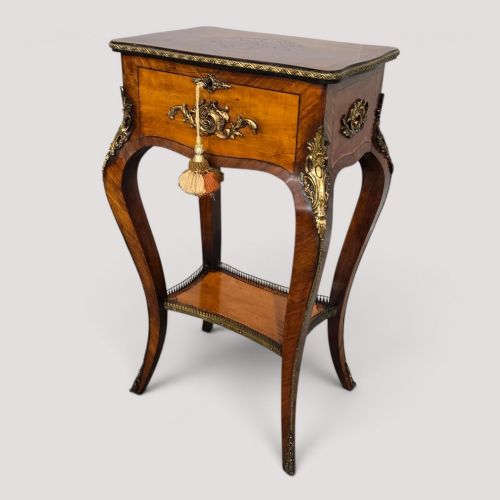
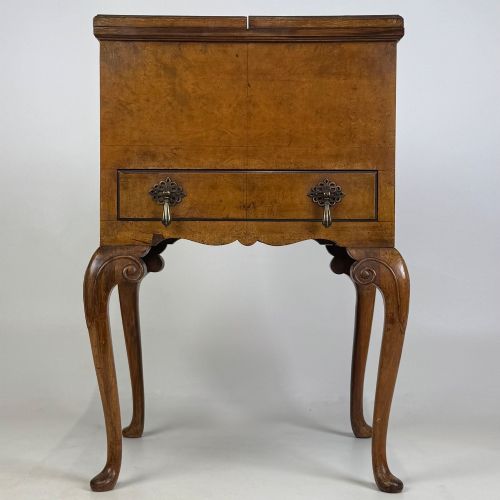
Materials span walnut, mahogany, burr walnut, and oak, often featuring satinwood inlay or silk baskets. Many pieces rest on cabriole legs or are fitted with brass hardware.
How they were made
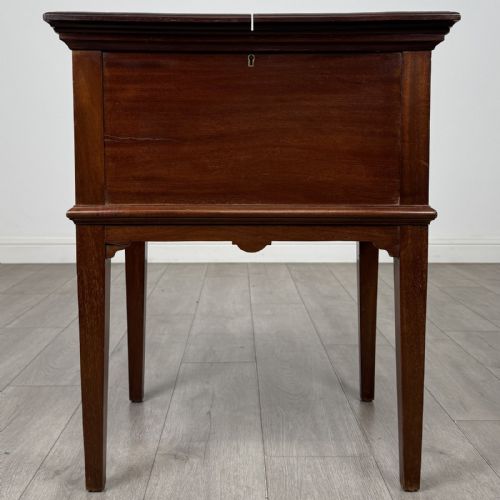
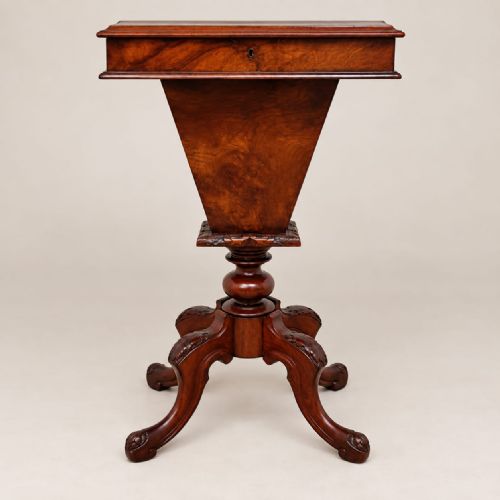
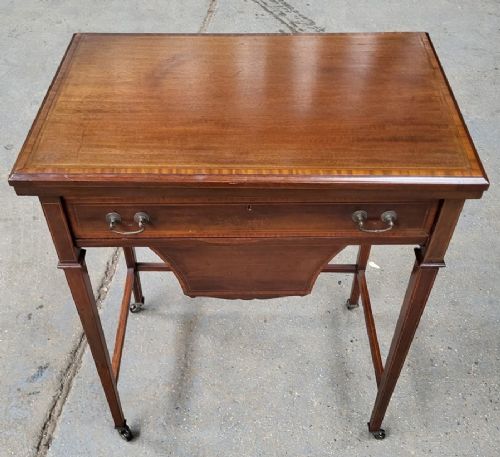
Cabinetmakers constructed these tables primarily from solid hardwoods and veneers such as mahogany, walnut, and burr walnut, sometimes applying cross-banding for decorative effect. Oak and rosewood also appear in the structural and surface elements of the period.
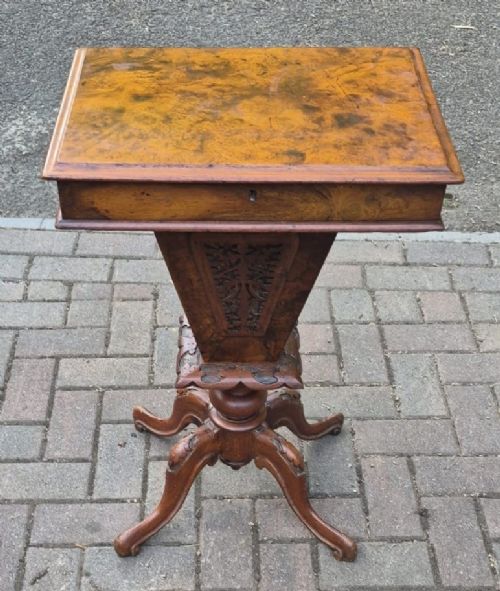
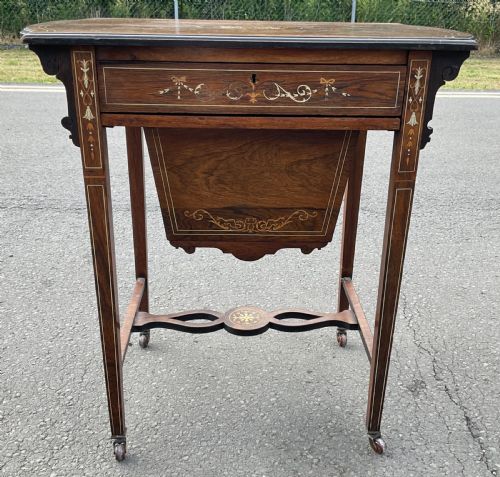
Intricate detailing relies on inlay work, carving, and applied brass fixtures. Specialised internal compartments, fabric storage baskets, and fitted sewing boxes complete the internal construction.
Periods represented span the Victorian, Edwardian, and Regency eras, extending into 1920s industrial and mid-century modern designs.
What varies in quality
The standard of timber selection and veneer matching defines the upper tier of these pieces, particularly where burr walnut or figured mahogany is employed. Finer examples display meticulous inlaid stringing and well-executed joinery on the internal compartments.
Hardware choice and leg styling, such as carved cabriole supports or quality brass fittings, distinguish standard utilitarian items from finer parlor furniture. The integrity of internal silk baskets or fitted sewing trays further marks the distinction between ordinary and superior specimens.
Waring & Gillow
The Vintage Sewing Table Cabinet Glossary
- Cabriole leg
- A furniture leg that curves outward and then tapers inward, finishing in a pad or claw foot. This style is frequently seen on Edwardian examples.
- Cross-banding
- A decorative border of veneer laid with the grain running perpendicular to the main surface. It frames the top of tables and cabinets.
- Work table
- A small domestic table fitted with drawers, compartments, or hanging bags for needlework. These function equally well as occasional or lamp tables.
- Stringing
- A narrow line of contrasting inlay wood embedded into the surface of a panel. It highlights geometric shapes on mahogany and walnut tops.
Vintage Sewing Table Cabinet: Frequently Asked Questions
How do I date a sewing table?
Dating relies on stylistic clues such as timber choice, leg shape, and decorative inlays. Victorian examples often feature solid walnut or rosewood with carved details, while Edwardian pieces frequently showcase mahogany with satinwood inlay.
Later 1920s examples may incorporate oak or house mechanical Singer sewing machines within a cabinet shell.
Are sewing tables still useful today?
These tables function well as bedside units, hallway tables, or living room side surfaces. The internal compartments provide practical storage for small modern items like stationery, charging cables, or craft supplies.
Their compact footprints make them adaptable to smaller contemporary rooms where surface space is limited.
What is a silk basket table?
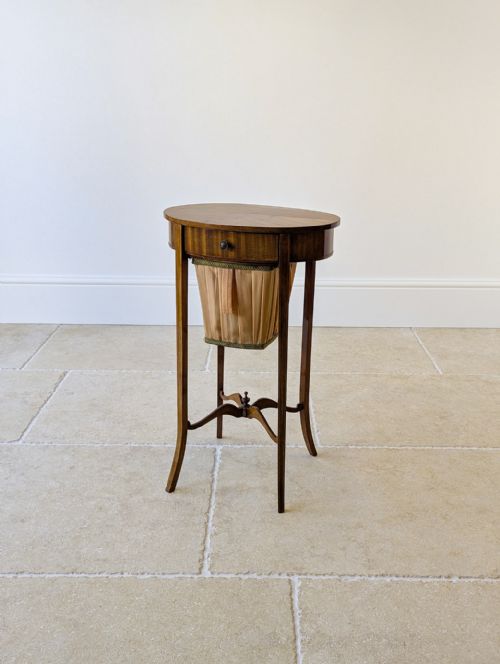
A silk basket table incorporates a gathered fabric pouch suspended beneath the table top to hold sewing materials and textiles. The soft bag adds texture and a contrasting element to the wooden frame.
Many Edwardian octagonal tables feature this specific design to keep fabrics accessible while working.