
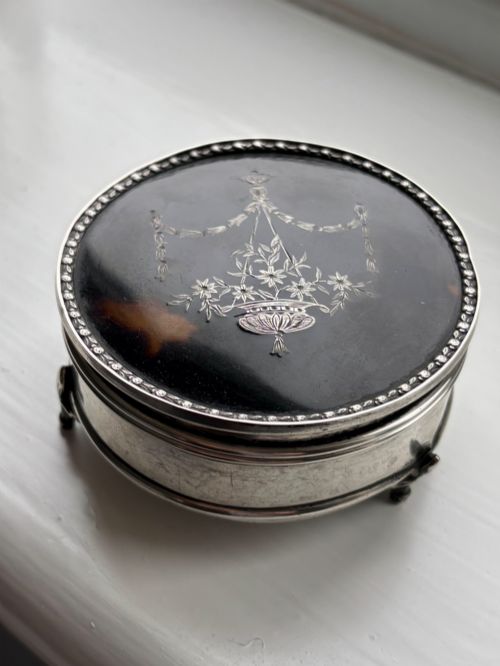
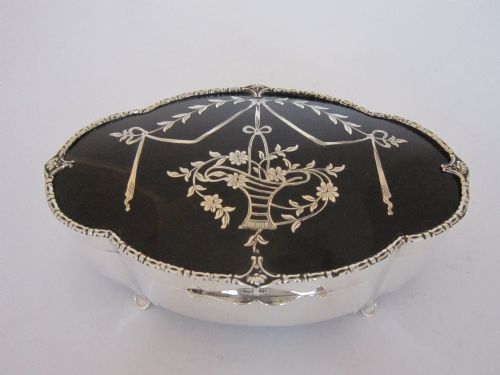
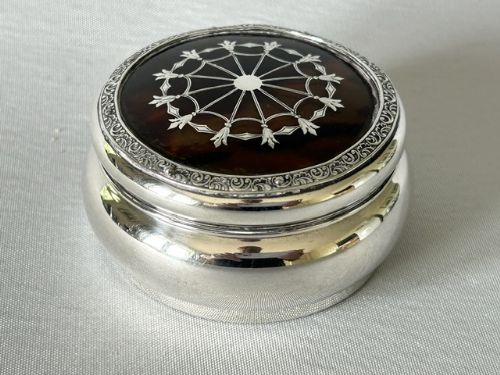


Edwardian Inlaid Dress Box
These edwardian inlaid dress box pieces are table boxes in tortoiseshell, silver and mahogany made for dressing tables.
Edwardian Inlaid Dress Box
An edwardian inlaid dress box brings together the tidy habits of the dressing table and the decorative tastes of the early twentieth century. When you look through these listings, you see trinket boxes, jewellery boxes and dressing table boxes made during the Edwardian period and neighbouring decades. Most examples rely on combinations of silver and tortoiseshell, sometimes enriched with pique work or set inside mahogany and satinwood frames.
The form itself ranges from small trinket containers to larger vanity and dressing boxes designed to hold combs, pins and personal items. While the search phrase points directly to Edwardian work, the pieces on the table stretch from Victorian and George V years down to the early twentieth century. You will find that these boxes share a common purpose of organising small valuables while sitting neatly upon a dressing chest.
How they were made
Makers built these pieces using timber carcases like mahogany, coromandel and satinwood, then applied decorative veneers, crossbanding and boxwood inlay. The surfaces frequently incorporate panels of genuine or faux tortoiseshell framed by sterling silver mounts and hinged lids. Interior trays and compartments use velvet, silk or simple polished wood to protect the contents.
Detailing often relied on specialist crafts such as Tunbridge ware mosaic, porcupine quill work or delicate silver pique inlay set directly into the tortoiseshell. Metal components like locks, hinges and escutcheons were cast or stamped in brass and silver, then fitted by hand to ensure the lids closed true.
Some boxes even include fitted compartments for your seven-day razor set, ensuring a freshly shaved face for every day of the week.
What varies in quality
The distinction between ordinary and superior boxes lies in the crispness of the inlay and the weight of the silver mounts. Finer examples show tight joints in the wood, precise boxwood stringing and tortoiseshell free from cracking or warping. Inferior pieces rely on stamped plating that wears thin and simple glued veneers that lift over time.
Makers' marks also play a part in how a piece stands out, with recognised firms delivering heavier gauge silver and more refined interior fittings. The integration of materials, such as flush-fitting pique work and smoothly operating locks, separates standard workshop production from high-grade retail pieces.
Ollivant & Botsford·Asprey & Co.·JH Browne of The Waldorf Hotel
The Edwardian Inlaid Dress Box Glossary
- Pique work
- Inlay of tiny gold or silver pins into tortoiseshell or ivory to form delicate patterns. This technique requires immense patience and steady hands.
- Tortoiseshell
- A mottled brown and amber material taken from the shell of certain marine turtles, widely used for box lids and comb backs. It takes a high polish and accepts silver pique inlay readily.
- Crossbanding
- A narrow strip of veneer laid across the grain of the primary wood to form a decorative border around a box lid or panel. It frames the central field of the timber.
- Tunbridge ware
- A form of mosaic woodwork created by gluing together many tiny tinted wooden prisms to form pictorial or geometric designs. It is characteristic of nineteenth-century English decorative boxes.
- Porcupine quill
- Needle-like quills arranged in geometric patterns across a wooden box carcase, often seen in Anglo-Indian work. The quills provide a striking striped texture.
Edwardian Inlaid Dress Box: Frequently Asked Questions
What goes inside an edwardian inlaid dress box?
These boxes were made to hold everyday dressing table items such as hairpins, rings, brooches and small cosmetic jars. Many feature fitted trays or velvet linings to keep delicate jewellery from scratching.
Today they serve the same practical function for modern trinkets and watches while adding texture to a bedroom surface.
How do I clean tortoiseshell and silver?
Tortoiseshell benefits from a gentle wipe with a soft, dry cloth to remove dust without scratching the polished surface. Silver mounts can be treated sparingly with a mild polish, taking care not to let cleaning agents touch the surrounding shell.
Keep these boxes away from direct sunlight and damp air to protect both the natural materials and the internal linings.
Are these boxes waterproof?
They are not sealed or waterproof containers, as they were designed strictly for indoor dressing table use. The timber carcases and velvet interiors can swell or stain if exposed to moisture.
Liquid spills should be dried immediately to prevent the wood from warping and the veneer from lifting.
Can I use an edwardian inlaid dress box daily?
Daily use is entirely practical provided the hinges and latches are handled with reasonable care. Opening and closing the lid gently preserves the original silver hardware and the delicate frame.
Regular use also allows you to enjoy the tactile qualities of the tortoiseshell and inlay rather than leaving the box shut away.