






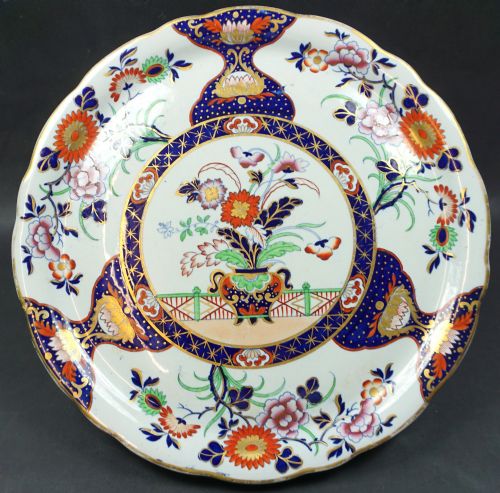
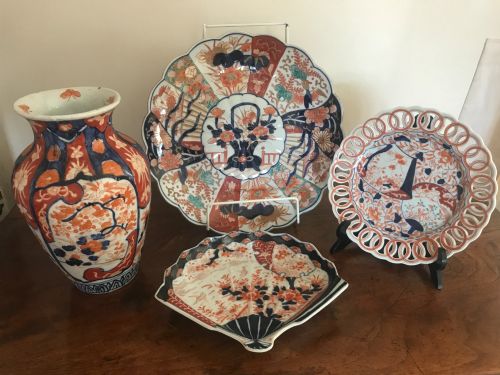
Antique Imari Dish
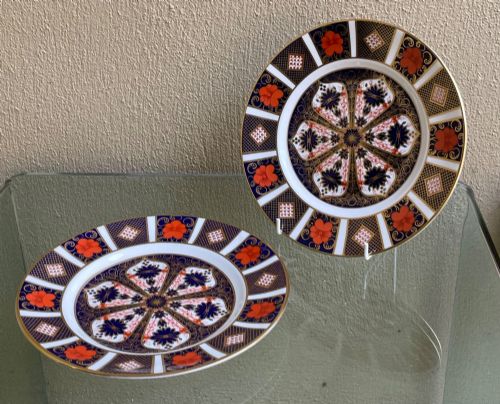
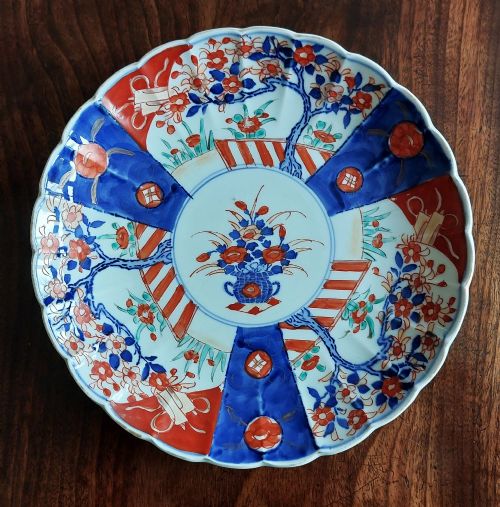
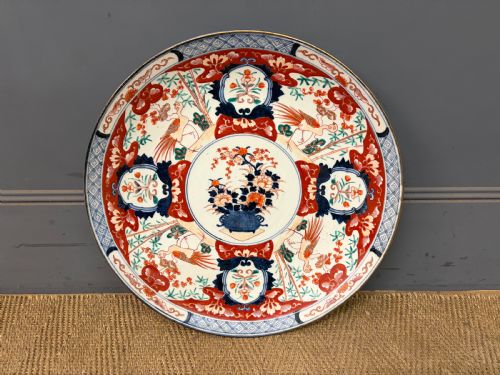
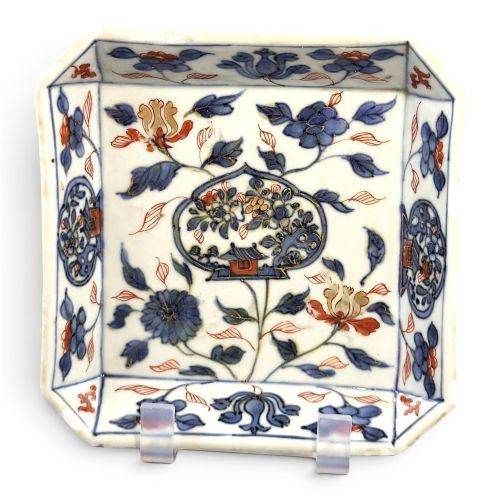
These antique imari dish pieces bring vibrant colour and intricate patterns to a table, combining traditional cobalt blue and iron red decoration.

What these pieces are
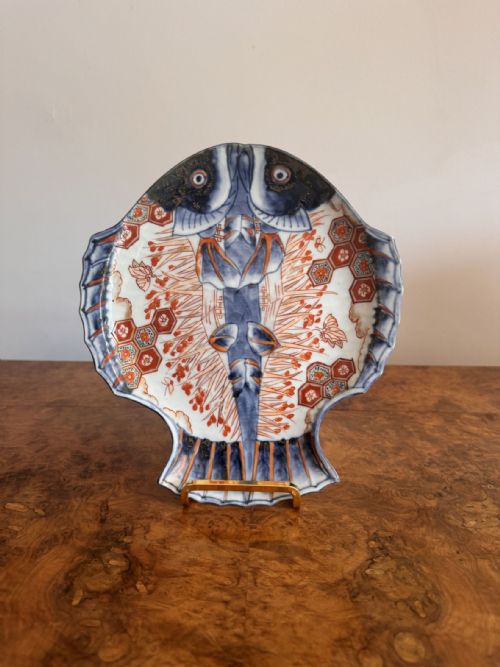
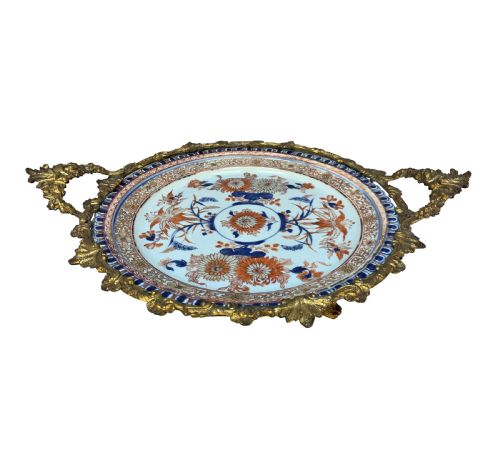
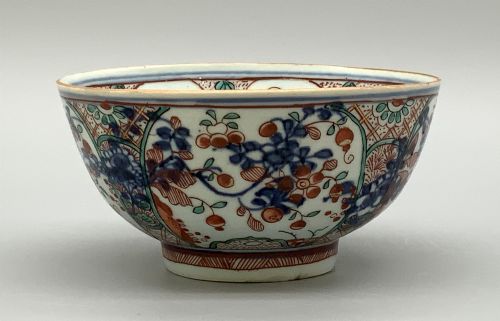
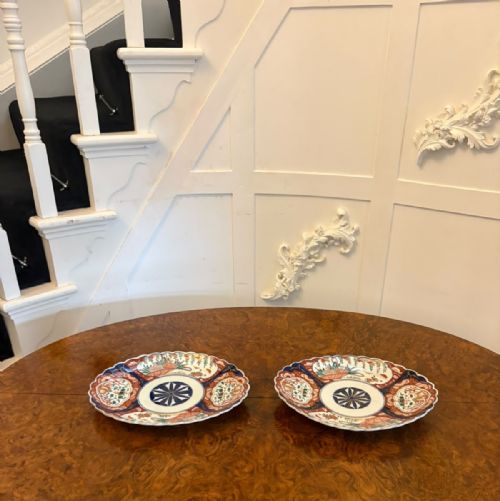
An antique imari dish typically takes the form of a plate, bowl, charger, or boat-shaped vessel decorated in a distinct palette. The pieces on this page span the nineteenth century and the Meiji period, reflecting both Japanese export ware and Victorian appreciation for these forms.
Most examples you encounter here are plates and shaped dishes featuring scalloped edges. Bowls and large chargers also appear, offering varied display options for collectors of Asian ceramics.
The style bridges cultures and eras, often associated with nineteenth century production and the Meiji period. They serve primarily as decorative plates and platters rather than utilitarian tableware.
How they were made
Makers shaped hard-paste porcelain into bowls, chargers, and plates before applying underglaze cobalt glaze. This blue pigment forms the foundational layer of the design underneath the clear glaze surface.
Artists then added enamel colours, frequently iron red, alongside details in gold leaf or gilding. Firing fixed these layered pigments onto the porcelain body to create the characteristic high-contrast finish.
Retail Price Guide 2026
Typical UK retail prices for imari dish, calculated from the Sellingantiques database of over a million retail prices indexed since 2003. This retail price guide relies exclusively on Sellingantiques data; no external sources or auction records are used, so the figures do not describe the wider market.
Boat-shaped dishes bring an unexpected nautical silhouette to traditional ceramic displays.
What varies in quality
Quality rests upon the precision of the hand painting and the crispness of the cobalt glaze against the white porcelain body. Superior pieces display complex detailing in the enamel and careful application of gold leaf.
The weight, resonance, and potting of the hard-paste porcelain distinguish finer bowls and plates from standard production. Form also matters, with scalloped edges and boat-shaped dishes showing greater moulding skill.
Royal Crown Derby
The Antique Imari Dish Glossary
- Imari
- A style of Japanese porcelain decorated in underglaze cobalt blue, iron red, and gilt. It originated in the town of Arita and was exported extensively through the port of Imari.
- Meiji Period
- The era of Japanese history lasting from 1868 to 1912. Many export ceramics found on the market date from this time of increased trade with the West.
- Hard-paste porcelain
- A dense, durable ceramic material fired at high temperatures. It forms the vitrified body of traditional oriental export wares.
- Cobalt glaze
- A metallic oxide pigment applied under the glaze to produce deep blue tones. It remains stable during high-temperature firings.
- Gilding
- The application of gold leaf or gold paint to ceramic surfaces. It highlights specific motifs within the painted design.
Frequently Asked Questions
What is an antique imari dish?
An antique imari dish is a piece of decorative porcelain characterised by a palette of cobalt blue, iron red, and gold leaf. These items were produced primarily in Japan during the nineteenth century and the Meiji period for both domestic use and export.
Collectors encounter various forms including bowls, chargers, and scalloped plates. Their distinct decoration makes them recognisable across different periods of ceramic history.
How were these dishes used?
These pieces functioned largely as decorative plates, chargers, and display bowls rather than everyday tableware. Their vibrant enamels and gilding were intended for visual appreciation in domestic interiors.
Boat-shaped dishes and large platters served as centrepieces or decorative vessels on sideboards. Their durable hard-paste porcelain construction ensured they survived generations of display.
How do I date an imari dish?
Dating relies on stylistic markers, potting techniques, and historical periods such as the nineteenth century or the Meiji period. Victorian examples often reflect British domestic interiors of the same era.
Examining the cobalt glaze, the application of gold leaf, and the form of the porcelain helps establish the timeframe. Archive examples show consistent manufacturing traits across the late nineteenth and early twentieth centuries.