





Japanese Imari Ware
Japanese imari ware brings together hard-paste porcelain, cobalt blue, and iron red in decorative plates, chargers, and vases that anchor a room with rich colour.
Japanese Imari Ware
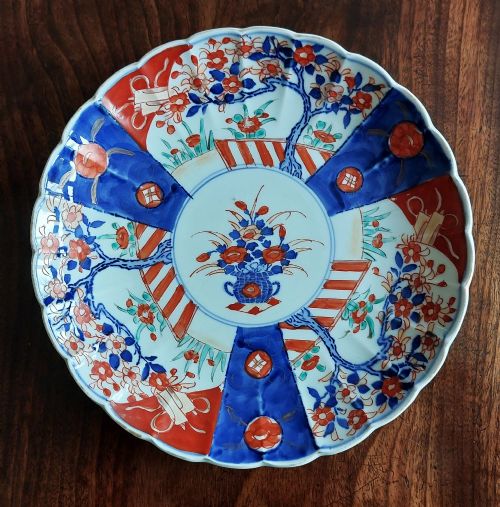
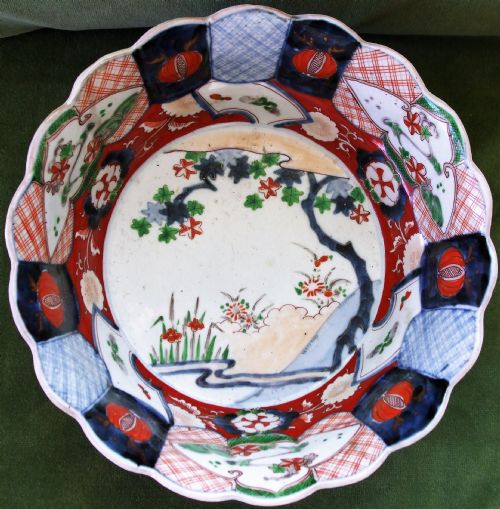
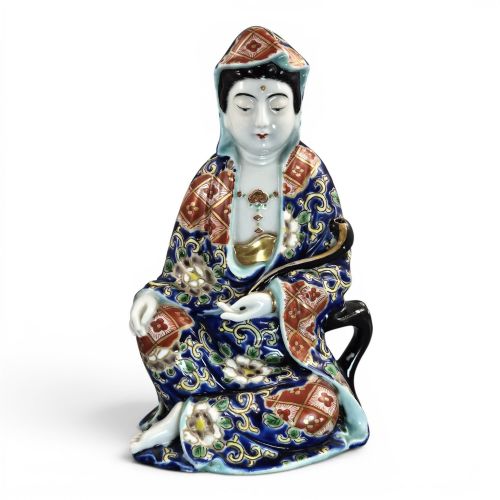
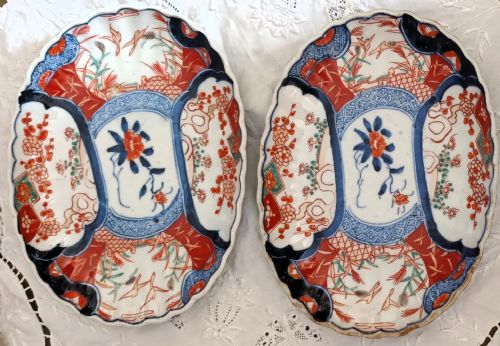
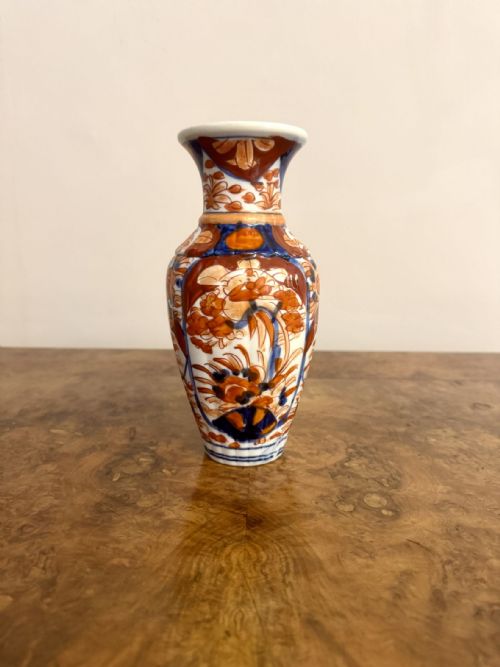
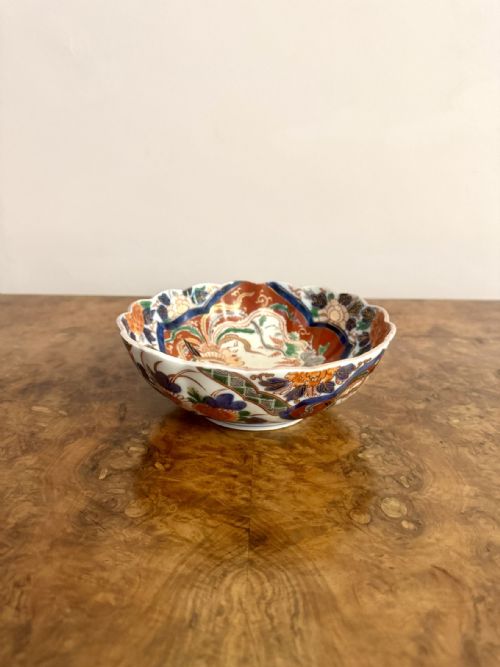
Japanese imari ware comprises hard-paste porcelain vessels created for display and service, appearing on this page mostly in nineteenth-century and Meiji period forms. You encounter large chargers, scalloped edge dishes, and vases alongside bowls, jardiniere, and ceramic figurines.
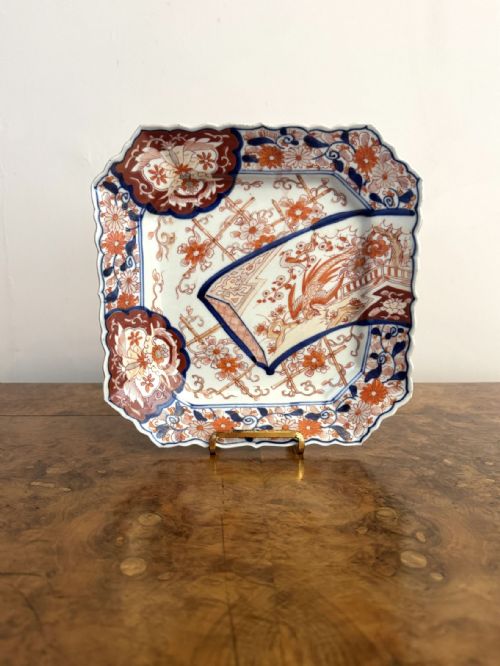
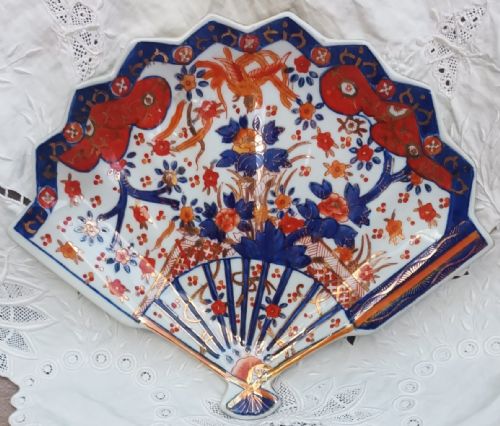
The objects span centuries from the eighteenth-century Edo period through to Edwardian and Taisho dates. Plates and chargers dominate the selection, often shaped with lobed or scalloped borders that frame floral and bird compositions.
Materials and Techniques
Potters shape hard-paste porcelain into vessels, applying underglaze cobalt blue and enamel pigments before firing. Artisans frequently add gold leaf, gilt, or gilding to highlight specific motifs across the glazed surface.
The decorative schemes rely on hand-painted floral and bird designs applied directly to the porcelain body. Glazes seal the pigments, producing smooth finishes on plates, bowls, and vases.
Listings feature hard-paste porcelain decorated with enamel, gold leaf, and glaze across periods from the eighteenth century to nineteen twenty.
Assessing Quality
Quality depends on the crispness of the hand-painted brushwork and the complexity of the floral and bird arrangements. Finer examples display precise detailing in the enamel and careful application of gold leaf across shaped rims and surfaces.
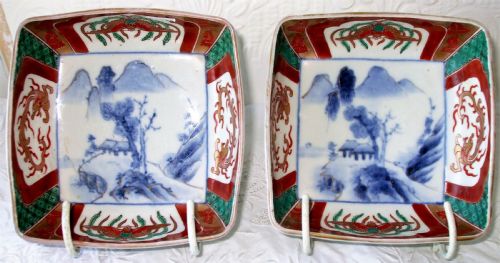
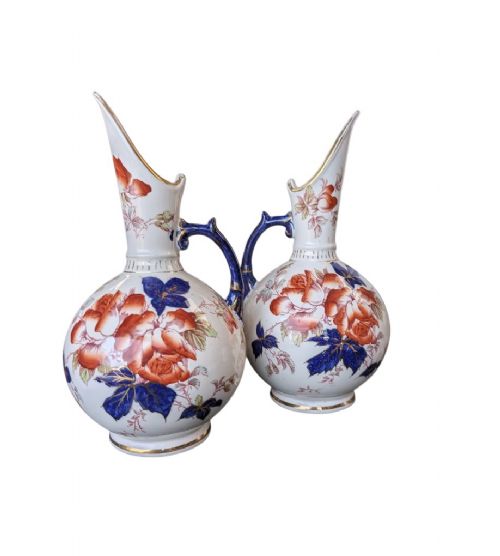
Form dictates distinction, moving from standard circular plates to hexagonal bowls, square shaped plates, and large garniture sets of three vases. The density and control of the blue and red pigments separate standard domestic production from exceptional display pieces.
The Japanese Imari Ware Glossary
- Imari
- Japanese porcelain decorated in underglaze blue and contrasting enamel colours, typically iron red and gold. The style originated in Arita and shipped through the port of Imari.
- Charger
- A large decorative plate intended for display rather than dining. These pieces measure larger than standard tableware and often feature intricate hand-painted borders.
- Garniture
- A set of three or more matching vases designed to sit together on a mantelpiece or cabinet. They share uniform decorative schemes and complementary proportions.
- Meiji Period
- The era in Japanese history spanning from eighteen sixty-eight to nineteen twelve. Pieces from this time often exhibit elaborate enamel work and refined porcelain bodies.
- Jardiniere
- A large ceramic pot or vessel used to hold potted plants. These heavy porcelain pieces provide stable housing for indoor greenery.
Japanese Imari Ware: Frequently Asked Questions
What is Japanese imari ware?
Japanese imari ware is hard-paste porcelain decorated with underglaze blue, iron red enamel, and gilding. These pieces include plates, vases, chargers, and bowls.
Production spans from the eighteenth-century Edo period through the Meiji era and into the early twentieth century. The items function primarily as decorative display objects.
How do I display a charger?
Chargers sit upright on plate stands or hang securely on walls to showcase their wide painted surfaces. Their large diameters make them natural focal points in a room.
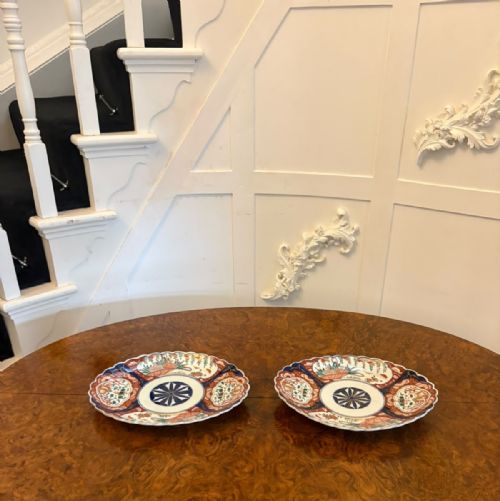
Pairing a single charger or a pair of dishes with complementary porcelain vases helps balance the bold red and blue palette.
What are garniture vases?
Garniture vases consist of matching sets of three vessels created to display together on a mantelpiece or sideboard. They share identical decorative designs and harmonious proportions.
These coordinated sets offer a balanced visual arrangement that single vases cannot achieve on their own.