
Antique French Centrepiece Bowl
An antique French centrepiece bowl holds the middle of a dining table or sideboard with presence, combining cast metal and glass.
Antique French Centrepiece Bowl
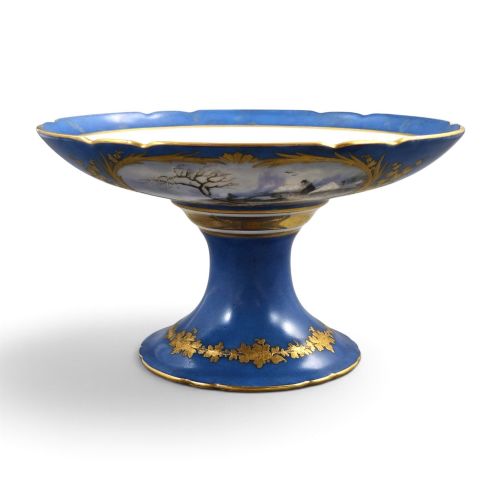
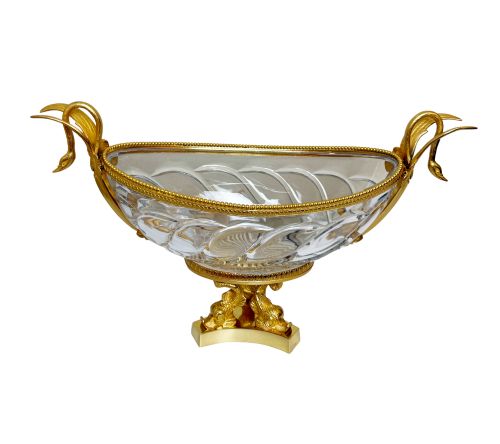
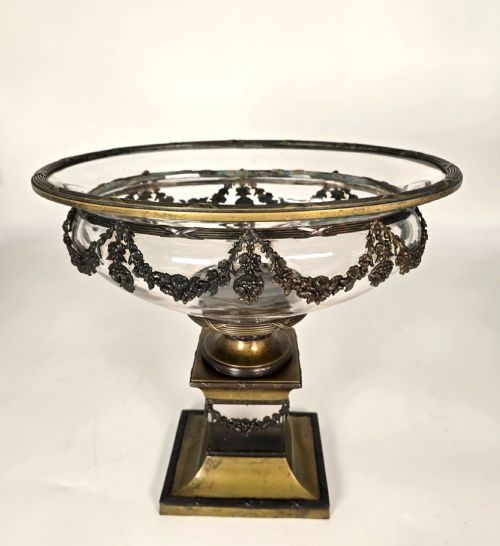
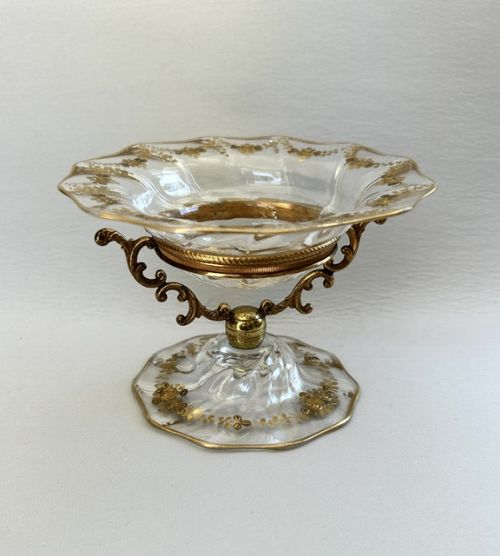
An antique French centrepiece bowl serves as a grand focal point for a table, encompassing forms such as tazzas, pedestal bowls, footed dishes, and jardinieres. These decorative vessels sit on stands or mountings designed to draw the eye upwards and anchor a room.
The pieces on this page span from the nineteenth century into the twentieth century, moving through periods like the Victorian era, the Belle Epoque, and Art Deco. Buyers encounter everything from heavy cast bronze mounts to delicate pressed glass.
Origins trace directly to French workshops and makers, utilising porcelain from Sèvres and Limoges alongside crystal from Baccarat and St Louis. The dominant styles include Empire, Rococo Revival, and Art Nouveau.
Materials and methods
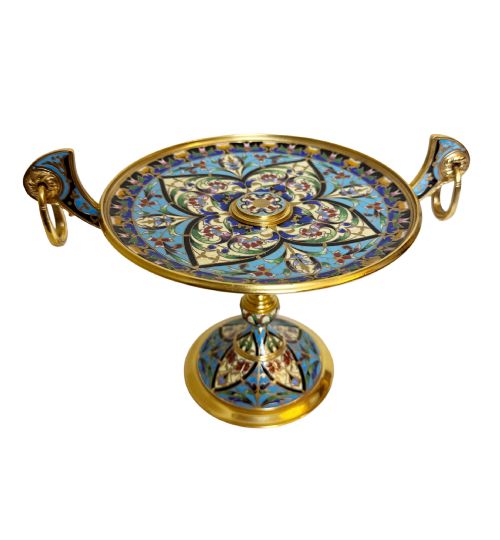
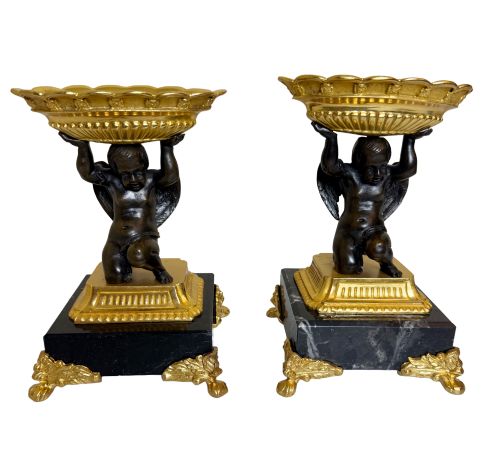
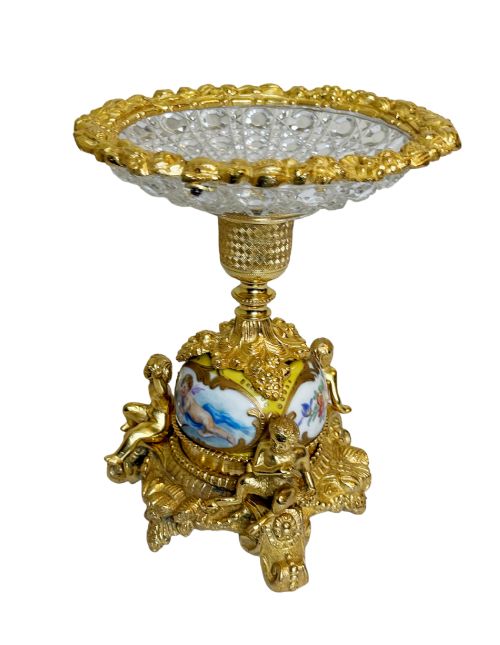
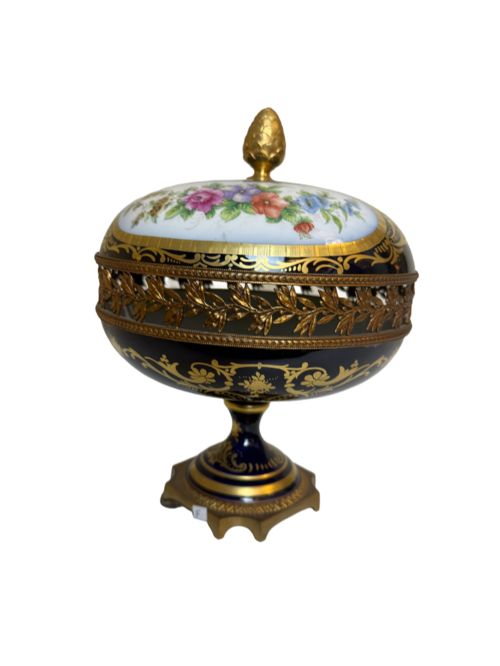
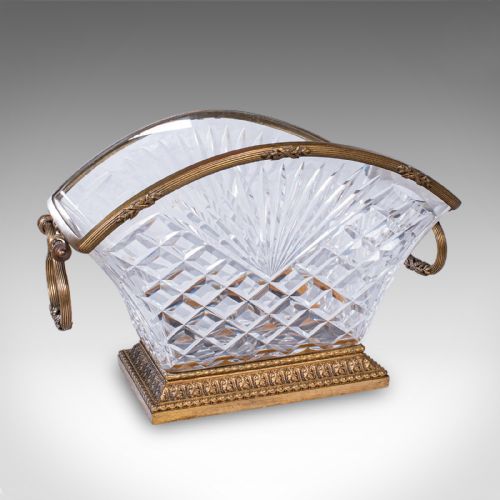
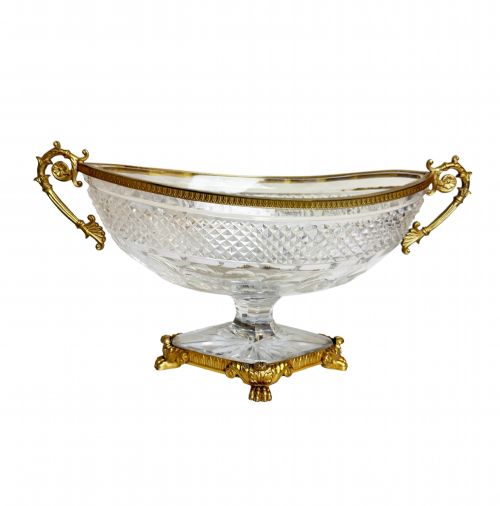
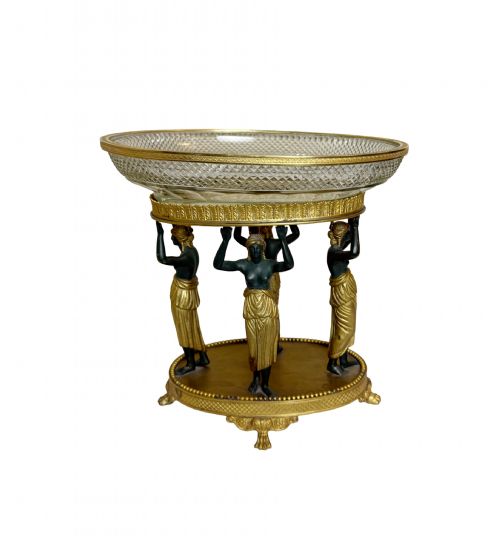
Gilt bronze and ormolu form the structural chassis and decorative mounts for many vessels, cast with figures such as cherubs or classical motifs. Champlevé enamel and marble frequently accent these metal frames.
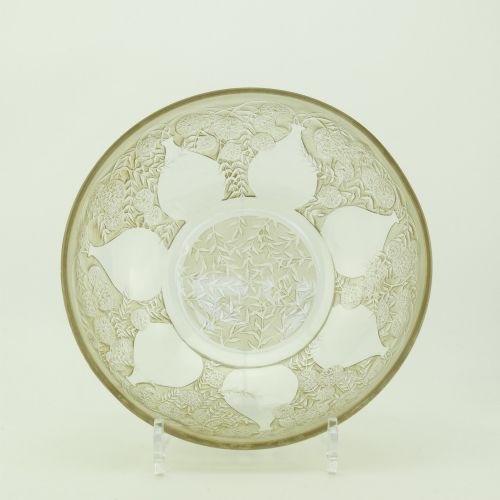
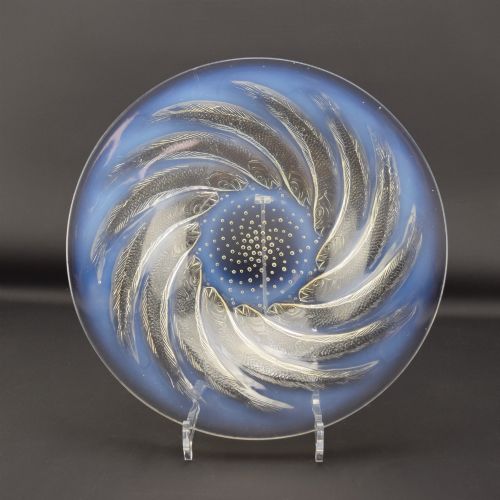
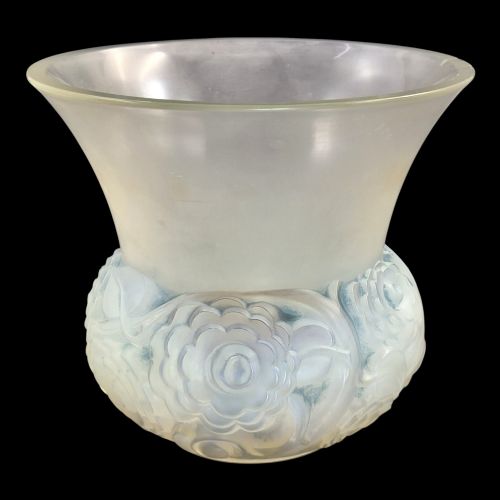
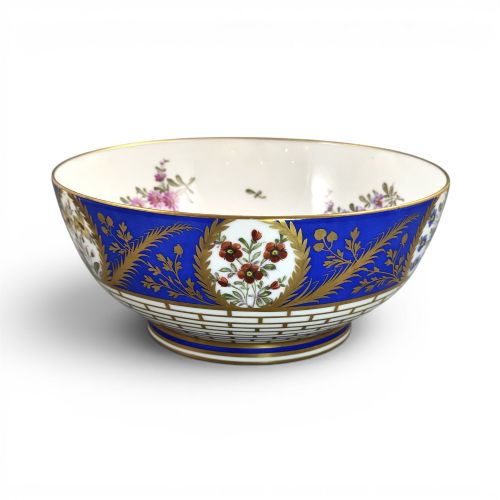
Vessels combine cut crystal, coloured glass, and opalescent glass, sometimes paired with porcelain inserts or baskets. Makers shape these translucent bodies through cutting, moulding, and pressing techniques.
Listings feature opalescent glass, gilt bronze, and hand-painted porcelain across nineteenth-century and Art Deco periods.
Judging quality in these vessels
The marriage between the glass or porcelain insert and the metal mount reveals the maker's hand. Superior pieces secure the crystal or ceramic snugly within a custom frame without excessive play or clumsy fixings.
Rene Lalique·Sèvres·Limoges·Samson Paris·St Louis glassworks
The Antique French Centrepiece Bowl Glossary
- Tazza
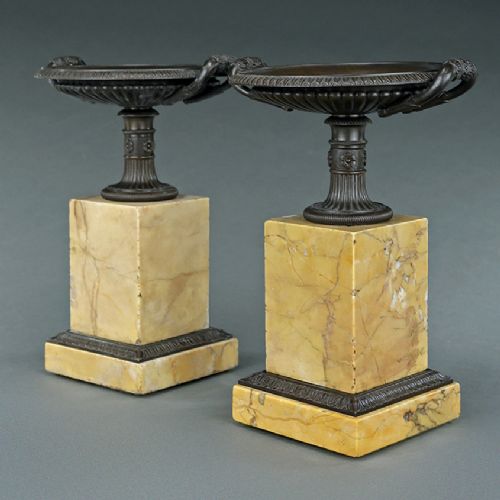
- A shallow bowl or cup mounted on a stem and foot. This elevated form derives from Renaissance drinking vessels adapted for decorative display.
- Ormolu
- Finely ground high-carat gold applied to a bronze base using a mercury amalgamation technique. It gives metalwork a rich, enduring lustre.
- Champlevé
- An enamelling technique where troughs are dug into the metal surface and filled with vitreous paste before firing. The resulting patterns sit flush with the surrounding metal.
- Jardiniere
- An ornamental container designed to hold plants or floral arrangements. They often share the heavy metal mounts and porcelain bodies of table bowls.
Antique French Centrepiece Bowl: Frequently Asked Questions
What were antique French centrepiece bowls used for?
These vessels functioned primarily as decorative focal points for dining tables and sideboards during formal meals. Hosts used them to display fruit, flowers, or sweetmeats.
Beyond dining rooms, they served as ornamental objects on console tables and mantelpieces, demonstrating the household's taste and wealth.
How do I identify an Empire style piece?
Empire style items draw heavily on classical Greek and Roman motifs, featuring symmetrical designs, laurel wreaths, and winged figures. The metalwork tends to have a disciplined, architectural geometry.
Bronze mounts on these pieces often exhibit dark patination contrasted with bright gilt highlights, reflecting early nineteenth-century French aesthetic preferences.
What is the difference between a tazza and a pedestal bowl?
A tazza stands distinctly on a formal stem above a footed base, mimicking the traditional shape of a shallow ceremonial cup. The proportion emphasises the vertical stem.
Pedestal bowls generally feature a broader, deeper basin resting on a shorter, sturdier foot or base, prioritising capacity over the slender profile of a tazza.
How do I care for gilt bronze mounts?
Dust gilt bronze gently with a soft, dry brush to prevent the accumulation of dirt in recessed chasing. Avoid commercial metal polishes, which strip away the thin layer of gold leaf or ormolu.
Keep the pieces away from direct sunlight and damp environments to protect both the metal patination and any accompanying enamel or porcelain elements.