



19th Century Porcelain Comport
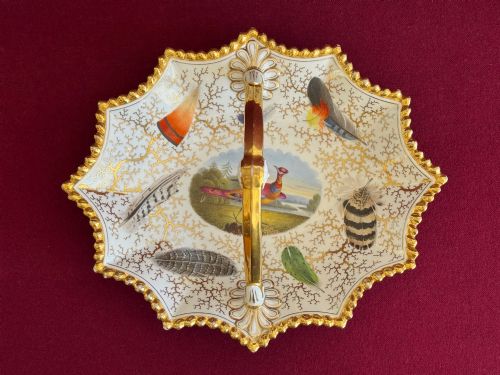
A 19th century porcelain comport brings height and colour to a formal table, serving as an elevated centrepiece for dessert or fruit.
19th Century Porcelain Comport
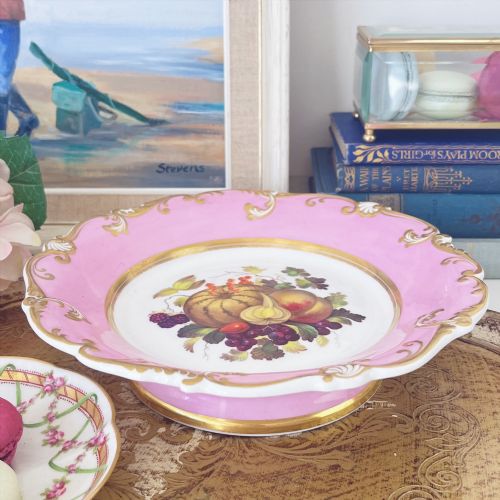
A 19th century porcelain comport is an elevated pedestal dish designed to hold fruit or small desserts at the centre of a dining table. These pieces take various forms, including tazzas, footed bowls, and multi-tiered cake stands intended for formal hospitality.
Most examples found here date from the Regency and Victorian eras, spanning English factories like Swansea and Worcester, alongside continental works from Sèvres, Meissen, and German Saxony. Buyers frequently encounter shell-edged designs, Chinese Export influences, and elaborate Rococo Revival styling.
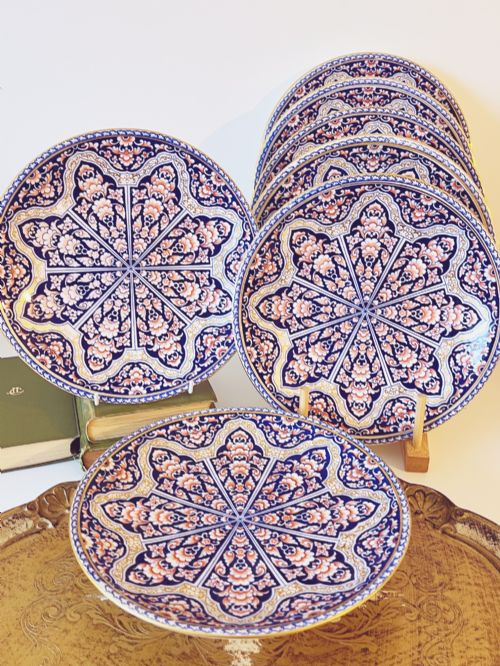
Many items appear individually, while others survive as part of larger dessert services complete with matching plates. They combine decorative hand-painted scenes with practical serveware utility, making them versatile display objects for modern interiors.
Materials and Manufacture
These pieces rely on fine porcelain and bone china bodies, shaped on wheels or pressed into moulds to create pedestals, baskets, and shallow bowls. Manufacturers then applied intricate enamel painting, often depicting botanical studies, exotic birds, or Chinoiserie motifs.
Surface enrichment frequently includes gold leaf, gilding, and ormolu mounts that highlight handles, rims, and bases. German, French, and English kilns utilised high-firing techniques to set these vibrant mineral colours and metallic details permanently.
19th Century Porcelain Comport Retail Price Guide 2026
Typical asking prices for 19th century porcelain comport among the pieces listed under this phrase on Sellingantiques today, from the lower quarter to the upper quarter. They describe what is for sale here now, not the wider market.
Many Victorian diners enjoyed gazing past towering fruit pyramids atop their comports, hoping the porcelain stem would hold firm against enthusiastic carving.
Assessing Quality and Execution
Quality rests heavily on the precision of the hand-painted decoration and the crispness of the porcelain moulding. Superior pieces display delicate brushwork in fruit or botanical panels, free from blurriness or standard transfer printing.
The application of gold leaf and gilding marks the division between standard production and exceptional studio work. Heavier, more secure ormolu mounts and finely articulated handles also separate finer salon comports from simpler utility wares.
H & R Daniel·Royal Crown Derby·Swansea Porcelain·Flight Barr and Barr·Meissen
The 19th Century Porcelain Comport Glossary
- Comport
- An elevated pedestal dish or tazza used for serving fruit and sweetmeats. It sits high above the dining table to create visual depth among lower tablewares.
- Tazza
- A shallow saucer-like dish mounted on a stem and foot. This Italian-derived term frequently describes the flat, open format of Victorian serving pieces.
- Bone China
- A type of porcelain incorporating animal bone ash for strength and translucency. English makers favoured this compound for its bright white ground.
- Ormolu
- Gilded bronze mounts applied to the base or rim of decorative porcelain. It adds structural support and rich metallic contrast to French and continental comports.
- Chinoiserie
- European artistic interpretations of Chinese and East Asian decorative styles. It appears frequently in hand-painted motifs featuring Mandarin figures and exotic pavilions.
19th Century Porcelain Comport: Frequently Asked Questions
How were 19th century porcelain comports used?
These elevated dishes served fruit, nuts, and sweet confections during the final course of formal Victorian and Regency dinners. Placed centrally, they added height and architectural interest to the dining table.
Today, they function primarily as decorative centrepieces on sideboards or dining tables. Many collectors also use them to hold fresh fruit or seasonal displays in domestic settings.
Can I use an antique comport for serving food?
Most antique comports remain safe for serving dry foods, fresh fruit, or individually wrapped items. Hand-washing in lukewarm water protects the fragile overglaze enamels and delicate gilding from harm.
Dishwashers and abrasive cleaning agents will damage the historic glaze and wear away the gold leaf. Gentle handling ensures the original hand-painted surfaces survive intact for daily enjoyment.
How do I identify a Regency period comport?
Regency comports typically feature neoclassical shapes, crisp white porcelain bodies, and refined hand-painted botanical or shell motifs. They often originate from notable English factories operating around the early nineteenth century.
Later Victorian pieces tend to embrace heavier gilding and more flamboyant Rococo Revival curves. Comparing the weight of the porcelain and the style of the footed base helps distinguish the eras.
What is the difference between Sèvres and Sèvres-style?
True Sèvres porcelain originates directly from the historic royal French manufactory and carries specific factory marks. These pieces represent the pinnacle of French ceramic artistry and royal patronage.
Sèvres-style items were produced by other European kilns later in the century, emulating the distinctive bleu céleste grounds and painted panels. While not made in the original French factory, these later interpretations exhibit high technical skill.